

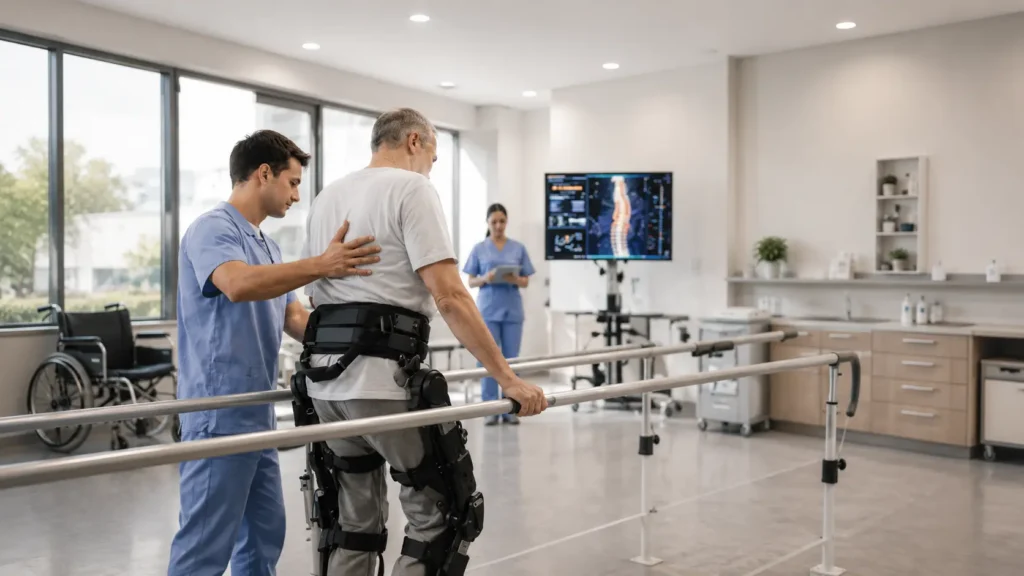
Understanding Paralysis from Spinal Cord Injury
Paralysis in Spinal Cord Injury (SCI) refers to the partial or complete loss of voluntary movement and sensation below the level of spinal damage. It occurs when injury to the spinal cord interrupts the transmission of nerve signals between the brain and the rest of the body, preventing muscles from responding to commands and sensory information from reaching the brain. Depending on the severity and location of the injury, paralysis may affect the legs alone (paraplegia) or both the arms and legs (quadriplegia), often accompanied by challenges in bladder, bowel, and respiratory function.
Ready to Begin?
Our centres in Bengaluru (HRBR Layout) and Hyderabad are open Monday to Saturday, 8:30 AM to 6:30 PM.
What Causes Paralysis in SCI?
What Causes Paralysis in Spinal Cord Injury (SCI)?
Paralysis in Spinal Cord Injury develops due to a combination of immediate damage and secondary biological processes that disrupt nerve communication between the brain and the body. Each cause plays a critical role in the severity and permanence of paralysis.
- Direct Injury to the Spinal Cord Traumatic events such as road accidents, falls, sports injuries, or violence can directly damage the spinal cord through compression, bruising, tearing, or complete severing of nerve tissue. This immediate injury interrupts motor and sensory pathways, stopping signals from traveling past the injured segment and leading to sudden loss of movement and sensation below the injury level.
- Inflammation and Swelling After Injury Following the initial trauma, the body responds with inflammation to protect the injured area. However, in SCI, excessive swelling within the confined spinal canal increases pressure on delicate nerve tissue. This compression worsens nerve damage, expands the area of injury, and deepens paralysis beyond the original trauma site.
- Disruption of Blood Supply to the Spinal Cord Spinal cord injury can impair blood vessels that supply oxygen and nutrients to nerve cells. Reduced blood flow (ischemia) leads to oxygen deprivation, causing nerve cells to weaken or die. This secondary damage significantly contributes to the progression and persistence of paralysis after SCI.
- Formation of Scar Tissue at the Injury Site As the spinal cord heals, scar tissue forms around the damaged area. While this is a natural protective response, the resulting scar creates a physical and chemical barrier that blocks nerve regrowth and prevents reconnection of damaged neural pathways, limiting natural recovery of movement.
- Secondary Injury Cascade SCI triggers a complex chain reaction involving toxic chemical release, immune cell activation, and oxidative stress. These processes continue to damage neurons and supporting cells for days or weeks after the initial injury, enlarging the affected area and worsening paralysis even when the spine is structurally stabilized.
- Loss of Neural Connectivity Damage to communication pathways prevents coordination between the brain and muscles. Without intact neural connections, muscles below the injury become inactive, weaken over time, and lose function, reinforcing long-term paralysis unless targeted neurological rehabilitation and regenerative interventions are introduced.
Signs and Symptoms of Paralysis in Spinal Cord Injury (SCI)
Paralysis caused by Spinal Cord Injury presents with a range of physical, sensory, and functional symptoms. The type and severity of these symptoms depend on the level of injury and the extent of nerve damage.
- Loss of Voluntary Movement One of the most prominent signs of paralysis in SCI is the inability to move muscles below the level of injury. Signals from the brain can no longer reach the affected muscles, resulting in partial weakness or complete loss of movement in the arms, legs, or both. This loss may be sudden following injury and can vary from mild impairment to total paralysis.
- Loss or Alteration of Sensation SCI often disrupts sensory pathways, leading to numbness, tingling, or complete loss of sensation below the injured area. Patients may be unable to feel touch, pain, temperature, or pressure, increasing the risk of unnoticed injuries, burns, or pressure sores.
- Muscle Weakness and Loss of Muscle Control Even when complete paralysis is not present, individuals may experience significant muscle weakness or poor coordination. Muscles may respond slowly or unpredictably due to impaired nerve signaling, making everyday tasks such as walking, gripping objects, or maintaining balance difficult.
- Spasticity or Muscle Stiffness Damage to the spinal cord can cause abnormal muscle tone, resulting in stiffness, tightness, or involuntary muscle spasms. Spasticity can interfere with movement, cause discomfort, and limit joint mobility, affecting overall functional independence.
- Bladder and Bowel Dysfunction SCI-related paralysis frequently affects bladder and bowel control. Nerve disruption can lead to urinary retention, incontinence, constipation, or loss of bowel sensation, requiring long-term management strategies and increasing the risk of infections.
- Sexual Dysfunction Paralysis in SCI may impair sexual sensation, arousal, and function in both men and women. These changes can significantly affect emotional well-being, relationships, and quality of life.
- Breathing Difficulties (in High-Level Injuries) When paralysis affects the cervical region of the spinal cord, muscles responsible for breathing may be weakened or paralyzed. This can cause shortness of breath, reduced lung capacity, or the need for assisted ventilation in severe cases.
- Chronic Pain and Abnormal Sensations Despite loss of normal sensation, many individuals experience neuropathic pain, burning sensations, or electric-shock–like feelings below or around the injury level. This pain arises from damaged nerve pathways sending abnormal signals to the brain.
Diagnosis of Paralysis in Spinal Cord Injury (SCI)
Accurate diagnosis of paralysis caused by Spinal Cord Injury is essential to determine the severity of nerve damage, identify the level of injury, and plan appropriate treatment and rehabilitation. Diagnosis typically involves a combination of clinical evaluation, imaging studies, and functional assessments.
- Detailed Medical History and Physical Examination The diagnostic process begins with a thorough medical history, including the cause of injury, onset of symptoms, and progression of paralysis. A physical examination assesses muscle strength, reflexes, coordination, and voluntary movement. This helps clinicians identify which parts of the body are affected and estimate the level of spinal cord involvement.
- Neurological Examination A focused neurological assessment evaluates sensory perception (touch, pain, temperature), motor function, and reflex activity. Doctors check how well nerve signals are traveling between the brain and the body. Changes in sensation or movement help pinpoint the exact location and extent of spinal cord damage.
- Imaging Tests (MRI and CT Scan) Magnetic Resonance Imaging (MRI) is the most important diagnostic tool for SCI, as it provides detailed images of the spinal cord, nerves, and surrounding soft tissues. It helps detect compression, swelling, bleeding, or scar formation. CT scans and X-rays are used to identify fractures, dislocations, or structural damage to the spine that may be contributing to paralysis.
- ASIA (American Spinal Injury Association) Impairment Scale The ASIA scale is widely used to classify the severity of SCI-related paralysis. It grades injury from complete loss of motor and sensory function to partial preservation. This standardized assessment helps guide prognosis, treatment decisions, and long-term rehabilitation planning.
- Electrophysiological Studies Tests such as electromyography (EMG) and nerve conduction studies evaluate how well electrical signals travel through nerves and muscles. These tests help differentiate spinal cord damage from peripheral nerve or muscle disorders and provide insight into residual nerve function.
- Functional and Rehabilitation Assessment Specialized assessments evaluate the patient’s ability to perform daily activities, balance, mobility, and coordination. These evaluations help design individualized rehabilitation and regenerative therapy programs aimed at maximizing functional recovery.
What Is Regenerative Cell Therapy?
Regenerative cell therapy is an advanced medical approach designed to repair, restore, and support damaged tissues by using the body’s own healing cells. Instead of only managing symptoms, this therapy focuses on addressing the underlying cause of tissue damage. In neurological conditions such as Spinal Cord Injury, regenerative cell therapy aims to improve nerve function, reduce inflammation, and create an environment that supports neural repair and functional recovery.
How Regenerative Cell Therapy Works
Regenerative cell therapy works through a series of biological actions that help the injured area heal and function more effectively:
- Use of the Body’s Own Regenerative Cells The therapy typically uses regenerative cells collected from the patient’s own body, such as autologous mesenchymal cells. Because these cells are self-derived, the risk of immune rejection or adverse reactions is significantly reduced.
- Targeted Delivery to the Injury Site After careful processing, regenerative cells are introduced into or near the damaged area—such as the spinal canal in spinal cord injury. This targeted delivery allows the cells to act directly where healing is needed most.
- Reduction of Inflammation and Secondary Damage Once introduced, regenerative cells release bioactive substances that calm inflammation and modulate immune responses. This helps limit secondary injury, which often worsens tissue damage after the initial trauma.
- Support for Tissue Repair and Regeneration Regenerative cells secrete growth factors and signaling molecules that encourage the repair of damaged nerve tissue, support surviving neurons, and promote the formation of new neural connections.
- Improvement of the Healing Environment By enhancing blood supply, oxygen delivery, and cellular communication, regenerative cell therapy creates a healthier environment for recovery. This supports long-term functional improvement when combined with rehabilitation therapies.
How Regenerative Cell Therapy Helps Paralysis in Spinal Cord Injury
Regenerative cell therapy supports recovery from paralysis in Spinal Cord Injury by addressing the biological damage that disrupts nerve communication. Rather than focusing only on symptom management, this therapy works at the cellular level to improve the spinal cord’s healing environment and functional potential.
- Reduces Inflammation at the Injury Site After a spinal cord injury, excessive inflammation damages healthy nerve tissue and worsens paralysis. Regenerative cells release anti-inflammatory factors that calm this response, reducing swelling and pressure within the spinal canal. By limiting ongoing nerve damage, this creates a more stable foundation for neurological recovery.
- Protects Surviving Nerve Cells Many neurons remain alive but vulnerable after SCI. Regenerative cell therapy provides neuroprotective support by releasing substances that shield these cells from further injury. Preserving existing nerve cells is critical, as it increases the chances of restoring signal transmission and functional movement.
- Promotes Repair of Damaged Neural Tissue Regenerative cells secrete growth factors that encourage repair of injured nerve fibers and supporting structures. This helps strengthen damaged pathways and supports the rebuilding of neural connections that are essential for restoring movement and sensation.
- Supports Formation of New Neural Connections One of the key challenges in SCI is the loss of communication between the brain and muscles. Regenerative cell therapy enhances neural signaling and synaptic activity, helping surviving nerves form new connections around the injury site. This process can improve motor control and responsiveness over time.
- Improves Blood Flow and Tissue Nutrition Injury often disrupts blood supply to the spinal cord, slowing healing. Regenerative cells support the development of healthier blood flow, ensuring oxygen and nutrients reach damaged tissues. Better circulation enhances nerve repair and overall spinal cord function.
- Enhances Outcomes of Rehabilitation Therapies When combined with physiotherapy, occupational therapy, and neurological rehabilitation, regenerative cell therapy amplifies functional gains. Improved nerve responsiveness allows patients to better engage in rehabilitation exercises, leading to greater improvements in strength, mobility, and independence.
- Helps Improve Quality of Life By supporting neurological recovery, regenerative cell therapy may reduce the severity of paralysis, improve muscle control, and enhance daily functioning. Even partial recovery can significantly improve independence, emotional well-being, and long-term quality of life for individuals with SCI.
Treatment for Spinal Cord Injury (SCI) at Plexus
Plexus follows a comprehensive, multidisciplinary approach to Spinal Cord Injury treatment, combining advanced regenerative care with personalized rehabilitation therapies. Each treatment component is designed to work together to maximize neurological recovery, improve mobility, and enhance quality of life.
- Aquatic Therapy Aquatic therapy uses the supportive properties of water to help individuals with SCI perform movements that may be difficult on land. The buoyancy of water reduces stress on joints and muscles, allowing safer and more controlled movement. Water resistance also helps improve muscle strength, balance, and coordination while minimizing the risk of injury. Aquatic therapy is especially beneficial in early rehabilitation stages, helping patients regain confidence and mobility.
- Physiotherapy Physiotherapy focuses on restoring movement, strength, and flexibility affected by spinal cord injury. Specialized physiotherapy programs at Plexus include muscle strengthening, gait training, posture correction, and neuromuscular re-education. These exercises help prevent muscle atrophy, reduce stiffness, and improve circulation, playing a vital role in functional recovery and independence.
- Occupational Therapy Occupational therapy helps SCI patients relearn daily living activities such as dressing, grooming, eating, and using assistive devices. Therapists work on fine motor skills, hand function, coordination, and adaptive techniques to improve independence. Occupational therapy also addresses environmental modifications to support safer and more efficient daily routines.
- Regenerative Cell Therapy Regenerative cell therapy at Plexus uses the patient’s own regenerative cells, including autologous mesenchymal cells, to support spinal cord repair. This therapy aims to reduce inflammation, protect surviving nerve cells, and promote neural repair and reconnection. When combined with intensive rehabilitation, regenerative cell therapy enhances neurological responsiveness and supports long-term functional improvement.
Why Plexus Is a Preferred Choice in India
Choosing an advanced rehabilitation centre significantly influences neurological recovery. Plexus is recognised for its specialised approach, clinical depth, and patient-focused systems.
Specialised Clinical Experience Plexus has been dedicated to neurological and regenerative rehabilitation since 2011, managing a high volume of complex nerve and brain-related conditions. Extensive clinical exposure across neurology and neurosurgery allows precise diagnosis, coordinated treatment planning, and seamless execution of advanced rehabilitation protocols.
Advanced Infrastructure & Integrated Expertise As India’s first ISO-certified regenerative rehabilitation and research centre, Plexus combines modern medical infrastructure with specialised rehabilitation environments. High-end imaging technology, fully equipped surgical theatres, and purpose-built therapy units support comprehensive care. Treatment is delivered through a coordinated team of neurologists, neurosurgeons, rehabilitation physicians, physiotherapists, occupational therapists, pain-management specialists, and regenerative medicine professionals.
Structured Care Pathway & Global Accessibility Every stage of care is organised through a structured clinical pathway, covering evaluation, treatment, rehabilitation, and continued follow-up. Plexus provides accessible care for both domestic and international patients, balancing medical excellence with cost efficiency. Flexible outpatient services, clearly defined therapy programs, and ongoing specialist communication ensure continuity throughout the recovery process.
Restoring Hope and Function After Spinal Cord Injury
Paralysis caused by Spinal Cord Injury presents complex physical and emotional challenges, requiring more than conventional rehabilitation alone. Plexus adopts an advanced, patient-centric approach that integrates regenerative cell therapy with specialized aquatic therapy, physiotherapy, and occupational therapy. This combined strategy targets nerve repair, enhances neuromuscular recovery, and supports functional independence. By focusing on both healing at the cellular level and practical rehabilitation, Plexus helps individuals with SCI move beyond limitations and work toward meaningful, sustained improvements in mobility and quality of life.
Ready to Begin?
Our centres in Bengaluru (HRBR Layout) and Hyderabad are open Monday to Saturday, 8:30 AM to 6:30 PM.
Other Disorders Treated at Plexus
At Plexus,expertise extends to offer comprehensive care for a variety of neurological and related conditions. Plexus provide specialized treatments for disorders such as, Brachial Plexus Injury , Spinocerebellar Ataxia, Sensory Processing Disorder (SPD), Cerebral Palsy, Multiple Sclerosis,Parkinson’s disease, Spinal Cord Injury, Motor Neuron Disease, Stroke, Autoimmune Conditions, Orthopedic Conditions, and Sports Injuries. Plexus multidisciplinary approach, incorporating therapies like Cell Therapy, Physiotherapy, Occupational Therapy, Aquatic Therapy, and Speech Therapy, ensures personalized care tailored to each condition, helping patients achieve improved mobility, function, and quality of life.
FAQs
What types of spinal cord injury are treated at Plexus? Plexus treats both partial and complete spinal cord injuries, including cervical, thoracic, lumbar, and sacral injuries. Each patient undergoes a detailed evaluation to design a personalized treatment and rehabilitation plan.
How does regenerative cell therapy support SCI recovery? Regenerative cell therapy uses the patient’s own regenerative cells, including autologous mesenchymal cells, to reduce inflammation, protect nerve tissue, and support neural repair. When combined with rehabilitation, it can enhance neurological responsiveness and functional improvement.
Can patients with long-standing paralysis benefit from treatment? Yes. Even individuals with chronic SCI may experience improvements in strength, control, or function. Outcomes vary, but regenerative therapy combined with targeted rehabilitation can still provide meaningful benefits.
Does Plexus combine rehabilitation with advanced therapies? Absolutely. Plexus integrates aquatic therapy, physiotherapy, occupational therapy, and regenerative cell therapy into a coordinated treatment plan to maximize recovery potential.
About the Author
Dr. Na’eem Sadiq
Medical Director of Plexus
Dr. Na’eem Sadiq is a globally recognized neurologist and neuropsychiatrist, renowned for his contributions to the treatment of complex neurological disorders. He founded Plexus in 2011 with a mission to enhance the quality of life for patients living with neurological conditions.
With over 35 years of clinical experience, Dr. Sadiq is considered a leading expert in the field. His internationally acclaimed research spans key topics such as Demyelinating Polyneuropathy, Multiple Sclerosis, Epilepsy, and Migraine, positioning him at the forefront of neurological care worldwide.