Spinocerebellar Ataxia (SCA) – a genetic condition that affects the cerebellum – impairs your body’s balance, control, and coordination. Since it affects the nervous system it leads to hand-eye incoordination, staggering gait, and abnormal speech. It can exhibit various other symptoms such as frequent stuttering, headache, dizziness, vocal changes, trouble swallowing food, and difficulty in processing, learning, and retaining information.
The signs and symptoms of Spinocerebellar Ataxia typically begin in early adulthood but can appear anytime from childhood to late adulthood.
Headed by Dr Na’eem Sadiq, our experts at the Plexus Neuro and Cell Research Center provide various types of therapies to our patients with SCA depending upon its type, symptoms, and degree of progression.
We design a customized Spinocerebellar Ataxia Rehabilitation plan that includes a strategic combination of Cell Therapy, Physiotherapy, Occupational Therapy, and Speech and Language Therapy.
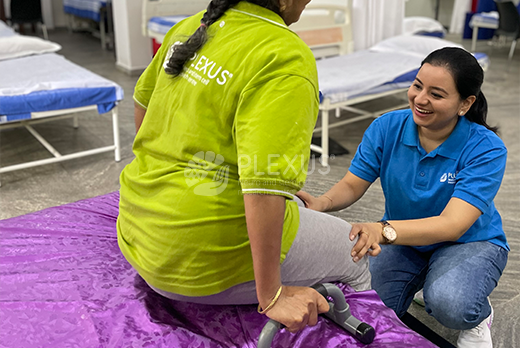
Postural stability
Core strengthening and locomotor exercises
Coordination training
Physical conditioning
Balance training
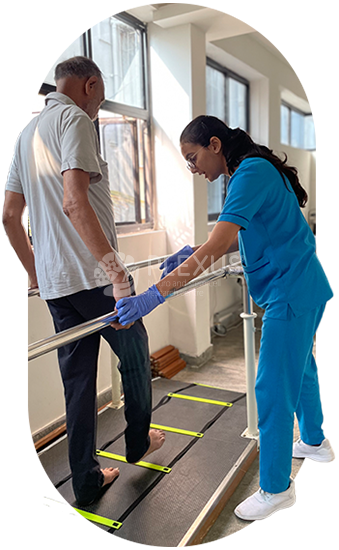
Gait training
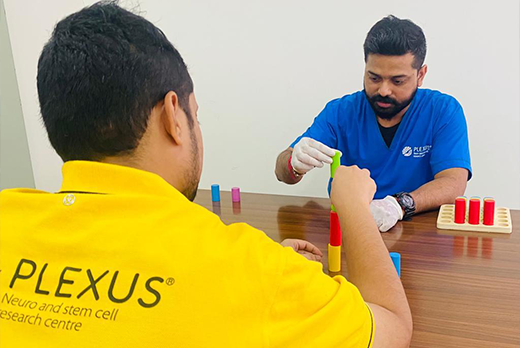
Hand function training
Handwriting training
Articulation exercises
Oromotor exercises
Handwriting training
Articulation exercises
With the objective to improve overall strength, endurance, and control, our physiotherapists offer gait training to correct severe balance impairments caused by Spinocerebellar Ataxia. We also factor in generalized muscular weakness and fatigue, trunk stability, related involuntary movements, and place focus on locomotor and core strengthening exercises.
Occupational therapy at Plexus focuses on balance training to improve performance of daily tasks affected by tremors, impaired balance, and incoordination. Our specialists focus on helping you become independent by enhancing indoor and community mobility and coordination for activities such as crossing door thresholds, maneuvering around furniture and objects, prevention of tripping and falling, etc.
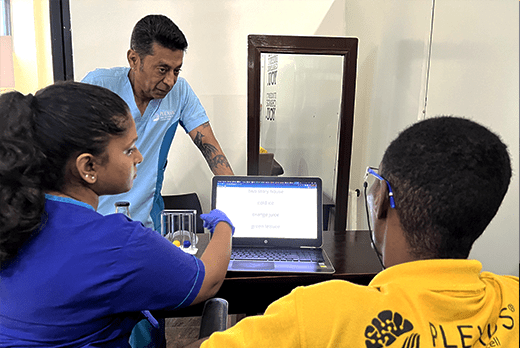
Progressive Ataxias can impair communication and swallowing functions, potentially affecting the clarity, quality, naturalness, and intelligibility of your speech. In some cases with associated cognitive deficits, language processing may also be impacted. The speech therapists at Plexus educate the patient and caregivers on the right methods to improve oral musculature strength, prevent choking, and improve breathing, speech and swallowing functions.
Ramrick Deb (name changed)
“For the last three years, I have been wondering what has happened to me. I have contacted many specialists but did not receive any results. After consulting Dr Na’eem Sadiq at Plexus, he told me that I was suffering from Spinocerebellar Ataxia. He provided me with customized treatment and now I am much better. I am able to walk without support, eat independently, and my speech has also improved. The treatment focused on all my problems and helped me improve in all aspects of my life.”

Vikas Anand (name changed)
“For the last three years, I have been wondering what has happened to me. I have contacted many specialists but did not receive any results. After consulting Dr Na’eem Sadiq at Plexus, he told me that I was suffering from Spinocerebellar Ataxia. He provided me with specialized treatment and now I am much better. I am able to walk without support, eat independently and my speech has also improved. The treatment focused on all my problems and helped me improve in all aspects of my life.”

Shaheen Taj (name changed)
"I have been having balance problems since a few months. Since my father and brother also suffered from such a condition, I knew its SCA for me too. I met Dr Sadiq and he did a genetic test for me, the report showed positive for SCA. I have taken cell therapy, physiotherapy and occupational therapy for my condition as recommended by Dr Sadiq. I feel I am much more stable in my walking and my daily activities have become easier. I recommend all the people suffering from SCA to take treatment at Plexus."