
What Is Stroke
A Stroke is a serious medical condition that occurs when blood flow to a part of the brain is blocked or when a blood vessel in the brain ruptures, preventing brain cells from receiving oxygen and nutrients. Without proper blood supply, brain cells begin to die within minutes, leading to potential loss of movement, speech difficulties, memory problems, or other neurological impairments. There are two main types of stroke, ischemic stroke, caused by a blood clot, and hemorrhagic stroke, caused by bleeding in the brain. Stroke is a medical emergency that requires immediate treatment to reduce brain damage and improve recovery outcomes.
Ready to Begin?
Our centres in Bengaluru (HRBR Layout) and Hyderabad are open Monday to Saturday, 8:30 AM to 6:30 PM.
Why Early Detection Matters
Early detection of a Stroke matters because brain damage begins within minutes of reduced blood flow, and timely treatment can significantly limit its impact. Recognizing symptoms early allows doctors to restore blood circulation or control bleeding before extensive brain injury occurs, reducing the risk of long-term disability such as paralysis, speech problems, or memory loss. Prompt medical care also lowers the chances of life-threatening complications and increases the likelihood of faster, more complete recovery. In stroke care, every minute counts, and early action can truly save lives.
Symptoms of Stroke
- Sudden Weakness or Paralysis on One Side of the Body
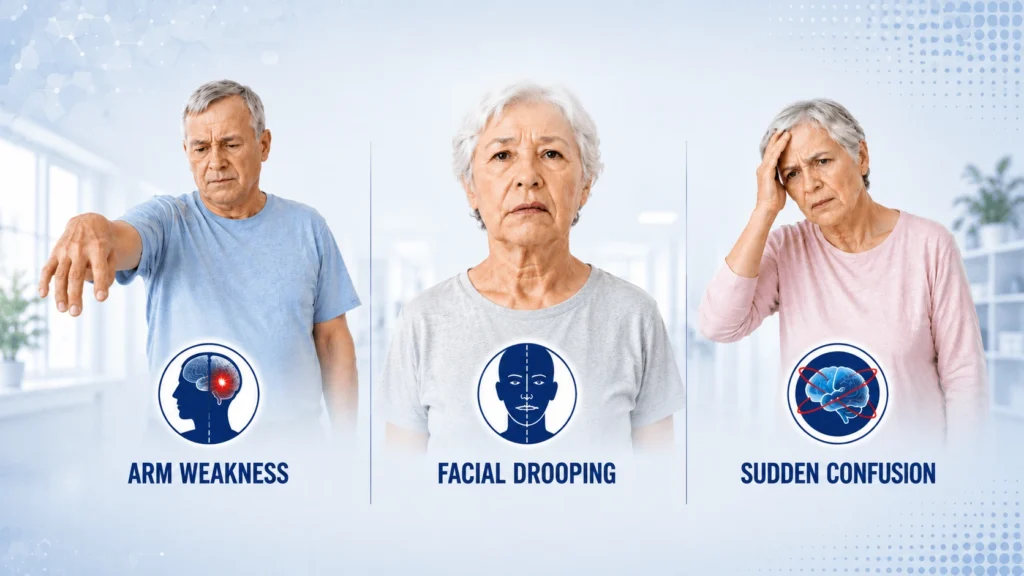
This is one of the most common Stroke symptoms and usually affects the face, arm, or leg on one side of the body. It occurs when the stroke damages the part of the brain responsible for muscle control. A person may experience facial drooping, difficulty lifting an arm, or dragging of a leg while walking. Even mild weakness that appears suddenly should be treated as a serious warning sign.
- Slurred Speech or Difficulty Speaking
Stroke can interfere with speech muscles and language centers in the brain, causing slurred, slow, or unclear speech. The person may struggle to find the right words or may speak in a way that is difficult to understand. In some cases, they may be unable to speak at all despite being awake and alert.
- Trouble Understanding Speech
Some strokes affect the brain’s ability to process language. A person may appear confused, have difficulty understanding simple instructions, or respond inappropriately to questions. This sudden loss of comprehension is a major neurological red flag.
- Sudden Vision Problems
Vision symptoms may include blurred vision, double vision, or sudden loss of vision in one or both eyes. This occurs when areas of the brain responsible for visual processing are affected. These changes often happen without pain and can severely impact balance and coordination.
- Sudden Severe Headache
A sudden, intense headache with no known cause, often described as the worst headache of one’s life, can indicate a hemorrhagic stroke. This headache may be accompanied by nausea, vomiting, dizziness, or loss of consciousness and requires immediate medical attention.
- Loss of Balance, Dizziness, or Difficulty Walking
A Stroke can affect the cerebellum or brain , leading to sudden dizziness, unsteadiness, or trouble walking. The person may feel lightheaded, stumble, or be unable to maintain balance, increasing the risk of falls.
- Sudden Confusion or Memory Loss
Stroke may cause sudden confusion, difficulty concentrating, or memory problems. The person may not recognize familiar people or places or may struggle to think clearly. These cognitive changes often appear abruptly and worsen without treatment.
- Difficulty Swallowing (Dysphagia)
Muscle weakness caused by stroke can affect swallowing, making it hard to eat, drink, or swallow saliva. This symptom increases the risk of choking and aspiration, where food or liquid enters the lungs. Difficulty swallowing is a serious symptom that needs urgent medical evaluation.
Diagnosis of Stroke
Stroke diagnosis focuses on confirming the type of stroke, identifying the affected brain area, and starting treatment as quickly as possible. Doctors use a combination of clinical evaluation, imaging tests, and laboratory investigations to make an accurate diagnosis.
- Clinical Examination: The doctor first performs a neurological assessment to check speech, vision, strength, reflexes, balance, and level of consciousness. The time when symptoms started is carefully noted, as it directly affects treatment decisions.
- Brain Imaging Tests: Imaging is essential to determine whether the stroke is ischemic or hemorrhagic. A CT scan of the brain is usually the first test performed because it quickly detects bleeding. An MRI scan provides more detailed images and helps identify smaller or early brain injuries.
- Blood Tests: Blood tests help check blood sugar levels, clotting ability, infection, and cholesterol levels. These tests assist in ruling out other conditions and identifying risk factors that may have contributed to the stroke.
- Heart and Blood Vessel Tests: An ECG (electrocardiogram) is done to detect abnormal heart rhythms such as atrial fibrillation. Carotid ultrasound, CT angiography, or MR angiography may be used to evaluate blood vessels supplying the brain and detect blockages or narrowing.
Early and accurate diagnosis allows doctors to begin life-saving treatment promptly, reduce brain damage, and plan effective rehabilitation for recovery.
Treatment at Plexus for Stroke Recovery
At Plexus, Stroke rehabilitation follows a multidisciplinary, patient-centered approach aimed at restoring movement, communication, independence, and quality of life. Each therapy is customized based on the type of stroke, severity, and individual recovery goals.
Aquatic therapy uses water-based exercises to support early and safe movement after stroke. The buoyancy of water reduces stress on joints and muscles, making it easier for patients to move weak or stiff limbs. Water resistance also helps improve muscle strength, balance, coordination, and endurance. Aquatic therapy is especially beneficial for patients with poor balance, spasticity, or fear of falling.
Physiotherapy focuses on improving mobility, strength, balance, and coordination after stroke. At Plexus, physiotherapists work on gait training, posture correction, muscle re-education, and spasticity management. Techniques include task-specific training, balance exercises, stretching, and strengthening programs to help patients regain functional movement and reduce the risk of falls.
Occupational therapy helps stroke survivors regain independence in daily activities such as dressing, eating, bathing, writing, and using household objects. Therapists focus on improving fine motor skills, hand function, coordination, and problem-solving abilities. Adaptive techniques and assistive devices may also be introduced to support safe and independent living.
Cognitive therapy addresses difficulties with memory, attention, problem-solving, planning, and decision-making that can occur after a stroke. At Plexus, structured cognitive exercises and functional tasks are used to improve mental processing and help patients return to work, social interactions, and daily responsibilities with confidence.
Speech therapy is essential for patients experiencing speech, language, or communication difficulties after stroke. Speech-language pathologists at Plexus work on improving speech clarity, language comprehension, expression, and social communication skills. Therapy also supports patients with aphasia and dysarthria to communicate effectively.
Swallowing therapy is provided for patients with dysphagia, a common complication after stroke. Therapists assess swallowing safety and train the muscles involved in chewing and swallowing. Therapy helps reduce the risk of choking and aspiration while improving the ability to eat and drink safely.
Why Choose Plexus in India
Choosing the right rehabilitation centre can make a significant difference in recovery outcomes. Plexus stands apart through a combination of clinical expertise, advanced infrastructure, and a carefully guided patient journey.
Expertise Since 2011, Plexus has specialized in neurological and regenerative rehabilitation, treating hundreds of thousands of patients and earning a strong reputation in managing complex nerve and neurological conditions. The team includes specialists trained in both neurology and neurosurgery, enabling comprehensive evaluation, treatment, and rehabilitation under one roof.
Facilities & Multidisciplinary Team Plexus is India’s first ISO-certified regenerative rehabilitation and research centre, supported by state-of-the-art diagnostic imaging, modern surgical theatres, and dedicated rehabilitation suites. Care is delivered through a multidisciplinary team comprising neurologists, neurosurgeons, physiotherapists, occupational therapists, pain specialists, and regenerative medicine experts who work collaboratively to provide integrated and personalized treatment.
Patient Journey & Access From the initial consultation through discharge and long-term follow-up, Plexus ensures continuity of care at every stage of recovery. Services are designed to support both Indian and international patients, offering cost-effective treatment without compromising clinical quality. Structured outpatient programs, coordinated therapy planning, and clear, accessible communication with treating doctors are central to the Plexus approach to patient care.
Ready to Begin?
Our centres in Bengaluru (HRBR Layout) and Hyderabad are open Monday to Saturday, 8:30 AM to 6:30 PM.
Other Disorders Treated at Plexus
At Plexus,expertise extends to offer comprehensive care for a variety of neurological and related conditions. Plexus provide specialized treatments for disorders such as, Brachial Plexus Injury , Spinocerebellar Ataxia, Sensory Processing Disorder (SPD), Cerebral Palsy, Multiple Sclerosis,Parkinson’s disease, Spinal Cord Injury, Motor Neuron Disease, Stroke, Autoimmune Conditions, Orthopedic Conditions, and Sports Injuries. Plexus multidisciplinary approach, incorporating therapies like Cell Therapy, Physiotherapy, Occupational Therapy, Aquatic Therapy, and Speech Therapy, ensures personalized care tailored to each condition, helping patients achieve improved mobility, function, and quality of life.
FAQs
When should stroke rehabilitation begin? Stroke rehabilitation should begin as early as possible, often within a few days after the stroke, once the patient is medically stable. Early therapy helps prevent complications and supports faster recovery.
How long does stroke rehabilitation take? Recovery time varies depending on the severity of the stroke, the affected brain areas, and the individual’s health. Some patients improve within weeks, while others may require months of ongoing rehabilitation.
Which therapies are most important after a stroke? Stroke rehabilitation typically includes physiotherapy, occupational therapy, speech and swallowing therapy, and cognitive therapy. The combination depends on the patient’s specific symptoms and recovery goals.
How does Plexus customize stroke rehabilitation programs? At Plexus, rehabilitation plans are tailored based on detailed assessments of physical, cognitive, and communication abilities. Therapies are adjusted regularly to match progress and evolving recovery needs.
About the Author
Dr. Na’eem Sadiq
Medical Director of Plexus
Dr. Na’eem Sadiq is a globally recognized neurologist and neuropsychiatrist, renowned for his contributions to the treatment of complex neurological disorders. He founded Plexus in 2011 with a mission to enhance the quality of life for patients living with neurological conditions.
With over 35 years of clinical experience, Dr. Sadiq is considered a leading expert in the field. His internationally acclaimed research spans key topics such as Demyelinating Polyneuropathy, Multiple Sclerosis, Epilepsy, and Migraine, positioning him at the forefront of neurological care worldwide.