
What is Stroke?
A Stroke is a serious medical emergency that occurs when blood flow to the brain is disrupted, either due to a blockage (ischemic stroke) or bleeding (hemorrhagic stroke). This interruption prevents oxygen and nutrients from reaching brain tissue, causing cells to begin dying within minutes. Stroke is one of the leading causes of disability and death worldwide, but timely recognition of stroke symptoms and immediate treatment can significantly improve recovery outcomes.
Ready to Begin?
Our centres in Bengaluru (HRBR Layout) and Hyderabad are open Monday to Saturday, 8:30 AM to 6:30 PM.
Causes of Stroke
| Category | Stroke Causes | Notes |
| Ischemic Stroke (≈87% of cases) | – Atherosclerosis (plaque buildup in arteries) – Blood clots (thrombosis) forming in brain vessels – Embolism (clot traveling from heart or other body part) – Irregular heartbeat (atrial fibrillation) | These block blood flow to the brain, leading to oxygen deprivation. |
| Hemorrhagic Stroke | – High blood pressure (hypertension) causing vessel rupture – Aneurysm (weakened blood vessel wall) – Arteriovenous malformation (AVM) – Head trauma | Bleeding inside the brain increases pressure and damages brain tissue. |
| Lifestyle-Related Causes | – Smoking – Excessive alcohol use – Poor diet (high salt, fat, cholesterol) – Physical inactivity | These increase risk factors like hypertension, diabetes, and obesity. |
| Medical Conditions | – Diabetes – High cholesterol – Heart disease – Obesity | Chronic conditions raise the likelihood of clot formation or vessel damage. |
| Gender & Age Factors | – Older age (risk rises after 55) – Stroke in women linked to pregnancy, birth control pills, and hormonal changes | Some causes are unique to women or more common in older adults. |
| Other Causes | – Genetic predisposition – Family history of stroke – Stress – Certain medications | These factors can contribute to both ischemic and hemorrhagic strokes. |
Symptoms of Stroke
| Category | Common Symptoms | Notes |
| Motor Symptoms | – Sudden numbness or weakness in the face, arm, or leg (especially on one side) – Paralysis or loss of coordination | Often the first noticeable signs; weakness typically affects one side of the body. |
| Speech & Language | – Sudden confusion – Trouble speaking – Difficulty understanding speech | Known as aphasia; can range from slurred speech to complete inability to communicate. |
| Vision Problems | – Sudden trouble seeing in one or both eyes – Blurred or double vision | May cause partial blindness or visual field loss. |
| Balance & Coordination | – Sudden dizziness – Loss of balance – Difficulty walking | Often linked to cerebellar or brain strokes. |
| Cognitive & Mental Changes | – Sudden confusion – Memory issues – Difficulty concentrating | Can mimic other neurological conditions but requires urgent evaluation. |
| Headache & Pain | – Sudden severe headache with no known cause – Nausea or vomiting | More common in hemorrhagic strokes due to bleeding in the brain. |
| Other Warning Signs | – Sudden fatigue – Facial drooping – Difficulty swallowing | These may appear alongside major symptoms and should not be ignored. |
Quick Recognition: BE FAST
- Balance – Sudden loss of balance or coordination
- Eyes – Sudden vision changes
- Face – Facial drooping on one side
- Arms – Weakness or numbness in one arm
- Speech – Slurred or confused speech
- Time – Act quickly; call emergency services immediately
Stroke Diagnosis : How Stroke is Identified and Confirmed
1. Physical and Neurological Examination
The first step in Stroke diagnosis is an immediate clinical evaluation. Doctors assess the patient’s level of consciousness, speech clarity, facial symmetry, limb strength, reflexes, coordination, and vision. The FAST assessment (Face drooping, Arm weakness, Speech difficulty, Time) is commonly used in emergency settings. A detailed neurological exam helps determine which part of the brain may be affected and how severe the stroke might be. This initial assessment guides urgent imaging decisions.
2. Medical History Assessment
A thorough medical history is essential in understanding stroke causes. Doctors evaluate risk factors such as high blood pressure, diabetes, heart disease, smoking, previous mini strokes (TIA), and family history of stroke. Information about symptom onset is extremely important because treatments like clot-dissolving medication for ischemic stroke are only effective within a limited time window (usually 4.5 hours). Understanding medication history, especially blood thinners, also helps determine bleeding risk.
3. CT Scan (Computed Tomography)
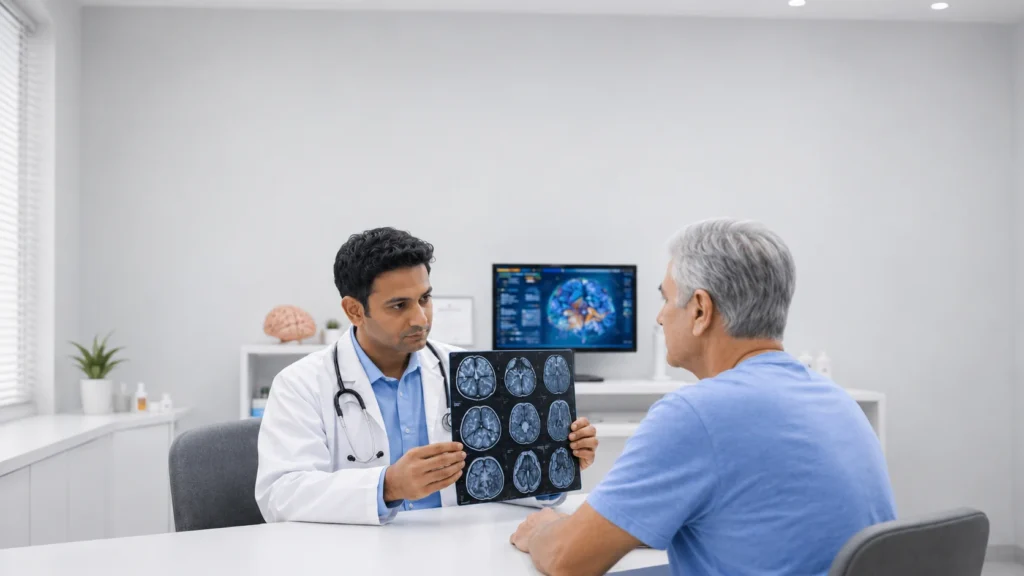
A CT scan is usually the first imaging test performed in suspected stroke cases. It is fast, widely available, and highly effective in detecting brain bleeding. The primary purpose of an emergency CT scan is to distinguish between ischemic stroke and hemorrhagic stroke, since treatments differ significantly. While early ischemic changes may not always appear immediately on CT, hemorrhagic stroke can be identified quickly, allowing doctors to avoid inappropriate clot-busting drugs.
4. MRI (Magnetic Resonance Imaging)
MRI provides more detailed images of brain tissue compared to CT scans. It is particularly useful in detecting early ischemic stroke, small strokes (lacunar stroke), brain stroke, and posterior circulation stroke. Diffusion-weighted MRI can identify brain damage within minutes of reduced blood flow. MRI is often used when CT results are unclear or when doctors need a more precise evaluation of brain injury.
5. Blood Tests
Blood tests play a supportive but crucial role in Stroke diagnosis. They help identify underlying causes and rule out other conditions that may mimic stroke symptoms. Tests typically include blood sugar levels (to rule out hypoglycemia), clotting profile, complete blood count, cholesterol levels, and markers of infection. Abnormal clotting results may influence treatment decisions, especially when considering thrombolytic therapy.
6. Carotid Ultrasound
Carotid ultrasound evaluates the carotid arteries in the neck, which supply blood to the brain. Narrowing or blockage in these arteries due to plaque buildup can lead to ischemic stroke. This non-invasive test uses sound waves to detect reduced blood flow or clots. Identifying carotid artery disease helps determine long-term stroke prevention strategies and may indicate the need for surgical intervention.
7. CT Angiography (CTA) and MR Angiography (MRA)
These advanced imaging techniques provide detailed views of blood vessels in the brain and neck. CTA uses contrast dye with CT scanning, while MRA uses MRI technology. These tests help identify blocked arteries, aneurysms, vascular malformations, or embolic sources. They are particularly useful in diagnosing large vessel occlusions, which may require mechanical thrombectomy.
8. Electrocardiogram (ECG)
An ECG evaluates the electrical activity of the heart. Certain heart conditions, such as atrial fibrillation, can cause blood clots that travel to the brain and result in embolic stroke. Detecting abnormal heart rhythms is essential in identifying the root cause of stroke and planning preventive treatment to reduce recurrence risk.
9. Echocardiogram
An echocardiogram uses ultrasound waves to examine heart structure and function. It helps detect blood clots, valve abnormalities, or structural defects that may have contributed to the stroke. This test is particularly important in younger patients or in cases where the stroke cause is not immediately obvious.
10. Cerebral Angiography
Cerebral angiography is a more invasive but highly detailed imaging technique used to visualize brain blood vessels. It is typically performed when doctors suspect aneurysms, vascular malformations, or complex hemorrhagic stroke cases. A catheter is inserted through an artery and guided to the brain vessels, where contrast dye is injected for imaging. It provides precise vascular mapping for surgical or interventional planning.
Why Early Intervention is Important in Stroke
Early intervention in Stroke is critical because brain cells begin to die within minutes when blood flow is blocked or a vessel ruptures, making rapid stroke diagnosis and stroke treatment essential to prevent permanent damage. In cases of ischemic stroke, early administration of clot-dissolving medication within the golden window (about 4.5 hours) can restore circulation and significantly reduce disability, while prompt management of hemorrhagic stroke can control bleeding and lower the risk of death. Recognizing stroke symptoms, brain stroke symptoms, or even mild Stroke symptoms early allows immediate medical response, improving survival rates and reducing complications such as paralysis, speech impairment, and cognitive decline.
How a Stroke Specialist Helps
1. Rapid Evaluation and Accurate Diagnosis
A Stroke specialist immediately evaluates stroke symptoms such as facial drooping, arm weakness, slurred speech, confusion, or vision problems to determine whether it is a true brain stroke or a condition that mimics stroke. Quick assessment is crucial because treatment decisions depend on identifying whether the patient has an ischemic stroke (blockage) or a hemorrhagic stroke (bleeding). The specialist ensures urgent brain imaging like CT scan or MRI is performed without delay. Accurate and fast stroke diagnosis reduces treatment delays and protects brain tissue from permanent damage.
2. Immediate Emergency Stroke Treatment
In cases of acute ischemic stroke, a stroke specialist determines eligibility for clot-dissolving medication (thrombolysis) within the critical 4.5-hour window. If a large artery is blocked, the specialist may recommend mechanical thrombectomy to physically remove the clot. For hemorrhagic stroke, the focus shifts to controlling bleeding, managing blood pressure, reversing blood thinners if necessary, and coordinating neurosurgical intervention. This early, targeted stroke treatment significantly improves survival and reduces disability.
3. Advanced Stroke Management Planning
Beyond emergency care, the stroke specialist creates a comprehensive stroke management plan tailored to the patient’s condition. This includes identifying the underlying cause—such as high blood pressure, diabetes, heart rhythm disorders, or carotid artery blockage—and initiating appropriate medications like antiplatelets, anticoagulants, cholesterol-lowering drugs, or blood pressure control therapy. Proper management prevents complications and reduces the risk of recurrent stroke.
4. Prevention of Recurrent Stroke
A key responsibility of a stroke specialist is secondary prevention. After stabilizing the patient, the specialist evaluates long-term risk factors and prescribes preventive strategies. Lifestyle modifications such as smoking cessation, diet changes, weight management, and exercise are emphasized. In patients with heart-related causes like atrial fibrillation, long-term anticoagulation may be required. Effective preventive care significantly lowers the likelihood of another stroke attack.
5. Coordinating Stroke Rehabilitation
Recovery does not end after hospital discharge. A Stroke specialist collaborates with a multidisciplinary team to initiate structured stroke rehabilitation, which may include physiotherapy, occupational therapy, speech therapy, and cognitive rehabilitation. Rehabilitation helps patients regain mobility, speech clarity, balance, and independence. Early and consistent rehabilitation improves outcomes in both ischemic stroke and hemorrhagic stroke patients.
6. Monitoring Complications and Recovery Progress
Stroke patients are at risk of complications such as swelling in the brain, seizures, infections, swallowing problems, and depression. A stroke specialist closely monitors these risks and adjusts treatment accordingly. Regular follow-up appointments help track recovery progress, optimize medications, and address any new or worsening stroke symptoms.
7. Patient and Family Education
Education is an essential part of Stroke care. A stroke specialist explains warning signs like mild stroke symptoms, teaches the FAST method for early recognition, and guides families on emergency response. Understanding how stroke happens and knowing when to seek help can save lives in the future. Clear communication empowers patients to actively participate in their recovery and long-term prevention plan.
Stroke Treatment at Plexus
At Plexus, stroke treatment is designed to deliver comprehensive and structured rehabilitation that supports recovery of physical movement, cognitive abilities, and communication skills. Each stroke patient receives an individualized treatment plan based on the type of stroke—whether ischemic stroke or hemorrhagic stroke—along with the severity of neurological impairment and functional limitations.
1. Physiotherapy
Physiotherapy focuses on restoring strength, coordination, and balance following a brain stroke. Structured exercise programs are developed to improve muscle activation, enhance joint mobility, and prevent stiffness or contractures. Interventions may include gait training to improve walking patterns, progressive resistance exercises to rebuild muscle strength, balance retraining to reduce fall risk, and neuromuscular stimulation to activate weakened muscles. This targeted approach supports improved mobility and greater independence in daily life.
2. Occupational Therapy
Occupational therapy aims to improve the ability to perform essential daily activities such as dressing, grooming, eating, and writing. Therapists assess fine motor skills, upper limb coordination, and functional limitations resulting from Stroke symptoms. Therapy programs may incorporate task-oriented training, adaptive techniques, assistive devices, and environmental modifications to enhance safety and independence. The goal is to help individuals regain confidence and functional self-sufficiency.
3. Cognitive Therapy
Cognitive rehabilitation addresses challenges related to memory, attention, reasoning, and executive function that can occur after a stroke attack. Structured exercises and evidence-based cognitive training programs are used to improve concentration, problem-solving skills, and mental processing speed. These interventions support better decision-making abilities and promote independence in social and occupational settings.
4. Speech and Language Therapy
Speech and language therapy supports recovery from communication and swallowing difficulties that may result from brain stroke. Comprehensive assessment identifies impairments in articulation, language comprehension, voice modulation, and swallowing function. Therapy may include targeted speech exercises, language retraining strategies, voice therapy, and safe swallowing techniques. These interventions aim to improve communication effectiveness while maintaining nutritional safety and quality of life.
Why Choose Plexus in India
Selecting the right centre can make a world of a difference to recovery outcomes. Here’s why Plexus stands out:
- Expertise: Since 2011, Plexus has specialised in neurological and regenerative rehabilitation, treating hundreds of thousands of patients and building a strong reputation in complex nerve‑injury care. Plexus specialists are experienced in both neurology and neuro‑surgery, offering the full spectrum of care under one roof.
- Facilities & Multidisciplinary Team: Plexus is India’s first ISO‑certified regenerative rehabilitation & research centre, equipped with state‑of‑the‑art diagnostic imaging, surgical theatres and dedicated rehabilitation suites. Plexus interdisciplinary team includes neurologists, neurosurgeons, physiotherapists, occupational therapists, pain specialists and regenerative medicine experts all collaborating to deliver integrated care.
- Patient Journey & Access: From first consultation to discharge and long‑term follow‑up, Plexus guides patients through every stage of recovery. Plexus supports both Indian and international patients, offering cost‑effective care without compromising quality. Comfortable outpatient programs, therapy and treatment planning, and accessible communication with Plexus doctors are part of Plexus commitment.
Ready to Begin?
Our centres in Bengaluru (HRBR Layout) and Hyderabad are open Monday to Saturday, 8:30 AM to 6:30 PM.
Other Disorders Treated at Plexus
At Plexus,expertise extends to offer comprehensive care for a variety of neurological and related conditions. Plexus provide specialized treatments for disorders such as, Brachial Plexus Injury , Spinocerebellar Ataxia, Sensory Processing Disorder (SPD), Cerebral Palsy, Multiple Sclerosis,Parkinson’s disease, Spinal Cord Injury, Motor Neuron Disease, Stroke, Autoimmune Conditions, Orthopedic Conditions, and Sports Injuries. Plexus multidisciplinary approach, incorporating therapies like Cell Therapy, Physiotherapy, Occupational Therapy, Aquatic Therapy, and Speech Therapy, ensures personalized care tailored to each condition, helping patients achieve improved mobility, function, and quality of life.
FAQs
What is the best treatment for stroke?
The best stroke treatment depends on the type of stroke. In ischemic stroke, clot-dissolving medication or mechanical thrombectomy is used to restore blood flow. In hemorrhagic stroke, treatment focuses on controlling bleeding, managing blood pressure, and sometimes surgery. Early intervention greatly improves outcomes.
What are the early stroke symptoms?
Common stroke symptoms include facial drooping, arm weakness, slurred speech, confusion, vision problems, and sudden loss of balance. Recognizing brain stroke symptoms early and seeking immediate medical care can prevent permanent damage.
How is stroke diagnosed?
Stroke diagnosis involves a neurological examination and imaging tests such as CT scan or MRI to determine whether the stroke is ischemic or hemorrhagic. Blood tests and heart evaluations may also be performed to identify underlying causes.
Can a mild stroke be serious?
Yes. Even mild stroke symptoms or a transient ischemic attack (mini stroke) can be warning signs of a major stroke. Immediate evaluation and proper stroke management are essential to reduce the risk of recurrence.
How long does stroke recovery take?
Recovery time varies depending on the severity of the brain stroke, the area affected, and how quickly treatment begins. With early stroke rehabilitation, many patients experience gradual improvement over weeks to months.
What therapies help in stroke rehabilitation?
Effective stroke rehabilitation may include physiotherapy to improve mobility, occupational therapy for daily activities, cognitive therapy for memory and attention, and speech therapy for communication and swallowing difficulties.