
What Is Psoriasis?
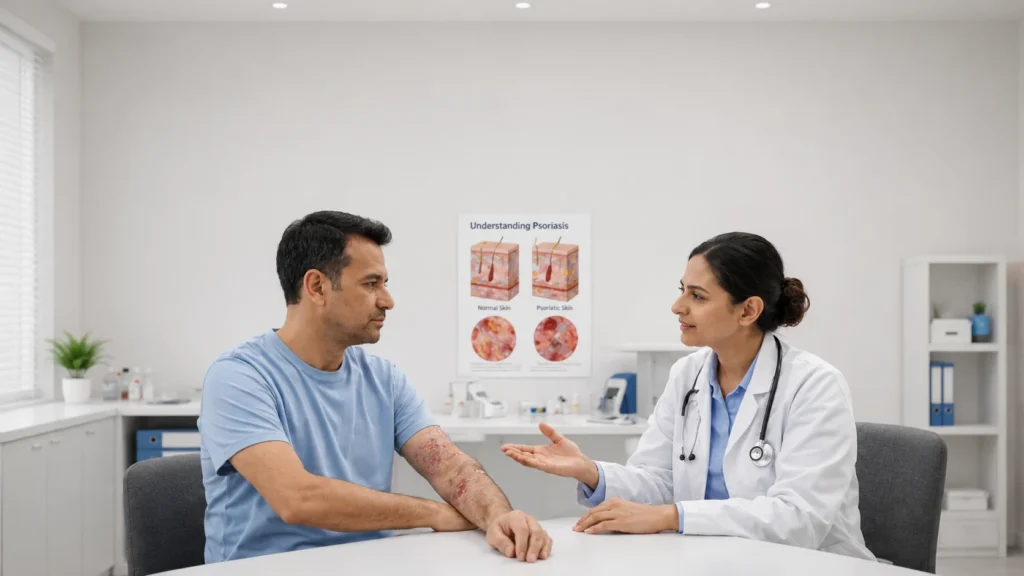
Psoriasis is a chronic Autoimmune Condition skin disorder that accelerates the life cycle of skin cells, leading to the rapid buildup of thick, scaly patches on the skin surface. These patches are often red, inflamed, itchy, and may cause discomfort or pain. The condition occurs due to an overactive immune response that mistakenly attacks healthy skin cells, triggering excessive cell production. Although psoriasis is not contagious, it is a long-term condition that requires structured medical management to control symptoms and reduce flare-ups.
Ready to Begin?
Our centres in Bengaluru (HRBR Layout) and Hyderabad are open Monday to Saturday, 8:30 AM to 6:30 PM.
Forms of Psoriasis
| Form of Psoriasis | Description | Common Symptoms | Commonly Affected Areas | Severity Level |
| Plaque Psoriasis | The most common form of psoriasis, characterized by raised, inflamed lesions covered with silvery-white scales. | Red patches, thick scales, itching, burning sensation | Scalp, elbows, knees, lower back | Mild to severe |
| Guttate Psoriasis | Often triggered by bacterial infections such as strep throat, more common in children and young adults. | Small, drop-shaped pink or red spots | Trunk, arms, legs | Mild to moderate |
| Inverse Psoriasis | Develops in skin folds where friction and sweating are common. | Smooth, shiny red patches without thick scaling | Under breasts, groin, armpits, buttocks | Mild to moderate |
| Pustular Psoriasis | A rare but serious form characterized by white pustules surrounded by red skin. | Blisters filled with pus, fever, chills (in severe cases) | Hands, feet, or widespread across body | Moderate to severe |
| Erythrodermic Psoriasis | A very rare and severe form that causes widespread redness and scaling across the body. | Intense redness, skin peeling, severe itching, pain | Entire body | Severe (medical emergency) |
| Scalp Psoriasis | Affects the scalp and may extend beyond the hairline. | Thick crusted plaques, flaking resembling dandruff, itching | Scalp, forehead, neck | Mild to severe |
| Nail Psoriasis | Affects fingernails and toenails, sometimes associated with psoriatic arthritis. | Nail pitting, discoloration, thickening, separation from nail bed | Fingernails and toenails | Mild to moderate |
| Psoriatic Arthritis | An inflammatory joint condition associated with psoriasis. | Joint pain, stiffness, swelling, nail changes | Joints (fingers, toes, spine) | Moderate to severe |
Causes of Psoriasis
Psoriasis develops due to a complex interaction between genetic, immune, and environmental factors. The condition is not caused by a single trigger; instead, multiple underlying mechanisms contribute to its onset and progression.
1. Immune System Dysfunction
Psoriasis is primarily an Autoimmune Conditions. The immune system mistakenly attacks healthy skin cells, triggering inflammation and rapid skin cell production. Normally, skin cells take about 28–30 days to renew, but in psoriasis, this process may occur within 3–5 days. This accelerated cycle leads to the accumulation of thick, scaly patches on the skin surface.
2. Genetic Predisposition
Genetics plays a significant role in psoriasis development. Individuals with a family history of psoriasis have a higher risk of developing the condition. Certain gene variations associated with immune regulation increase susceptibility. However, not everyone with these genetic markers develops psoriasis, indicating the involvement of additional triggers.
3. Environmental Triggers
External factors often act as triggers in genetically predisposed individuals. These include cold weather, pollution, skin injuries, and excessive sun exposure. Environmental influences can initiate the first episode or worsen existing symptoms.
4. Infections
Bacterial infections, particularly streptococcal throat infections, are strongly associated with guttate psoriasis. Viral infections may also stimulate immune system overactivity, leading to flare-ups.
5. Stress
Psychological stress is a well-recognized trigger. Stress hormones can influence immune system function and inflammatory pathways, potentially worsening symptoms or triggering new outbreaks.
6. Skin Injury (Koebner Phenomenon)
Physical trauma such as cuts, burns, insect bites, tattoos, or surgical wounds can lead to the development of psoriatic lesions at the site of injury. This reaction is known as the Koebner phenomenon.
7. Certain Medications
Some medications are known to trigger or aggravate psoriasis. These may include beta-blockers, lithium, antimalarial drugs, and certain anti-inflammatory medications. Medication-induced psoriasis requires careful medical evaluation.
8. Hormonal Changes
Hormonal fluctuations during puberty, pregnancy, or menopause may influence disease activity. Some individuals notice improvement during pregnancy and worsening after delivery.
9. Lifestyle Factors
Smoking, excessive alcohol consumption, obesity, and poor dietary habits contribute to inflammation and may increase the severity and frequency of flare-ups. Maintaining a healthy lifestyle plays a crucial role in disease control.
Symptoms of Psoriasis
Psoriasis symptoms vary depending on the type and severity of the condition. The disease commonly affects the skin but may also involve the nails and joints. Below is a detailed explanation of the key symptoms:
1. Red, Inflamed Patches of Skin
One of the most characteristic symptoms of psoriasis is the appearance of red or pink patches on the skin. These areas are caused by inflammation and increased blood flow to the affected region. The patches are often clearly defined and may gradually enlarge or merge with nearby lesions.
2. Thick, Silvery-White Scales
The rapid buildup of skin cells leads to thickened areas covered with silvery-white or grayish scales. These scales form because new skin cells accumulate faster than old ones can shed. The plaques may feel rough, dry, and raised above the surrounding skin.
3. Itching and Burning Sensation
Persistent itching is common in psoriasis and may range from mild irritation to intense discomfort. In some cases, a burning or stinging sensation accompanies the itching. Scratching can worsen inflammation and may lead to skin damage or infection.
4. Dry, Cracked Skin
Affected areas often become excessively dry and may crack or split. Severe cracking can cause bleeding and pain, particularly in areas exposed to friction or movement, such as elbows, knees, and hands.
5. Thickened or Ridged Nails
Psoriasis can affect fingernails and toenails, causing pitting (small dents), discoloration, thickening, or separation from the nail bed. Nail involvement may be an early indicator of psoriatic arthritis in some individuals.
6. Joint Pain and Stiffness
In some cases, psoriasis is associated with psoriatic arthritis, which causes inflammation in the joints. Symptoms include joint pain, swelling, stiffness (especially in the morning), and reduced range of motion. Without proper management, joint damage may progress.
7. Flaking of the Scalp
When psoriasis affects the scalp, it may resemble severe dandruff. Thick crusted plaques can form along the hairline, scalp, and behind the ears. Flaking may extend onto the forehead or neck in more pronounced cases.
8. Sensitivity and Skin Tenderness
The inflamed skin may become tender to touch. Sensitivity may increase in areas exposed to pressure, friction, or temperature changes.
Diagnosis of Psoriasis
Psoriasis is primarily diagnosed through clinical evaluation, supported by specific diagnostic procedures when required. Accurate diagnosis helps determine the type, severity, and most effective treatment approach.
1. Detailed Medical History
A comprehensive medical history is the first step in diagnosis. Information regarding symptom onset, duration, family history of psoriasis, recent infections, medication use, stress levels, and lifestyle factors is carefully evaluated. A history of joint pain or stiffness may indicate associated psoriatic arthritis.
2. Physical Examination
A thorough skin examination is conducted to assess the appearance, distribution, and characteristics of lesions. Typical findings include well-defined red plaques with silvery scales. The scalp, elbows, knees, lower back, nails, and skin folds are closely examined. Nail changes such as pitting or thickening are also assessed.
3. Dermatoscopy
Dermatoscopy is a non-invasive diagnostic tool that uses magnification and light to examine skin lesions in detail. It helps differentiate psoriasis from other skin conditions such as eczema, fungal infections, or dermatitis by identifying characteristic vascular and scaling patterns.
4. Skin Biopsy
In uncertain or atypical cases, a small skin sample may be taken for microscopic examination. A biopsy helps confirm the diagnosis by identifying hallmark features such as thickened epidermis, inflammatory cell infiltration, and abnormal keratinocyte proliferation.
5. Blood Investigations
Although psoriasis itself is not diagnosed through blood tests, laboratory investigations may be conducted to evaluate inflammation markers or rule out other conditions. Blood tests may also help assess associated conditions such as metabolic syndrome or autoimmune disorders.
6. Assessment for Psoriatic Arthritis
If joint symptoms are present, further evaluation is necessary. Imaging studies such as X-rays, ultrasound, or MRI may be recommended to assess joint inflammation and damage. Early identification of psoriatic arthritis is essential to prevent long-term complications.
7. Severity Assessment Scales
Standardized scoring systems such as the Psoriasis Area and Severity Index (PASI) or Body Surface Area (BSA) measurement may be used to determine disease severity. These tools help guide treatment decisions and monitor response to therapy over time.
Treatment for Psoriasis at Plexus
At Plexus, psoriasis management includes advanced regenerative cell therapy integrated with conventional dermatological care. Regenerative cell therapy focuses on immune modulation and repairing underlying inflammation pathways, offering a comprehensive approach to long-term symptom control and improved skin health.
1. Regenerative Cell Evaluation and Planning
Before therapy begins, a thorough assessment of medical history, symptom severity, and previous treatments is conducted. This evaluation ensures that regenerative cell therapy protocols are tailored to the condition’s presentation and expected response. By analyzing clinical findings alongside diagnostic reports, a personalized treatment roadmap is developed for optimal outcomes.
2. Preparation and Optimization
Preparation includes optimizing overall health to support the body’s response to regenerative cell treatment. Nutritional guidance, inflammation markers assessment, and wellness planning contribute to creating an internal environment that enhances therapeutic effects. This phase ensures better engagement of regenerative cells with the immune system and skin repair mechanisms.
3. Regenerative Cell Administration
Selected regenerative cells are administered using safe, evidence-based procedures. These cells work by interacting with the immune system and local inflammatory pathways, aiding in reduction of excessive immune activity that drives psoriasis flare-ups. The aim is to support tissue homeostasis and enhance the body’s capacity for regulated skin cell production.
4. Supportive Dermatological Care
While regenerative cell therapy targets immune regulation, supportive care such as topical treatments, moisturization regimens, and phototherapy may be incorporated based on clinical needs. Combining regenerative cell therapy with standard dermatology practices enhances relief from scaling, redness, and itching.
5. Monitoring and Follow-Up
Post-treatment monitoring is essential to assess response, track improvements in lesion appearance, and evaluate changes in itch intensity, skin texture, and overall quality of life. Scheduled follow-ups allow adjustment of therapy protocols and reinforcement of lifestyle recommendations that support sustained remission.
6. Long-Term Management and Lifestyle Support
Psoriasis is a chronic condition; long-term care strategies are critical. Stress management techniques, dietary optimization to reduce systemic inflammation, and educational support on identifying triggers all contribute to minimizing relapse frequency and severity. Regenerative cell therapy complements these strategies by creating a more balanced immune environment.
Why Choose Plexus in India
Expertise: Since 2011, Plexus has specialised in neurological and regenerative rehabilitation, treating hundreds of thousands of patients and earning a strong reputation in complex nerve‑injury care. Specialists at Plexus are highly experienced in both neurology and neurosurgery, providing a comprehensive spectrum of care within a single facility.
Facilities & Multidisciplinary Team: Plexus is India’s first ISO‑certified regenerative rehabilitation and research centre, featuring advanced diagnostic imaging, surgical theatres, and dedicated rehabilitation suites. The interdisciplinary team comprises neurologists, neurosurgeons, physiotherapists, occupational therapists, pain specialists, and regenerative medicine experts, all collaborating to deliver integrated patient care.
Patient Journey & Access: From the initial consultation through discharge and long-term follow-up, Plexus ensures guidance at every stage of recovery. Services accommodate both domestic and international patients, offering cost-effective care without compromising quality. Comfortable outpatient programs, structured therapy and treatment planning, and streamlined communication with medical specialists are integral components of the patient experience.
Ready to Begin?
Our centres in Bengaluru (HRBR Layout) and Hyderabad are open Monday to Saturday, 8:30 AM to 6:30 PM.
Other Disorders Treated at Plexus
At Plexus,expertise extends to offer comprehensive care for a variety of neurological and related conditions. Plexus provide specialized treatments for disorders such as, Brachial Plexus Injury , Spinocerebellar Ataxia, Sensory Processing Disorder (SPD), Cerebral Palsy, Multiple Sclerosis,Parkinson’s disease, Spinal Cord Injury, Motor Neuron Disease, Stroke, Autoimmune Conditions, Orthopedic Conditions, and Sports Injuries. Plexus multidisciplinary approach, incorporating therapies like Cell Therapy, Physiotherapy, Occupational Therapy, Aquatic Therapy, and Speech Therapy, ensures personalized care tailored to each condition, helping patients achieve improved mobility, function, and quality of life.
FAQs
What are the early warning signs of psoriasis?
Early signs may include small red patches with mild scaling, persistent itching, scalp flaking that resembles dandruff, or nail pitting. Early medical evaluation helps prevent progression and widespread flare-ups.
Are lifestyle changes important in psoriasis management?
Lifestyle modifications play a critical role. Stress control, maintaining a healthy weight, avoiding smoking, limiting alcohol intake, and following an anti-inflammatory diet can significantly reduce flare frequency.
Is psoriasis linked to other health conditions?
Psoriasis is associated with systemic inflammation and may increase the risk of metabolic syndrome, cardiovascular disease, and psoriatic arthritis. Regular monitoring supports early detection of related conditions.
How is disease severity measured in psoriasis?
Severity is typically assessed using Body Surface Area (BSA), Psoriasis Area and Severity Index (PASI), and evaluation of symptom impact on daily functioning. These tools help guide treatment decisions.
Can children develop psoriasis?
Yes, psoriasis can occur in children and adolescents. Guttate psoriasis is more commonly seen in younger age groups, often triggered by infections.
When should specialist consultation be considered?
Specialist consultation is recommended when symptoms are persistent, spreading, painful, associated with joint symptoms, or not responding to standard topical treatments. Early intervention improves long-term disease control.