
Cell therapy is more than just a ray of hope!
It may just be the answer (and cure) we have been waiting for. Regenerative medicine, as it is alternatively known, has been gaining significant ground in clinical testing and therapeutic applications. Because of this, medical practitioners are now recommending Cell therapy as a viable and effective treatment plan for several neurological conditions, cardiovascular ailments, bone and cartilage diseases, cancers, etc.
Through this blog, we will help you understand the role of Autologous Bone Marrow Derived in regenerative medicine.
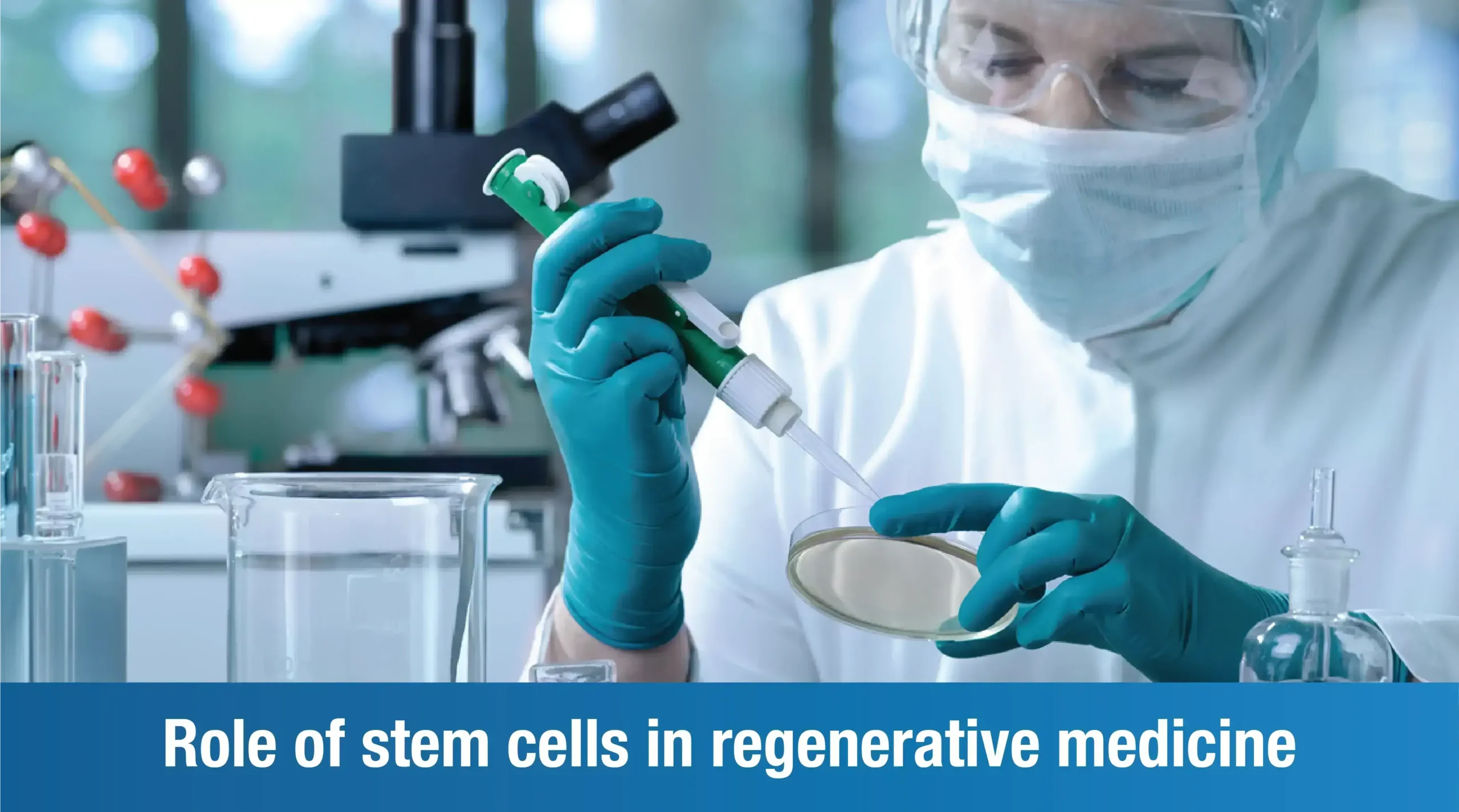
Regenerative medicine
Regenerative medicine aims to replace tissues and/or organs that are diseased or damaged by degenerative diseases, trauma, and congenital disorders. It fortifies the body’s ability to reengineer/rebuild cells, tissues, and organs (self-healing).
Types of regenerative therapy treatments
Presently, there are four types of regenerative therapy treatments that have shown remarkable results in the treatment of neurological, neurodegenerative, congenital, cardiovascular, bone-cartilage, and lifestyle diseases.
These are:
-
- Cell therapy
- Cartilage regeneration
- Platelet-Rich Plasma (PRP)
- Prolotherapy
For the purpose of this blog, we will focus on Cell therapy.
Regenerative Cells
Unspecialized cells of the human body are known as Regenerative Cells. They can transform and/or multiply into specialized cells.
Regenerative Cells procured from one part of the body can become/grow into other kinds of cells. They work to repair the body by generating healthy cells that can replace the cells damaged by disease.
Regenerative Cells are characterized by their prolonged divisional capacity and the extent of their ability to differentiate into functional cell types. Totipotent, pluripotent, and multipotent Regenerative Cells are capable of generating several lineages of Regenerative Cells.
Once the Regenerative Cells are identified and classified, their self-renewal and differentiation capacities may be determined. This will further ascertain the type of disease/disorder they may be used to treat.
The connection between Autologous Bone Marrow Derived Cells and regenerative medicine
Cell therapy aims to replace, repair or restore function of diseased, dysfunctional, and/or injured tissue by injecting Autologous Bone Marrow Derived Cells(or their derivatives). It modulates the body’s immune system and helps in reducing inflammation. Autologous Bone Marrow Derived Cells also secrete growth factors, and produce supporting cells that are capable of protecting damaged motor neurons from further damage and degeneration.
Owing to their ability to self-renew and differentiate, Autologous Bone Marrow Derived Cells have a critical role to play in regenerative medicine. Unlike traditional treatment methods that focus only on managing symptoms, regenerative medicine aims to restore function and amplify the body’s natural healing process. There are little to no side-effects in regenerative treatments, and most procedures are non-surgical, leading to quicker post-procedural recovery.
In the years to come, Cell therapy may become a viable alternative to organ transplantation too.
Best Cell therapy in Bangalore
Plexus Neuro and Cell Research Centre is ISO-certified and headed by India’s no. 1 neurologist and Regenerative Medicine specialist, Dr Na’eem Sadiq. We offer customized regenerative rehabilitation programs for diseases like Parkinson’s, Multiple Sclerosis, MND, Spinocerebellar Ataxia, Spinal Cord Injuries, Cerebral Palsy, Stroke, and Brachial Plexus Injury. Our patients have shown remarkable recovery in terms of mobility and function.
At Plexus, we use Autologous Mesenchymal Cells procured from the patient’s body to treat neurological and neurodegenerative conditions.
Autologous Mesenchymal Cells are adult regenerative cells with anti-inflammatory, immunomodulatory, self-renewal, cell-division, signaling, and differentiation properties. They can divide and develop into many specialized cell types in specific organs and/or tissues.
Autologous Mesenchymal Cells may be sourced from different types of tissue (from the patient’s body) like –
- Adipose (fat) tissue
- Bone marrow
- Blood
- Dental pulp
- Umbilical cord tissue
- Liver
- Skin
Injected Regenerative Cells have the potential to turn into neurons and replace the ones lost or damaged. In this way, they are capable of restoring neural function to a point. The transplantation procedure is safe, non-surgical, and absolutely risk-free! It is performed by Dr Na’eem Sadiq and his team of experienced Regenerative Medicine specialists.
If you or your loved one is suffering from a neurological condition, then you should definitely consider Cell therapy as part of your treatment plan. You have everything to gain!
Book an appointment with us today.
Call +91 89048 42087 | 080-2546 0886
080-2547 0886 | 080-2549 0886
FAQs
Which 3 types of Autologous Bone Marrow Derived Cells are candidates for regenerative medicine?
Autologus Mesenchymal Cells, Adult Regenerative Cells, and Induced Pluripotent Regenerative Cells may be used in regenerative medicine depending on the disease that is being treated.
Are regenerative cells Autologous Bone Marrow Derived Cells?
Regenerative Cells have self-renewal and regenerative properties. Regenerative cells is another term for Autologous Bone Marrow Derived Cells.
What is an example of Autologous Bone Marrow Derived Cells regeneration?
Cell Therapy can be prescribed to treat a range of neurological and neurodegenerative diseases. For example, Cell Therapy for motor neuron diseases involves injecting Autologous Bone Marrow Derived Cells to slow down the rate of neurodegeneration. These cells can self-renew, regenerate cells, and repair damaged tissue.
How are Autologous Bone Marrow Derived Cells used in regenerative medicine?
The self-renewability and differentiation properties of Autologous Bone Marrow Derived Cells make them an integral part of regenerative medicine. Injected Regenerative Cells work towards improving immunity, secrete growth factors, repair/restore damaged cells, and also increase functionality. This is the very essence of regenerative medicine.
What are the four major types of Regenerative Cells?
Embryonic-origin Regenerative Cells, Adult Regenerative cells, Induced Pluripotent Regenerative Cells, and Autologous Mesenchymal Cells are the four types of Regenerative Cells.
Who discovered Regenerative Cells?
Cellular biologist Ernest McCulloch, and biophysicist James Till discovered haematopoietic Regenerative Cells and their role in the formation of blood cells.
In 1998, American developmental biologist James Alexander Thomson derived the first human Embryonic Regenerative Cell line. He also derived Induced Pluripotent Regenerative Cells in 2007.