
What Is a Sports Injury?
A sports injury refers to damage caused to muscles, ligaments, tendons, bones, or joints during physical activity, exercise, or athletic performance. These injuries may result from sudden trauma, improper technique, overuse, inadequate warm-up, or repetitive strain over timeSports Injuries. can range from mild sprains and muscle strains to more serious conditions such as ligament tears, fractures, or joint dislocations, often requiring specialized medical evaluation and structured rehabilitation for complete recovery.
Ready to Begin?
Our centres in Bengaluru (HRBR Layout) and Hyderabad are open Monday to Saturday, 8:30 AM to 6:30 PM.
Types of Sports Injuries
| Type of Injury | Description | Common Causes | Commonly Affected Areas | Symptoms |
| Sprain | Stretching or tearing of ligaments (tissues connecting bones). | Sudden twisting, falls, improper landing. | Ankle, knee, wrist. | Pain, swelling, bruising, joint instability. |
| Strain | Overstretching or tearing of muscles or tendons. | Overexertion, improper warm-up, heavy lifting. | Hamstring, back, shoulder. | Muscle pain, weakness, spasms, limited movement. |
| Ligament Tear (e.g., ACL Injury) | Partial or complete tear of a major ligament. | High-impact sports, sudden direction change. | Knee. | Severe pain, swelling, instability, popping sound. |
| Tendonitis | Inflammation of a tendon due to repetitive stress. | Overuse, repetitive motion activities. | Shoulder, elbow, Achilles tendon. | Gradual pain, stiffness, tenderness. |
| Fracture | Break or crack in a bone. | Direct trauma, collision, fall. | Arm, leg, collarbone. | Intense pain, swelling, deformity, difficulty moving. |
| Dislocation | Bone forced out of its normal joint position. | Sudden impact, falls, contact sports. | Shoulder, finger, knee. | Visible deformity, severe pain, swelling. |
| Stress Fracture | Small crack in bone due to repetitive force. | Running, jumping, overtraining. | Foot, shin. | Localized pain worsening with activity. |
| Meniscus Tear | Tear in knee cartilage that cushions the joint. | Twisting movements, sudden stops. | Knee. | Locking sensation, swelling, joint pain. |
| Shin Splints | Inflammation of muscles and tissues around the shin bone. | Excessive running, improper footwear. | Lower leg (shin). | Dull aching pain along shin. |
| Rotator Cuff Injury | Damage to shoulder muscles and tendons. | Repetitive overhead movement. | Shoulder. | Weakness, pain during lifting or rotation. |
Causes of Sports Injuries
Overuse and Repetitive Stress
Overuse injuries develop when repetitive movements place continuous stress on muscles, tendons, ligaments, or bones without adequate recovery time. Activities such as running, swimming, tennis, or weight training can lead to micro-trauma in tissues. Over time, this repetitive strain may result in conditions like tendonitis, stress fractures, or muscle fatigue. Lack of rest between training sessions significantly increases the risk of chronic injury.
Poor Technique or Improper Form
Incorrect posture, faulty movement patterns, or improper sports technique can place abnormal stress on joints and soft tissues. For example, неправиль landing mechanics during jumping or incorrect lifting posture during strength training can strain ligaments and muscles. Continuous performance with improper form gradually weakens supportive structures and increases injury susceptibility.
Inadequate Warm-Up and Cool-Down
Skipping warm-up routines reduces muscle flexibility and joint mobility, making tissues more prone to tears and strains. Proper warm-up increases blood flow, improves elasticity, and prepares the neuromuscular system for activity. Similarly, failure to cool down may contribute to stiffness and delayed muscle recovery, raising the likelihood of subsequent injury.
Sudden Impact or Trauma
Contact sports, falls, or collisions can cause acute injuries such as fractures, ligament tears, or dislocations. Sudden external force applied to a joint or bone may exceed its structural capacity, leading to immediate damage. High-intensity sports like football, basketball, or cricket often involve rapid directional changes and physical contact, increasing trauma-related risk.
Muscle Imbalance and Weakness
Imbalance between opposing muscle groups can alter joint alignment and biomechanics. For instance, weak quadriceps or hamstrings may compromise knee stability. When certain muscles are underdeveloped or fatigued, surrounding structures compensate, leading to abnormal strain and eventual injury.
Lack of Conditioning and Flexibility
Poor overall fitness, limited flexibility, and insufficient strength reduce the body’s ability to tolerate physical stress. Tight muscles and stiff joints restrict range of motion, making strains and sprains more likely during sudden movements. Gradual conditioning programs are essential to prepare tissues for increased activity levels.
Improper Equipment or Footwear
Wearing unsuitable shoes, poorly fitted protective gear, or using incorrect sporting equipment can disrupt natural biomechanics. For example, inadequate footwear may lead to ankle instability or shin splints. Properly selected equipment supports alignment, shock absorption, and joint protection.
Overtraining and Inadequate Recovery
Excessive training intensity without adequate rest can cause cumulative tissue damage. Overtraining weakens immune response, reduces muscle repair capacity, and increases inflammation. Balanced training schedules that incorporate recovery periods help prevent fatigue-related injuries.
Environmental Factors
Uneven playing surfaces, slippery floors, extreme temperatures, or poor lighting can contribute to accidents and injuries. Environmental hazards may impair stability and reaction time, increasing the risk of falls or joint stress.
Previous Injury History
Prior injuries may leave residual weakness, reduced flexibility, or scar tissue formation. Without proper rehabilitation, previously injured areas remain vulnerable to reinjury. Structured rehabilitation and preventive strengthening programs reduce recurrence risk.
Symptoms of Sports Injuries
Pain
Pain is the most common symptom of a Sports Injuries. and may range from mild discomfort to severe, sharp sensations. Acute injuries often cause sudden and intense pain immediately after trauma, while overuse injuries may begin as dull aches that gradually worsen. Pain may increase with movement, pressure, or weight-bearing activities.
Swelling
Swelling occurs due to inflammation or fluid accumulation around the injured area. It can develop quickly after an acute injury such as a sprain or fracture, or gradually in chronic conditions like tendonitis. Swelling may restrict joint movement and indicate tissue damage beneath the surface.
Bruising or Discoloration
Bruising results from bleeding under the skin caused by damaged blood vessels. The affected area may appear red, purple, or blue and change color as healing progresses. Bruising often accompanies sprains, strains, and direct impact injuries.
Limited Range of Motion
Restricted movement is common when joints, muscles, or ligaments are injured. Stiffness or difficulty bending, straightening, or rotating a joint may signal inflammation, structural damage, or protective muscle tightening around the injured area.
Weakness
Muscle weakness may occur when tissues are strained or torn. The affected limb or joint may feel unstable or unable to bear normal loads. Weakness often indicates muscle damage, nerve involvement, or joint instability.
Instability
Joint instability refers to a feeling that a joint may “give way” during movement. This symptom is frequently associated with ligament injuries such as knee or ankle sprains. Instability increases the risk of further injury if not properly managed.
Stiffness
Stiffness may develop due to inflammation, muscle tightness, or joint irritation. It is often more noticeable after periods of rest or in the morning. Chronic stiffness can limit athletic performance and mobility.
Tenderness to Touch
Injured tissues often become sensitive or painful when pressed. Localized tenderness helps identify the exact site of injury and may suggest muscle strain, tendon inflammation, or bone stress.
Popping or Clicking Sensation
A popping sound at the time of injury may indicate ligament rupture or tendon damage. Persistent clicking or locking in a joint, especially the knee, may suggest cartilage or meniscus involvement.
Numbness or Tingling
Numbness, tingling, or a “pins and needles” sensation may occur if nerves are compressed or irritated during injury. This symptom requires careful evaluation, particularly if it persists or spreads beyond the injury site.
Diagnosis of Sports Injuries
Detailed Medical History
Diagnosis begins with a comprehensive review of symptoms, injury mechanism, training patterns, and previous injuries. Information about the type of sport, intensity of activity, duration of symptoms, and any past joint or muscle issues helps identify whether the injury is acute or related to overuse. Understanding progression of pain and functional limitations guides further evaluation.
Physical Examination
A structured physical assessment evaluates swelling, tenderness, bruising, deformity, and range of motion. Strength testing, ligament stability tests, and functional movement analysis help determine the severity of muscle, tendon, or ligament involvement. Comparison with the unaffected side provides insight into weakness or instability.
Range of Motion and Functional Testing
Active and passive movement assessments identify stiffness, restricted mobility, or pain during specific motions. Functional testing such as squatting, hopping, or sport-specific drills may be performed to evaluate joint stability and muscle coordination. These tests assist in detecting subtle biomechanical abnormalities.
X-Ray Imaging
X-rays are commonly used to assess bone integrity and rule out fractures, dislocations, or joint misalignment. Although soft tissues such as ligaments and tendons are not clearly visible on X-ray, this imaging modality is essential in acute trauma cases to exclude bone injury.
MRI (Magnetic Resonance Imaging)
MRI provides detailed visualization of soft tissues including ligaments, tendons, cartilage, and muscles. It is particularly useful for diagnosing ACL tears, meniscus injuries, rotator cuff damage, and stress-related bone injuries. MRI helps determine injury severity and guides treatment planning.
Ultrasound Examination
Musculoskeletal ultrasound offers real-time imaging of tendons, ligaments, and muscles. It is useful for identifying tendon tears, inflammation, and fluid collection. Dynamic ultrasound assessment allows observation of structures during movement, which can reveal instability or impingement.
CT Scan (Computed Tomography)
CT scans provide detailed cross-sectional images of bones and joints. This imaging technique is helpful in complex fractures, joint surface injuries, or cases requiring surgical planning. It offers more precision than standard X-rays for specific bone-related injuries.
Arthroscopy (Diagnostic Procedure)
In selected cases, minimally invasive arthroscopy may be used to directly visualize joint structures. A small camera is inserted into the joint to assess cartilage damage, ligament tears, or loose fragments. Arthroscopy can serve both diagnostic and therapeutic purposes.
Biomechanical and Gait Analysis
Advanced assessment of walking, running, or movement mechanics identifies abnormal stress patterns contributing to injury. Gait analysis evaluates alignment, muscle coordination, and weight distribution, helping in both diagnosis and prevention of recurrence.
Laboratory Tests (When Required)
In rare cases where infection, inflammation, or systemic conditions are suspected, blood tests or joint fluid analysis may be conducted. These tests help rule out underlying medical causes that may mimic sports-related injuries.
Who Is a Sports Injury Doctor?
A Sports Injuries doctor is a medical specialist trained in diagnosing, treating, and preventing injuries related to physical activity, exercise, and athletic performance. This specialist possesses expertise in musculoskeletal medicine, orthopaedics, rehabilitation, and performance optimization. Sports injury doctors manage conditions affecting muscles, ligaments, tendons, bones, and joints, focusing not only on pain relief but also on restoring strength, mobility, and safe return to sport.
How Does a Sports Injury Doctor Help?
Accurate Diagnosis
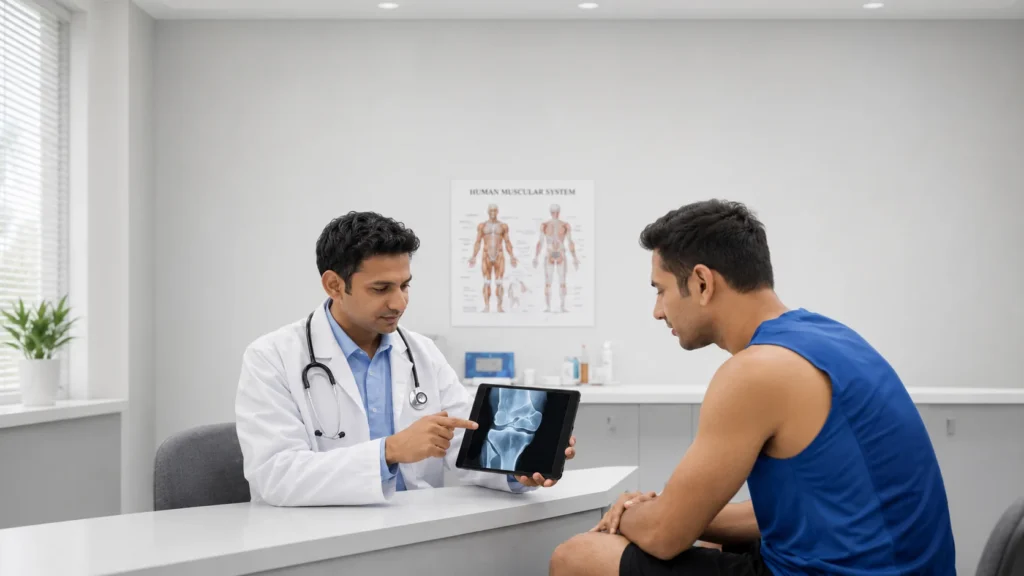
A sports injury doctor performs a thorough clinical evaluation to identify the exact structure involved, whether muscle, ligament, tendon, cartilage, or bone. Detailed physical examination combined with imaging such as X-rays, MRI, or ultrasound ensures clarity regarding the severity and type of injury. Accurate diagnosis prevents mismanagement and supports targeted treatment planning.
Individualized Treatment Planning
Every sports injury differs based on activity level, age, fitness status, and performance goals. A structured treatment plan is designed to address pain control, tissue healing, strength restoration, and functional recovery. This personalized approach reduces unnecessary interventions and improves overall outcomes.
Non-Surgical Management
Many sports-related injuries can be treated conservatively without surgery. A sports injury doctor may recommend physiotherapy, structured rehabilitation exercises, activity modification, bracing, and regenerative cells–based therapies in selected cases. These approaches aim to promote natural healing while maintaining joint stability and function.
Rehabilitation Guidance and Monitoring
Rehabilitation is a critical component of recovery. Progress is carefully monitored to ensure gradual improvement in flexibility, muscle strength, balance, and coordination. Adjustments are made to therapy intensity based on healing progress, minimizing the risk of reinjury or delayed recovery.
Surgical Management When Necessary
In cases of complete ligament tears, severe fractures, or persistent joint instability, surgical intervention may be advised. A sports injury doctor ensures appropriate pre-surgical planning and structured post-surgical rehabilitation to restore optimal movement and performance.
Injury Prevention and Risk Assessment
Evaluation of biomechanics, posture, muscle balance, and training patterns helps identify factors contributing to injury. Preventive strategies such as strength conditioning, flexibility training, and technique correction reduce recurrence risk and enhance athletic longevity.
Safe Return-to-Sport Planning
A phased return-to-sport protocol ensures adequate healing before full participation. Functional testing assesses strength, endurance, agility, and joint stability. Gradual progression minimizes complications and supports confident return to athletic activity.
Performance Optimization
Beyond recovery, focus may extend to improving neuromuscular coordination, power generation, and endurance capacity. Structured conditioning programs help athletes regain or exceed pre-injury performance levels while maintaining joint health.
Treatment for Sports Injury at Plexus
Plexus offers a structured and evidence-based approach for managing Sports Injuries. Treatment protocols focus on reducing pain, accelerating tissue healing, restoring strength, and ensuring safe return to sport.
1. Aquatic Therapy
Aquatic therapy utilizes the therapeutic properties of water to promote safe and controlled rehabilitation. Water buoyancy reduces joint stress, allowing early movement without excessive load on injured tissues. Hydrostatic pressure helps decrease swelling and improves circulation, while water resistance supports gradual muscle strengthening. This therapy is particularly beneficial for ligament injuries, post-surgical rehabilitation, and weight-bearing joint conditions.
2. Physiotherapy
Physiotherapy forms the foundation of sports injury rehabilitation. Treatment includes manual therapy, stretching, strengthening exercises, neuromuscular re-education, balance training, and sport-specific conditioning. Structured physiotherapy restores joint mobility, corrects muscle imbalances, improves flexibility, and enhances overall functional performance. Progressive rehabilitation programs are tailored to injury severity and athletic goals.
3. Regenerative Cell Therapy
In selected cases, regenerative cell therapy may be recommended to support tissue repair and healing. This approach focuses on enhancing the body’s natural recovery mechanisms, particularly in tendon, ligament, and cartilage injuries. When clinically indicated, autologous mesenchymal cells may be utilized under strict medical protocols. Regenerative therapy is integrated with rehabilitation to optimize recovery timelines and functional outcomes.
Why Choose Plexus in India
Selecting the right centre can make a world of a difference to recovery outcomes. Here’s why Plexus stands out:
- Expertise: Since 2011, Plexus has specialised in neurological and regenerative rehabilitation, treating hundreds of thousands of patients and building a strong reputation in complex nerve‑injury care. Plexus specialists are experienced in both neurology and neuro‑surgery, offering the full spectrum of care under one roof.
- Facilities & Multidisciplinary Team: Plexus is India’s first ISO‑certified regenerative rehabilitation & research centre, equipped with state‑of‑the‑art diagnostic imaging, surgical theatres and dedicated rehabilitation suites. Plexus interdisciplinary team includes neurologists, neurosurgeons, physiotherapists, occupational therapists, pain specialists and regenerative medicine experts all collaborating to deliver integrated care.
- Patient Journey & Access: From first consultation to discharge and long‑term follow‑up, Plexus guides patients through every stage of recovery. Plexus supports both Indian and international patients, offering cost‑effective care without compromising quality. Comfortable outpatient programs, therapy and treatment planning, and accessible communication with Plexus doctors are part of Plexus commitment.
Comprehensive Sports Injury Care at Plexus
Effective Sports Injuries management requires accurate diagnosis, structured rehabilitation, and advanced therapeutic support. A multidisciplinary approach combining Aquatic Therapy, Physiotherapy, and regenerative cell therapy ensures optimal tissue healing, strength restoration, and performance recovery. Plexus delivers evidence-based treatment protocols tailored to athletes, fitness enthusiasts, and active individuals. The focus remains on long-term joint stability, injury prevention, and safe return to sport with improved functional capacity.
Ready to Begin?
Our centres in Bengaluru (HRBR Layout) and Hyderabad are open Monday to Saturday, 8:30 AM to 6:30 PM.
Other Disorders Treated at Plexus
At Plexus,expertise extends to offer comprehensive care for a variety of neurological and related conditions. Plexus provide specialized treatments for disorders such as, Brachial Plexus Injury , Spinocerebellar Ataxia, Sensory Processing Disorder (SPD), Cerebral Palsy, Multiple Sclerosis,Parkinson’s disease, Spinal Cord Injury, Motor Neuron Disease, Stroke, Autoimmune Conditions, Orthopedic Conditions, and Sports Injuries. Plexus multidisciplinary approach, incorporating therapies like Cell Therapy, Physiotherapy, Occupational Therapy, Aquatic Therapy, and Speech Therapy, ensures personalized care tailored to each condition, helping patients achieve improved mobility, function, and quality of life.
FAQs
What is the most common sports injury treated at Plexus?
Ligament sprains, muscle strains, tendon injuries, meniscus tears, and shoulder injuries are among the most frequently managed conditions.
Can sports injuries heal without surgery?
Yes. Many injuries respond well to physiotherapy and structured rehabilitation. Surgical intervention is considered only in severe or unstable cases.
How long does recovery from a sports injury take?
Recovery depends on injury severity. Minor strains may heal within weeks, while ligament tears or post-surgical cases may require several months of rehabilitation.
What is regenerative cell therapy in sports injuries?
Regenerative cell therapy supports natural tissue repair and may be used in selected ligament, tendon, or cartilage injuries under medical supervision.
Is Aquatic Therapy useful after surgery?
Yes. Aquatic Therapy allows early movement with reduced joint stress, supporting faster and safer post-surgical rehabilitation.
When can sports activity be resumed after treatment?
Return-to-sport decisions are based on functional testing, strength recovery, and joint stability to minimize reinjury risk.