
What is Motor Neuron Disease (MND)?
Motor Neuron Disease (MND) is a progressive neurological disorder that affects the motor neurons responsible for controlling voluntary muscle movements. The Motor Neuron Disease meaning refers to a group of conditions involving upper motor neuron and lower Motor Neuron Disease, leading to gradual muscle weakness, stiffness, and loss of coordination. Motor Neuron Disease types include conditions that impact either upper Motor Neuron Disease, lower Motor Neuron Disease, or both, resulting in upper and lower Motor Neuron Disease involvement. Motor Neuron Disease causes may include genetic factors, abnormal protein accumulation, and environmental influences, although the exact Motor Neuron Disease cause often remains unclear. Early recognition of Motor Neuron Disease symptoms and timely Motor Neuron Disease diagnosis are essential for effective Motor Neuron Disease treatment and improved quality of life.
Ready to Begin?
Our centres in Bengaluru (HRBR Layout) and Hyderabad are open Monday to Saturday, 8:30 AM to 6:30 PM.
Motor Neuron Disease Types
| Motor Neuron Disease Types | Motor Neuron Disease Classification | Neuron Involvement | Key Motor Neuron Disease Symptoms | Common Motor Neuron Disease Causes | Motor Neuron Disease Treatment Approach |
| Amyotrophic Lateral Sclerosis (ALS) | Classic Motor Neuron Disease (MND) | Upper and lower Motor Neuron Disease | Progressive muscle weakness, stiffness, twitching, speech and swallowing difficulty | Genetic mutations, abnormal protein aggregation, oxidative stress | Multidisciplinary Motor Neuron Disease treatment including medication, rehabilitation, respiratory care, and regenerative cell therapy |
| Primary Lateral Sclerosis (PLS) | Upper Motor Neuron Disease | Upper Motor Neuron Disease only | Muscle stiffness, spasticity, slow movements, exaggerated reflexes | Often idiopathic; possible neurodegenerative mechanisms | Symptom-focused Motor Neuron Disease treatment, physiotherapy, spasticity management |
| Progressive Muscular Atrophy (PMA) | Lower Motor Neuron Disease | Lower Motor Neuron Disease only | Muscle wasting, reduced reflexes, weakness, fasciculations | Degeneration of spinal motor neurons; sometimes genetic | Supportive treatment of Motor Neuron Disease with rehabilitation and muscle-strength preservation |
| Progressive Bulbar Palsy (PBP) | Bulbar-onset Motor Neuron Disease | Upper and lower Motor Neuron Disease (bulbar region) | Difficulty speaking, swallowing problems, tongue weakness | Neurodegeneration affecting bulbar motor neurons | Speech therapy, nutritional support, respiratory management, regenerative cell therapy |
| Spinal Muscular Atrophy (Adult Form) | Genetic lower Motor Neuron Disease | Lower Motor Neuron Disease | Gradual muscle weakness, especially proximal muscles | Inherited genetic mutation affecting motor neurons | Genetic-based management, supportive therapy, and structured rehabilitation |
Causes Motor Neuron Disease
Motor Neuron Disease causes are complex and often multifactorial. The exact Motor Neuron Disease cause may vary depending on the Motor Neuron Disease types and whether the condition involves upper Motor Neuron Disease, lower Motor Neuron Disease, or upper and lower Motor Neuron Disease. Below are the major factors associated with causes Motor Neuron Disease explained in detail.
- Genetic Mutations
Genetic abnormalities are a well-established Motor Neuron Disease cause in familial cases. Certain inherited gene mutations disrupt normal motor neuron function, leading to progressive degeneration. These mutations can interfere with protein processing, cellular transport, and nerve cell survival. Inherited forms of Motor Neuron Disease (MND) may present earlier and often affect both upper motor neuron and lower Motor Neuron Disease pathways. Genetic factors are particularly relevant in specific Motor Neuron Disease types, and genetic testing may support Motor Neuron Disease diagnosis in suspected familial cases.
- Abnormal Protein Accumulation
One of the major Motor Neuron Disease causes involves the accumulation of misfolded or abnormal proteins inside nerve cells. These toxic protein aggregates impair cellular function and eventually lead to motor neuron death. This process is commonly observed in upper and lower Motor Neuron Disease patterns such as ALS. The disruption of normal protein clearance mechanisms plays a central role in neurodegeneration and progression of Motor Neuron Disease symptoms.
- Oxidative Stress
Oxidative stress occurs when there is an imbalance between free radicals and the body’s antioxidant defenses. Excessive oxidative damage harms motor neurons, contributing to degeneration. This mechanism is considered a significant Motor Neuron Disease cause in sporadic cases. Damage caused by oxidative stress affects both upper Motor Neuron Disease and lower Motor Neuron Disease components, accelerating symptom progression.
- Glutamate Excitotoxicity
Excess levels of glutamate, a neurotransmitter in the brain, may overstimulate motor neurons and cause cellular injury. This process, known as excitotoxicity, leads to progressive nerve damage. Glutamate imbalance is one of the biological explanations behind Motor Neuron Disease causes and is particularly associated with upper and lower Motor Neuron Disease involvement. Targeted medical therapy often aims to reduce excitotoxic damage as part of Motor Neuron Disease treatment.
- Immune System Dysfunction
Abnormal immune responses may contribute to inflammation around motor neurons. Chronic neuroinflammation can damage nerve cells and worsen Motor Neuron Disease symptoms. Immune-mediated mechanisms are being actively studied to better understand Motor Neuron Disease classification and progression patterns across different Motor Neuron Disease types.
- Mitochondrial Dysfunction
Mitochondria are responsible for producing cellular energy. Dysfunction in these structures can impair energy supply to motor neurons, leading to degeneration. Mitochondrial abnormalities are considered an important Motor Neuron Disease cause, particularly in cases involving progressive muscle weakness seen in lower Motor Neuron Disease.
- Environmental and Toxin Exposure
Exposure to environmental toxins, heavy metals, pesticides, or industrial chemicals has been proposed as a contributing factor in some sporadic cases. While not definitively proven, environmental triggers may interact with genetic susceptibility to initiate motor neuron damage. This highlights the multifactorial nature of Motor Neuron Disease causes.
- Aging and Cellular Degeneration
Increasing age is a significant risk factor for Motor Neuron Disease (MND). Age-related cellular wear and reduced neuronal repair capacity can increase vulnerability to degeneration. As a result, Motor Neuron Disease symptoms often develop later in adulthood, although onset varies across Motor Neuron Disease types.
Symptoms of Motor Neuron Disease
Motor Neuron Disease (MND) is a progressive neurological disorder in which Motor Neuron Disease symptoms gradually worsen over time. The pattern of symptoms depends on whether upper Motor Neuron Disease, lower Motor Neuron Disease, or upper and lower Motor Neuron Disease involvement is present. Early Motor Neuron Disease diagnosis often depends on recognizing subtle clinical changes.
- Progressive Muscle Weakness
One of the earliest and most common Motor Neuron Disease symptoms is progressive muscle weakness. Weakness may begin in the hands, legs, or bulbar muscles and gradually spread to other regions. In upper Motor Neuron Disease, stiffness accompanies weakness, while in lower Motor Neuron Disease, weakness is more associated with muscle wasting. In upper and lower Motor Neuron Disease forms, both features may appear together. This symptom significantly impacts mobility and daily activities.
- Muscle Stiffness and Spasticity
Muscle stiffness is more pronounced in upper Motor Neuron Disease. Increased muscle tone, tightness, and exaggerated reflexes are characteristic features. Spasticity can cause difficulty with walking, coordination, and fine motor tasks. These changes help clinicians distinguish upper motor neuron and lower Motor Neuron Disease patterns during Motor Neuron Disease diagnosis.
- Muscle Wasting (Atrophy)
Muscle wasting is a hallmark of lower Motor Neuron Disease. As motor neurons degenerate, muscles lose nerve supply and gradually shrink. Visible thinning of the arms, legs, or tongue may occur. In combined upper and lower Motor Neuron Disease types, atrophy often develops alongside stiffness, reflecting widespread motor neuron involvement.
- Muscle Twitching (Fasciculations)
Involuntary muscle twitching, known as fasciculations, is a frequent Motor Neuron Disease symptom. These small, spontaneous contractions occur due to unstable lower motor neurons. Fasciculations are more commonly associated with lower Motor Neuron Disease but may be present in mixed Motor Neuron Disease types as well.
- Difficulty Speaking (Dysarthria)
Speech difficulties develop when Motor Neuron Disease affects bulbar muscles. Slurred or slow speech may indicate involvement of both upper and lower Motor Neuron Disease pathways controlling facial and throat muscles. This symptom is particularly noticeable in certain Motor Neuron Disease types that primarily affect the bulbar region.
- Difficulty Swallowing (Dysphagia)
Swallowing impairment is another serious Motor Neuron Disease symptom. Weakness of throat muscles increases the risk of choking and aspiration. In advanced Motor Neuron Disease (MND), nutritional status may decline due to swallowing challenges, requiring specialized management as part of Motor Neuron Disease treatment.
- Breathing Difficulties
Respiratory muscle weakness can occur as the disease progresses. Involvement of the diaphragm and chest muscles leads to shortness of breath, fatigue, and reduced lung capacity. Respiratory symptoms are more common in upper and lower Motor Neuron Disease forms such as ALS and require early monitoring.
- Impaired Coordination and Balance
As motor neurons deteriorate, coordination becomes compromised. Individuals may experience frequent falls, difficulty climbing stairs, or challenges with fine motor skills. This symptom can appear in both upper Motor Neuron Disease and lower Motor Neuron Disease presentations.
- Emotional and Cognitive Changes
Although primarily a motor disorder, some Motor Neuron Disease types may involve cognitive or behavioral changes. Emotional lability, such as sudden laughing or crying, can occur due to upper Motor Neuron Disease involvement affecting brain pathways responsible for emotional control.
Motor Neuron Disease Diagnosis
Motor Neuron Disease diagnosis is a structured and comprehensive process because no single test can definitively confirm Motor Neuron Disease (MND). Diagnosis focuses on identifying upper Motor Neuron Disease and lower Motor Neuron Disease involvement, ruling out other neurological conditions, and classifying the specific Motor Neuron Disease types. Early and accurate Motor Neuron Disease diagnosis plays a crucial role in planning appropriate Motor Neuron Disease treatment.
- Detailed Clinical Evaluation
The foundation of Motor Neuron Disease diagnosis begins with a thorough neurological examination. A neurologist evaluates muscle strength, tone, reflexes, coordination, speech, and swallowing ability. Signs of upper Motor Neuron Disease include spasticity and exaggerated reflexes, while lower Motor Neuron Disease presents with muscle wasting and reduced reflexes. Identifying upper and lower Motor Neuron Disease features helps determine the Motor Neuron Disease classification and guides further investigations.
- Electromyography (EMG)
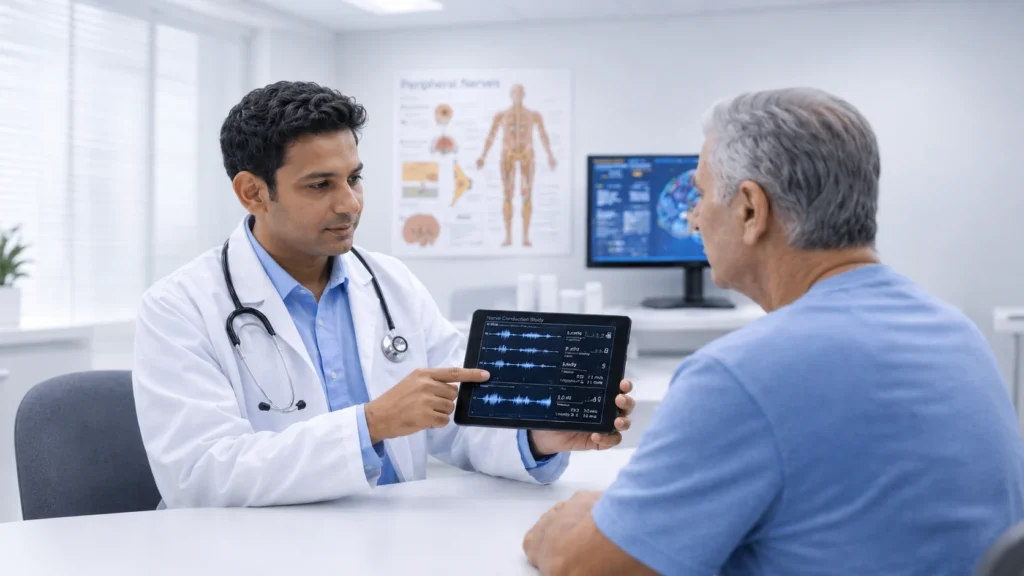
Electromyography is one of the most important tests in Motor Neuron Disease diagnosis. EMG measures electrical activity in muscles and detects abnormalities caused by lower Motor Neuron Disease. It helps identify ongoing nerve degeneration, even in muscles that may not yet show obvious weakness. EMG findings are essential in differentiating Motor Neuron Disease types and confirming widespread motor neuron involvement.
- Nerve Conduction Studies (NCS)
Nerve conduction studies assess how efficiently electrical signals travel along peripheral nerves. In Motor Neuron Disease (MND), nerve conduction may appear relatively preserved compared to other neuropathies. This distinction helps rule out conditions that mimic Motor Neuron Disease symptoms. NCS supports the overall Motor Neuron Disease diagnosis by excluding alternative causes of weakness.
- Magnetic Resonance Imaging (MRI)
MRI scans of the brain and spinal cord are performed to exclude structural abnormalities such as tumors, cervical spine compression, or multiple sclerosis. Although MRI does not directly confirm Motor Neuron Disease cause, it helps rule out other disorders that may present with similar upper Motor Neuron Disease or lower Motor Neuron Disease signs. Imaging is a critical step in accurate Motor Neuron Disease classification.
- Blood and Laboratory Tests
Blood tests are conducted to exclude metabolic, infectious, autoimmune, or nutritional causes of muscle weakness. Since Motor Neuron Disease causes are often unclear, laboratory testing helps eliminate treatable conditions that resemble Motor Neuron Disease symptoms. These investigations support differential diagnosis before confirming Motor Neuron Disease types.
- Genetic Testing
In cases with a family history, genetic testing may be recommended. Certain inherited mutations are linked to specific Motor Neuron Disease types. Identifying a genetic Motor Neuron Disease cause assists in confirming diagnosis and understanding prognosis. Genetic counseling may also be advised for affected families.
- Pulmonary Function Testing
Respiratory evaluation is important in advanced Motor Neuron Disease (MND). Pulmonary function tests measure lung capacity and breathing strength, especially in upper and lower Motor Neuron Disease forms that affect respiratory muscles. Early detection of respiratory involvement allows timely intervention as part of Motor Neuron Disease treatment.
- Diagnostic Criteria and Classification
Motor Neuron Disease diagnosis is ultimately based on established clinical criteria that confirm progressive degeneration of upper motor neuron and lower Motor Neuron Disease pathways. The classification of Motor Neuron Disease depends on symptom distribution, progression pattern, and diagnostic findings. Accurate Motor Neuron Disease classification ensures targeted and individualized Motor Neuron Disease treatment planning.
Motor Neuron Disease Doctor
A Motor Neuron Disease doctor is a highly trained neurologist specializing in the diagnosis, classification, and management of Motor Neuron Disease (MND). Because Motor Neuron Disease types vary and may involve upper Motor Neuron Disease, lower Motor Neuron Disease, or upper and lower Motor Neuron Disease patterns, expert supervision is essential for accurate evaluation and long-term care planning. Comprehensive management requires a multidisciplinary approach coordinated by an experienced Motor Neuron Disease doctor.
How Motor Neuron Disease Doctor Help
- Expertise in Motor Neuron Disease Types
Different Motor Neuron Disease types require individualized care strategies. A Motor Neuron Disease doctor evaluates whether the condition primarily involves upper Motor Neuron Disease, lower Motor Neuron Disease, or combined upper and lower Motor Neuron Disease. Accurate classification helps determine prognosis and guides Motor Neuron Disease treatment planning. Understanding the differences between these patterns is essential for effective symptom management.
- Understanding Motor Neuron Disease Causes
Motor Neuron Disease causes may include genetic mutations, abnormal protein accumulation, oxidative stress, immune mechanisms, or environmental triggers. A Motor Neuron Disease doctor evaluates potential Motor Neuron Disease cause factors, especially in familial cases. Genetic testing and counseling may be recommended when hereditary Motor Neuron Disease types are suspected.
- Planning Motor Neuron Disease Treatment
Motor Neuron Disease treatment focuses on slowing progression, managing symptoms, and improving quality of life. A Motor Neuron Disease doctor coordinates medication management, rehabilitation therapy, nutritional planning, and respiratory monitoring. In advanced care settings, regenerative cell therapy protocols may be considered to support neuronal function and reduce inflammation as part of comprehensive Motor Neuron Disease treatment in India.
- Monitoring Disease Progression
Regular follow-up is critical in Motor Neuron Disease (MND). A Motor Neuron Disease doctor tracks changes in muscle strength, breathing capacity, swallowing ability, and mobility. Monitoring upper motor neuron and lower Motor Neuron Disease progression allows timely adjustments in treatment strategies and supportive care.
- Multidisciplinary Care Coordination
Effective Motor Neuron Disease treatment requires collaboration among physiotherapists, occupational therapists, speech therapists, respiratory specialists, and nutrition experts. A Motor Neuron Disease doctor oversees this multidisciplinary team to ensure coordinated care. This integrated model helps manage Motor Neuron Disease symptoms and supports functional independence for as long as possible.
Motor Neuron Disease Treatment at Plexus
Motor Neuron Disease (MND) requires a comprehensive and multidisciplinary treatment strategy because Motor Neuron Disease symptoms progressively affect mobility, speech, swallowing, and respiratory function. Since Motor Neuron Disease types may involve upper Motor Neuron Disease, lower Motor Neuron Disease, or upper and lower Motor Neuron Disease patterns, treatment is customized according to Motor Neuron Disease classification and stage of progression. At Plexus, Motor Neuron Disease treatment focuses on preserving function, slowing decline, and improving quality of life.
Physiotherapy plays a central role in Motor Neuron Disease treatment. In upper Motor Neuron Disease, therapy focuses on reducing spasticity, improving flexibility, and maintaining joint mobility. In lower Motor Neuron Disease, strengthening unaffected muscle groups and preventing muscle wasting become priorities. For individuals with upper and lower Motor Neuron Disease involvement, physiotherapy programs are carefully designed to maintain posture, balance, coordination, and mobility while preventing contractures. Regular therapy helps manage Motor Neuron Disease symptoms and supports functional independence.
Occupational therapy helps individuals adapt to daily challenges caused by Motor Neuron Disease (MND). As progressive muscle weakness affects routine activities, therapists recommend assistive devices and environmental modifications to enhance safety and independence. In both upper motor neuron and lower Motor Neuron Disease cases, occupational therapy focuses on energy conservation, hand function improvement, and adaptive techniques for dressing, eating, and writing. This approach ensures improved quality of life despite advancing Motor Neuron Disease symptoms.
Speech therapy is essential when Motor Neuron Disease affects bulbar muscles responsible for speaking and swallowing. Slurred speech and difficulty swallowing are common Motor Neuron Disease symptoms in certain Motor Neuron Disease types. Speech-language pathologists provide exercises to strengthen oral muscles, improve clarity of speech, and reduce aspiration risk. Early intervention supports communication abilities and nutritional safety as part of comprehensive Motor Neuron Disease treatment.
Regenerative Cell therapy, specifically regenerative cell therapy, is incorporated as part of advanced Motor Neuron Disease treatment in specialized centers. This therapy aims to support neuronal survival, reduce inflammation, and promote repair mechanisms within the nervous system. Protocols using autologous mesenchymal cells are implemented under strict clinical supervision. Regenerative cell therapy is designed to complement rehabilitation strategies and may help stabilize Motor Neuron Disease progression when integrated with physiotherapy and supportive care.
Why Choose Plexus in India
Selecting the right centre can make a world of a difference to recovery outcomes. Here’s why Plexus stands out:
- Expertise: Since 2011, Plexus has specialised in neurological and regenerative rehabilitation, treating hundreds of thousands of patients and building a strong reputation in complex nerve‑injury care. Plexus specialists are experienced in both neurology and neuro‑surgery, offering the full spectrum of care under one roof.
- Facilities & Multidisciplinary Team: Plexus is India’s first ISO‑certified regenerative rehabilitation & research centre, equipped with state‑of‑the‑art diagnostic imaging, surgical theatres and dedicated rehabilitation suites. Plexus interdisciplinary team includes neurologists, neurosurgeons, physiotherapists, occupational therapists, pain specialists and regenerative medicine experts all collaborating to deliver integrated care.
- Patient Journey & Access: From first consultation to discharge and long‑term follow‑up, Plexus guides patients through every stage of recovery. Plexus supports both Indian and international patients, offering cost‑effective care without compromising quality. Comfortable outpatient programs, therapy and treatment planning, and accessible communication with Plexus doctors are part of Plexus commitment.
Ready to Begin?
Our centres in Bengaluru (HRBR Layout) and Hyderabad are open Monday to Saturday, 8:30 AM to 6:30 PM.
Other Disorders Treated at Plexus
At Plexus,expertise extends to offer comprehensive care for a variety of neurological and related conditions. Plexus provide specialized treatments for disorders such as, Brachial Plexus Injury , Spinocerebellar Ataxia, Sensory Processing Disorder (SPD), Cerebral Palsy, Multiple Sclerosis,Parkinson’s disease, Spinal Cord Injury, Motor Neuron Disease, Stroke, Autoimmune Conditions, Orthopedic Conditions, and Sports Injuries. Plexus multidisciplinary approach, incorporating therapies like Cell Therapy, Physiotherapy, Occupational Therapy, Aquatic Therapy, and Speech Therapy, ensures personalized care tailored to each condition, helping patients achieve improved mobility, function, and quality of life.
FAQs
What is Motor Neuron Disease (MND)? Motor Neuron Disease (MND) is a progressive neurological disorder that damages motor neurons controlling voluntary muscle movements. The Motor Neuron Disease meaning includes a group of conditions affecting upper Motor Neuron Disease, lower Motor Neuron Disease, or upper and lower Motor Neuron Disease pathways, leading to muscle weakness and functional decline.
Who is the best doctor for Motor Neuron Disease? The best doctor for Motor Neuron Disease is a neurologist experienced in managing different Motor Neuron Disease types. Expertise in Motor Neuron Disease diagnosis, classification of Motor Neuron Disease, and multidisciplinary Motor Neuron Disease treatment is essential for optimal care. Plexus provides specialized neurological supervision with structured rehabilitation support.
What are the main Motor Neuron Disease symptoms? Motor Neuron Disease symptoms include progressive muscle weakness, stiffness, muscle wasting, twitching, difficulty speaking, trouble swallowing, and breathing challenges. Symptoms vary depending on whether upper Motor Neuron Disease, lower Motor Neuron Disease, or combined upper and lower Motor Neuron Disease involvement is present.
What are the Motor Neuron Disease causes? Motor Neuron Disease causes may include genetic mutations, abnormal protein accumulation, oxidative stress, immune dysfunction, and environmental influences. In many cases, the exact Motor Neuron Disease cause remains unclear, particularly in sporadic forms.
How is Motor Neuron Disease diagnosis confirmed? Motor Neuron Disease diagnosis is based on clinical evaluation, electromyography (EMG), nerve conduction studies, MRI scans, laboratory testing, and sometimes genetic testing. Identifying upper motor neuron and lower Motor Neuron Disease features helps determine Motor Neuron Disease classification and guide treatment.
What are the types of Motor Neuron Disease? Motor Neuron Disease types include conditions affecting only upper Motor Neuron Disease, only lower Motor Neuron Disease, or both. Accurate classification of Motor Neuron Disease supports targeted Motor Neuron Disease treatment strategies.
What is the treatment of Motor Neuron Disease at Plexus? Motor Neuron Disease treatment at Plexus includes physiotherapy, occupational therapy, speech therapy, respiratory care, and regenerative cell therapy using autologous mesenchymal cells under clinical protocols. Treatment focuses on managing Motor Neuron Disease symptoms and improving quality of life.