

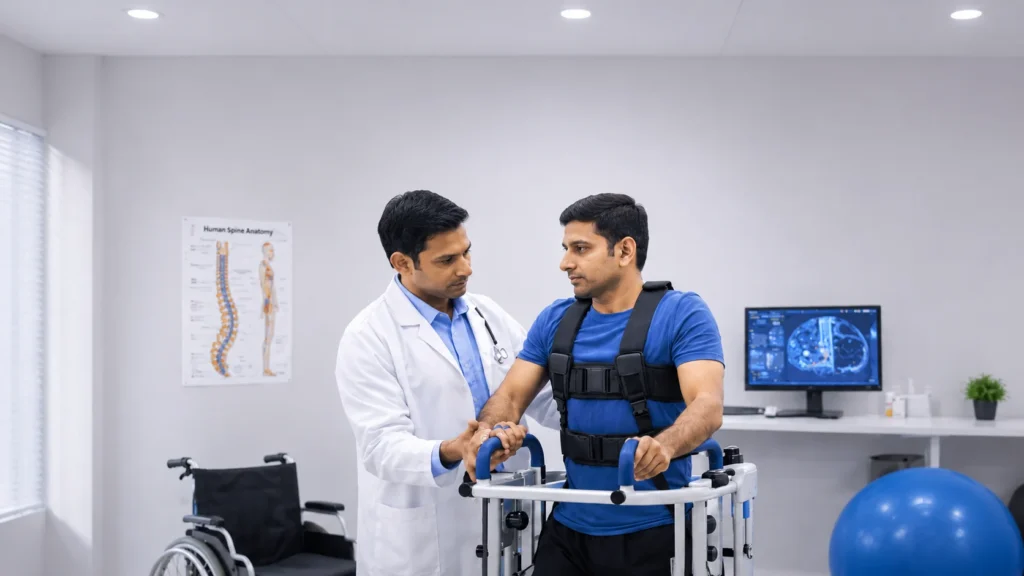
What Is Spinal Cord Injury?
Spinal Cord Injury is a serious neurological condition that occurs when damage to the spinal cord disrupts communication between the brain and the rest of the body. Understanding what is spinal cord injury is essential, as it can lead to partial or complete loss of movement, sensation, and autonomic functions below the level of injury. This condition may result from trauma such as accidents or falls, or from medical causes like tumors and infections. The severity of spinal cord injury varies depending on the location and extent of damage, significantly affecting mobility, independence, and overall quality of life.
Ready to Begin?
Our centres in Bengaluru (HRBR Layout) and Hyderabad are open Monday to Saturday, 8:30 AM to 6:30 PM.
Types of Spinal Cord Injury
| Type | Description | Level of Injury | Motor & Sensory Impact | Recovery Potential |
| Complete Spinal Cord Injury | A condition where there is total loss of motor and sensory function below the level of injury. No signals pass through the damaged area of the spinal cord. | Can occur at cervical, thoracic, lumbar, or sacral levels | Complete paralysis and absence of sensation below the injury site | Recovery is limited; rehabilitation focuses on maximizing independence and preventing complications |
| Incomplete Spinal Cord Injury | Partial damage to the spinal cord where some motor or sensory function remains below the injury level. | May affect any spinal level | Partial movement, sensation, or both are preserved | Higher recovery potential with intensive spinal cord injury rehabilitation |
| Cervical Spinal Cord Injury | Injury occurring in the neck region of the spinal cord. Often associated with severe functional impairment. | C1–C8 vertebrae | May cause quadriplegia (tetraplegia), breathing difficulty, and loss of function in arms and legs | Depends on severity; early intervention improves outcomes |
| Thoracic Spinal Cord Injury | Injury affecting the upper or mid-back region. | T1–T12 vertebrae | Usually results in paraplegia, affecting trunk and lower limbs | Moderate recovery potential depending on completeness of injury |
| Lumbar Spinal Cord Injury | Damage to the lower back region of the spinal cord. | L1–L5 vertebrae | Impacts hips and legs; upper body function remains intact | Better functional independence possible with rehabilitation |
| Sacral Spinal Cord Injury | Injury involving the lowest part of the spinal cord. | S1–S5 vertebrae | May affect bowel, bladder, and sexual function with mild leg weakness | Generally favorable prognosis with structured therapy |
| Anterior Cord Syndrome | Damage to the front portion of the spinal cord, often due to trauma or reduced blood supply. | Varies | Loss of motor function and pain/temperature sensation; touch may remain | Variable recovery depending on severity |
| Central Cord Syndrome | More damage to the center of the spinal cord, commonly seen in older adults after trauma. | Often cervical | Greater weakness in arms than legs | Often shows good recovery with rehabilitation |
| Brown-Sequard Syndrome | Injury affecting one side of the spinal cord. | Any level | Weakness on one side of the body and sensory loss on the opposite side | Often good recovery potential with therapy |
Causes of Spinal Cord Injury
Understanding the causes of Spinal Cord Injury is essential for prevention, early intervention, and effective spinal cord injury treatment. Spinal cord injury causes may be traumatic or non-traumatic, and each mechanism affects the severity of spinal cord injury symptoms and overall spinal cord injury recovery.
Traumatic Accidents
Road traffic accidents are one of the most common causes of spinal cord injury worldwide. High-impact collisions can fracture or dislocate vertebrae, compressing or severing the spinal cord. These injuries often lead to complete spinal cord injury or incomplete spinal cord injury depending on the force and location of trauma. Early emergency care plays a major role in limiting permanent neurological damage.
Falls
Falls are a leading cause of spinal cord injury, particularly among older adults. A severe fall can result in vertebral fractures or spinal instability that damages the spinal cord. In elderly individuals, even minor trauma can trigger significant spinal cord injury symptoms due to pre-existing degenerative spine changes. Prompt diagnosis improves the potential for spinal cord injury recovery.
Sports and Recreational Injuries
High-risk sports such as diving, gymnastics, wrestling, and contact sports are recognized spinal cord injury causes. Sudden impact or improper landing can injure the cervical spine, potentially resulting in quadriplegia. Protective measures and safety protocols are critical in reducing these causes of spinal cord injury.
Violence and Penetrating Injuries
Acts of violence, including gunshot wounds and stab injuries, directly damage spinal cord tissue. These traumatic spinal cord injury causes frequently result in complete spinal cord injury due to direct disruption of nerve pathways. Immediate surgical and medical management is often required as part of spinal cord injury treatment.
Tumors and Cancer
Non-traumatic spinal cord injury causes include tumors that compress or invade spinal cord structures. Gradual pressure on neural tissues may initially produce mild spinal cord injury symptoms such as weakness or numbness, which can progress without timely intervention. Early detection significantly influences spinal cord injury rehabilitation outcomes.
Infections
Spinal infections such as abscesses or tuberculosis can inflame or compress the spinal cord. These causes of spinal cord injury may develop gradually, leading to progressive neurological deficits. Effective antimicrobial therapy and decompression procedures help prevent long-term disability.
Degenerative Spine Disorders
Conditions such as spinal stenosis, disc herniation, and spondylosis can narrow the spinal canal and compress the spinal cord. Chronic compression may lead to incomplete spinal cord injury over time. Structured spinal cord injury rehabilitation and early medical care improve functional outcomes.
Vascular Disorders
Reduced blood supply to the spinal cord due to stroke, aneurysm, or vascular malformation is another important category of spinal cord injury causes. Ischemic damage can result in sudden loss of motor and sensory function. Rapid intervention is essential to improve spinal cord injury recovery.
Spinal Cord Injury Symptoms
Spinal Cord Injury symptoms vary depending on the level and severity of damage. Recognizing the symptoms of spinal cord injury early helps guide timely spinal cord injury treatment and improves spinal cord injury recovery outcomes. Below are the major spinal cord injury symptoms explained in detail.
- Paralysis and Loss of Movement
Paralysis is one of the most significant spinal cord injury symptoms. Damage to the spinal cord disrupts signals between the brain and muscles, resulting in weakness or complete loss of voluntary movement below the level of injury. In complete spinal cord injury, there is total loss of movement, while incomplete spinal cord injury may preserve partial muscle function. The extent of paralysis depends on the location of spinal cord injury, such as cervical or thoracic involvement.
- Loss of Sensation
Loss of sensation is a common symptom of spinal cord injury and may include numbness, tingling, or inability to feel temperature, pain, or touch. Sensory deficits occur because the injured spinal cord cannot transmit signals effectively. In incomplete spinal cord injury, some sensory function may remain, whereas complete spinal cord injury results in total sensory loss below the affected level.
- Impaired Bladder and Bowel Control
Bladder and bowel dysfunction are frequent spinal cord injury symptoms due to disruption of autonomic nerve pathways. A spinal cord injury patient may experience urinary retention, incontinence, constipation, or loss of bowel control. These issues significantly affect daily life and require structured spinal cord injury rehabilitation and long-term management.
- Breathing Difficulties
Breathing problems may occur in spinal cord injury involving the cervical region. High-level injuries can weaken or paralyze the diaphragm and respiratory muscles, making independent breathing difficult. This symptom highlights the importance of early medical stabilization and comprehensive spinal cord injury treatment.
- Muscle Spasticity and Stiffness
Spasticity, characterized by involuntary muscle stiffness and spasms, is a common symptom of spinal cord injury. It occurs due to disrupted nerve signaling pathways. Spasticity may interfere with mobility and daily activities but can sometimes indicate signs of recovery from spinal cord injury when associated with returning nerve activity in incomplete spinal cord injury.
- Neuropathic Pain
Neuropathic pain is a burning, shooting, or electric shock-like sensation experienced by many spinal cord injury patients. This pain results from abnormal nerve signaling following spinal cord damage. Effective pain management is an essential component of spinal cord injury treatment and rehabilitation.
- Loss of Coordination and Balance
Spinal cord injury symptoms often include reduced coordination and impaired balance. Damage to neural pathways affects muscle control and proprioception, making walking and standing difficult. Intensive spinal cord injury rehabilitation focuses on improving coordination and strengthening remaining motor function.
Spinal Cord Injury Diagnosis
Accurate diagnosis is critical in determining the severity of Spinal Cord Injury, identifying spinal cord injury types, and planning appropriate spinal cord injury treatment. Early and detailed evaluation improves spinal cord injury recovery outcomes and helps differentiate between complete spinal cord injury and incomplete spinal cord injury.
- Clinical and Neurological Examination
The first step in diagnosing spinal cord injury involves a thorough clinical and neurological examination. Specialists assess muscle strength, reflexes, sensory response, and motor function to determine the level and extent of neurological impairment. This evaluation helps classify whether the condition is a complete spinal cord injury or incomplete spinal cord injury. The pattern of weakness, loss of sensation, and other spinal cord injury symptoms provides essential information for treatment planning and prognosis.
- Assessment of Spinal Cord Injury Symptoms
Careful evaluation of spinal cord injury symptoms is crucial during diagnosis. Symptoms of spinal cord injury such as paralysis, numbness, breathing difficulty, bladder dysfunction, and spasticity are systematically analyzed. The presence or absence of motor and sensory function below the injury level helps define the spinal cord injury types and guides immediate spinal cord injury treatment decisions.
- Imaging Studies (MRI and CT Scan)
Magnetic Resonance Imaging (MRI) and Computed Tomography (CT) scans are essential diagnostic tools in spinal cord injury. MRI provides detailed images of the spinal cord, soft tissues, and ligaments, helping identify compression, hemorrhage, or structural damage. CT scans are useful for detecting fractures and vertebral instability, which are common causes of spinal cord injury. Imaging findings support accurate classification and help determine the need for surgical or non-surgical spinal cord injury treatment.
- Functional Assessment Scales
Standardized neurological grading systems are used to measure the severity of spinal cord injury and monitor spinal cord injury recovery. These scales assess motor strength, sensory levels, and functional independence in each spinal cord injury patient. Functional assessments also help track signs of recovery from spinal cord injury during spinal cord injury rehabilitation.
- Evaluation of Associated Complications
Diagnosis also includes screening for complications that may affect spinal cord injury recovery. Respiratory function, bladder and bowel control, blood pressure stability, and risk of pressure sores are carefully assessed. Identifying these factors early allows comprehensive spinal cord injury rehabilitation planning and long-term management.
Spinal Cord Injury Treatment at Plexus
Comprehensive Spinal Cord Injury treatment at Plexus focuses on restoring function, enhancing independence, and supporting spinal cord injury recovery through structured rehabilitation and advanced regenerative approaches. Each spinal cord injury patient receives an individualized care plan based on injury level, severity, and whether the condition is complete spinal cord injury or incomplete spinal cord injury.
Aquatic Therapy plays a vital role in spinal cord injury rehabilitation by using water-based exercises to improve mobility and muscle strength. The buoyancy of water reduces body weight stress on joints and weak muscles, allowing safer movement training for individuals with significant spinal cord injury symptoms such as paralysis or spasticity. Water resistance also supports gradual strengthening and balance training, which may contribute to signs of recovery from spinal cord injury in selected cases.
Physiotherapy is a cornerstone of spinal cord injury treatment. Targeted exercises focus on strengthening preserved muscle groups, improving coordination, enhancing flexibility, and preventing complications such as muscle atrophy and contractures. For incomplete spinal cord injury, physiotherapy aims to maximize remaining neurological function and encourage motor relearning. In complete spinal cord injury, therapy emphasizes functional adaptation, mobility training, and assistive device use to promote independence.
Occupational Therapy supports functional independence in daily activities such as dressing, grooming, feeding, and mobility within home or work environments. Customized strategies and adaptive equipment are introduced based on the needs of each spinal cord injury patient. This structured approach enhances confidence, reduces dependency, and improves quality of life as part of comprehensive spinal cord injury rehabilitation.
Regenerative cell therapy is integrated into spinal cord injury treatment to support neural repair and reduce inflammation. Advanced regenerative cells, including autologous mesenchymal cells where clinically indicated, are utilized to promote tissue regeneration and potentially enhance spinal cord injury recovery. When combined with intensive rehabilitation, regenerative therapy may contribute to improved functional outcomes, particularly in incomplete spinal cord injury cases.
Why Choose Plexus in India
Selecting the right centre can make a world of a difference to recovery outcomes. Here’s why Plexus stands out:
- Expertise: Since 2011, Plexus has specialised in neurological and regenerative rehabilitation, treating hundreds of thousands of patients and building a strong reputation in complex nerve‑injury care. Plexus specialists are experienced in both neurology and neuro‑surgery, offering the full spectrum of care under one roof.
- Facilities & Multidisciplinary Team: Plexus is India’s first ISO‑certified regenerative rehabilitation & research centre, equipped with state‑of‑the‑art diagnostic imaging, surgical theatres and dedicated rehabilitation suites. Plexus interdisciplinary team includes neurologists, neurosurgeons, physiotherapists, occupational therapists, pain specialists and regenerative medicine experts all collaborating to deliver integrated care.
- Patient Journey & Access: From first consultation to discharge and long‑term follow‑up, Plexus guides patients through every stage of recovery. Plexus supports both Indian and international patients, offering cost‑effective care without compromising quality. Comfortable outpatient programs, therapy and treatment planning, and accessible communication with Plexus doctors are part of Plexus commitment.
Ready to Begin?
Our centres in Bengaluru (HRBR Layout) and Hyderabad are open Monday to Saturday, 8:30 AM to 6:30 PM.
Other Disorders Treated at Plexus
At Plexus,expertise extends to offer comprehensive care for a variety of neurological and related conditions. Plexus provide specialized treatments for disorders such as, Brachial Plexus Injury , Spinocerebellar Ataxia, Sensory Processing Disorder (SPD), Cerebral Palsy, Multiple Sclerosis,Parkinson’s disease, Spinal Cord Injury, Motor Neuron Disease, Stroke, Autoimmune Conditions, Orthopedic Conditions, and Sports Injuries. Plexus multidisciplinary approach, incorporating therapies like Cell Therapy, Physiotherapy, Occupational Therapy, Aquatic Therapy, and Speech Therapy, ensures personalized care tailored to each condition, helping patients achieve improved mobility, function, and quality of life.
FAQs
What is spinal cord injury and how is it treated? Spinal cord injury is damage to the spinal cord that disrupts movement and sensation. Spinal cord injury treatment includes medical stabilization, regenerative therapy, and structured spinal cord injury rehabilitation.
What are the common spinal cord injury symptoms? Spinal cord injury symptoms include paralysis, muscle weakness, loss of sensation, bladder and bowel dysfunction, breathing difficulty, and neuropathic pain.
What is the difference between complete spinal cord injury and incomplete spinal cord injury? Complete spinal cord injury involves total loss of motor and sensory function below the injury level, while incomplete spinal cord injury retains partial movement or sensation, offering better spinal cord injury recovery potential.
What is the best treatment for spinal cord injury? The best treatment for spinal cord injury combines early medical care, regenerative cell therapy, and intensive spinal cord injury rehabilitation tailored to the specific spinal cord injury types.
What are the signs of recovery from spinal cord injury? Signs of recovery from spinal cord injury may include return of sensation, improved muscle strength, better coordination, and enhanced bladder or bowel control during rehabilitation.