
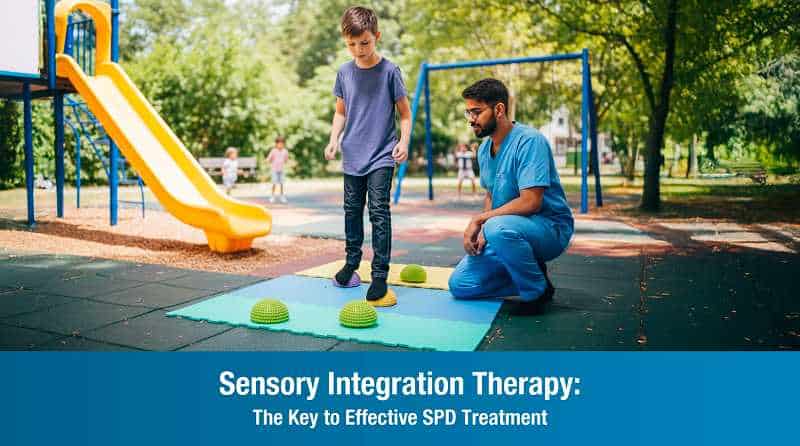
Sensory Processing Disorder (SPD) is a condition in which the brain struggles to receive and respond to sensory information. Children and adults with SPD may experience sensory sensitivity, sensory overload, or display sensory seeking behaviors.
SPD affects how individuals process sensory information, impacting everyday activities, learning, and social interactions.
Symptoms of SPD to Watch Out For
Recognizing SPD symptoms early is crucial. Common signs may include:
- Extreme sensory sensitivity to lights, sounds, textures, or smells
- Difficulty tolerating crowded or noisy environments (sensory overload)
- Constant movement or frequent touching of objects (sensory seeking behaviors)
- Challenges with coordination, balance, or motor skills
- Emotional meltdowns triggered by certain sensations
The Role of Sensory Integration Therapy in SPD Treatment
Sensory Integration Therapy is a proven intervention designed to help individuals with SPD regulate and respond to sensory input more effectively. It focuses on retraining the brain to process sensory information accurately, reducing the impact of sensory processing sensitivity.
How Sensory Integration Therapy Works
Therapists create controlled sensory experiences to improve sensory processing. Techniques may include:
- Swinging, bouncing, or balance exercises
- Tactile play using textured materials
- Visual and auditory stimulation in a structured environment
These activities are customized based on each individual’s needs to address sensory issues and help children or adults overcome SPD symptoms.
Benefits of Sensory Integration Therapy
Engaging in Sensory Integration Therapy can:
- Reduce sensory overload in daily environments
- Improve focus, attention, and learning
- Enhance social and emotional regulation
- Encourage positive sensory seeking behaviors
- Increase confidence in handling everyday challenges
Getting Started with Sensory Integration Therapy at Plexus
If you suspect Sensory Processing Disorder (SPD), the first step is understanding your sensory profile through a professional assessment. At Plexus, our specialists work closely with you to evaluate sensory processing challenges and create a personalized Sensory Integration Therapy plan tailored to individual needs.
With the right guidance and intervention, sensory challenges don’t have to limit potential. Sensory Integration Therapy at Plexus empowers individuals to build confidence, regulate responses, and engage more comfortably with the world improving everyday function and overall quality of life through effective, compassionate SPD support.
Other Disorders treated at Plexus
We also treat a range of neurological and orthopedic conditions:
- Brachial Plexus Injury
- Spinocerebellar Ataxia
- Sensory Processing Disorder (SPD)
- Cerebral Palsy
- Multiple Sclerosis
- Spinal Cord Injury
- Motor Neuron Disease
- Stroke
- Autoimmune Conditions
- Orthopedic Conditions
- Sports Injuries
At Plexus, we combine advanced techniques, expert therapists, and personalized care to address every neurological condition.
Reach Out to Us
WhatsApp: +91 89048 42087 | Call +91 93555 33404 (Bangalore)
FAQs
How does Sensory Integration Therapy help children with SPD?
It helps children process sensory information better, reduces sensory overload, improves coordination, and encourages positive sensory seeking behaviors.
What are the signs that my child may benefit from SPD treatment?
Signs include extreme sensory sensitivity, frequent meltdowns, difficulty with daily tasks, or strong reactions to textures, sounds, or lights.
Can adults benefit from Sensory Integration Therapy for SPD?
Yes. Adults can improve sensory processing, manage sensory issues, and reduce sensory overload in daily life.
About the Author
Dr. Na’eem Sadiq
Medical Director of Plexus
Dr. Na’eem Sadiq is a globally recognized neurologist and neuropsychiatrist, renowned for his contributions to the treatment of complex neurological disorders. He founded Plexus in 2011 with a mission to enhance the quality of life for patients living with neurological conditions.
With over 35 years of clinical experience, Dr. Sadiq is considered a leading expert in the field. His internationally acclaimed research spans key topics such as Demyelinating Polyneuropathy, Multiple Sclerosis, Epilepsy, and Migraine, positioning him at the forefront of neurological care worldwide.