

Introduction on Parkinson’s Cure
Every year, millions of people are diagnosed with Parkinson’s disease, a progressive neurological condition that affects movement, balance, and coordination. One of the most commonly asked questions is: “Can Parkinson’s disease be cured?” While researchers around the world are working tirelessly in search of a Parkinson’s Cure, there is currently no definitive answer. However, that doesn’t mean there’s no hope.
With advances in treatment and care — especially at specialized centers like Plexus — patients can manage symptoms and live fuller, more active lives.
Current Treatments and Their Limitations
Current treatments for Parkinson’s disease focus on managing symptoms. Common options include:
- Medications such as Levodopa and dopamine agonists, which help improve movement but may cause side effects over time, such as memory problems, depression and hallucinations.
- Surgical interventions like Deep Brain Stimulation (DBS) used for select cases.
While these may improve quality of life, they do not stop disease progression. This is why the global medical community continues its pursuit of a true Parkinson’s cure.
Recent Advances in Parkinson’s Research
Promising breakthroughs in the field of Parkinson’s disease research include:
- Gene Therapy – Aims to repair or replace faulty genes linked to the disease.
- Immunotherapy trials – Targets and clears harmful protein buildup in the brain.
- Cell Therapy – Focuses on regenerating damaged dopamine-producing neurons.
While these approaches are still in various stages of research and trials, each step brings us closer to a potential Parkinson’s cure.
The Role of Plexus in Advanced Parkinson’s Care
Plexus is India’s leading center for integrated neuro care. Our patients benefit from:
- Personalized, research-backed care plans
- Access to cutting-edge regenerative therapies
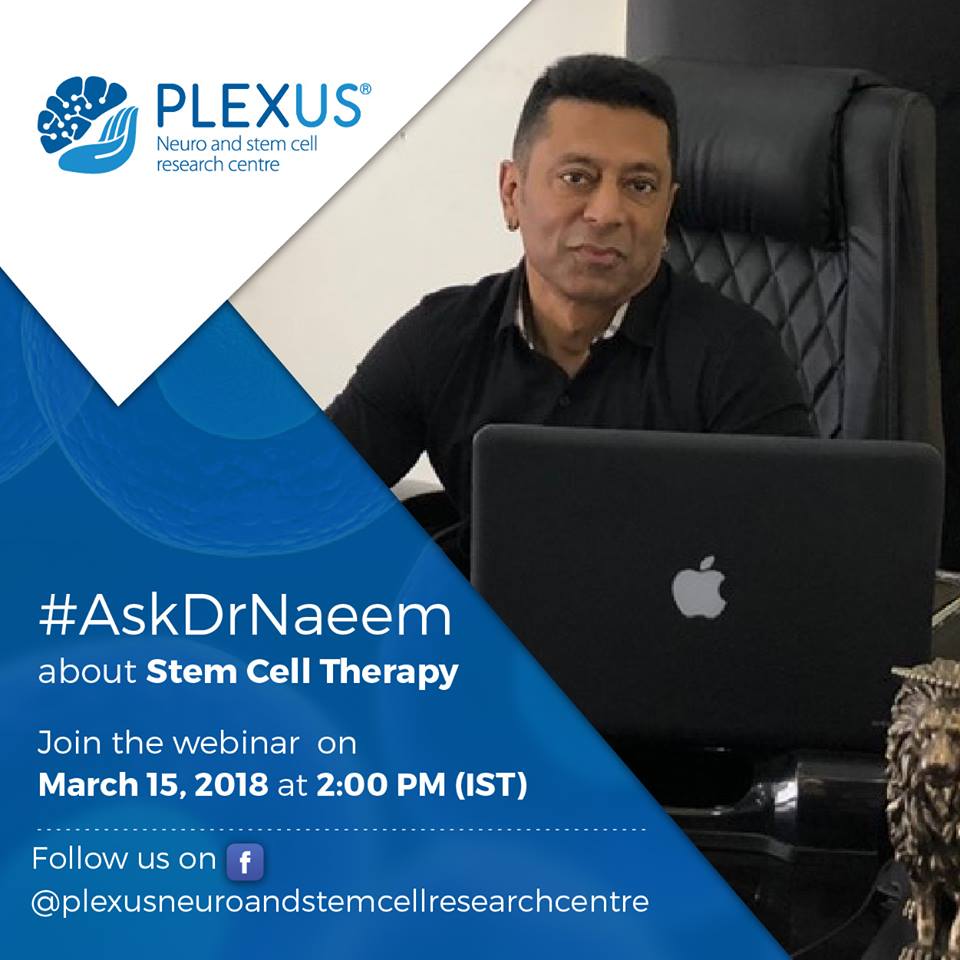
- Comprehensive rehabilitation under the guidance of Dr. Na’eem Sadiq, Medical Director of Plexus
- A multidisciplinary team of neurologists, physiotherapists, and therapists
Our goal is not just to manage Parkinson’s — but to improve your quality of life in every way possible.
Importance of Early Diagnosis
Early detection is a vital step in improving treatment outcomes for Parkinson’s disease. Current efforts include:
- Identifying biomarkers in blood, spinal fluid, or imaging that signal the disease before symptoms appear
- Using genetic testing to assess risk in individuals with a family history
- Leveraging digital tools and AI algorithms for early movement analysis
Early diagnosis means earlier intervention — which increases the chances of slowing the disease and preserving function.
Challenges in Developing a Cure
Despite intense global research, several challenges stand in the way of a Parkinson’s cure:
The cause of Parkinson’s disease is still not fully understood — it likely involves a mix of genetic and environmental factors.
Parkinson’s affects each person differently, making a one-size-fits-all treatment difficult.
The brain’s complexity makes regenerating or replacing lost neurons extremely challenging.
Many promising treatments in lab trials do not translate to human success due to safety or efficacy concerns.
Understanding these challenges can help manage expectations and reinforce the importance of early diagnosis and advanced care.
So, can Parkinson’s disease be cured? Not yet — but science is advancing rapidly. While a definitive Parkinson’s cure remains elusive, patients today have more hope than ever before.
At Plexus, we combine the best of modern medicine, research, and compassion to deliver care that’s future-focused and deeply personalized. Until the day a Parkinson’s cure is found, managing the disease with skill, empathy, and innovation is the next best thing — and that’s what we do every day.
Contact us to schedule an appointment.
WhatsApp: +91 89048 42087
Call: +91 9513262686 (Hyderabad) | +91 9355533404 (Bangalore)
FAQs
Are researchers close to finding a cure for Parkinson’s?
Researchers have made significant progress in understanding the disease and testing new treatments, but a complete Parkinson’s cure has not yet been found. Ongoing studies in gene therapy, cell therapy, and immunotherapy show great promise.
Why is Parkinson’s hard to cure?
Parkinson’s disease is complex and affects individuals differently. The exact cause is unknown, and regenerating brain cells lost during the disease is extremely difficult. These factors make finding a Parkinson’s cure challenging.
What is the best way to cure Parkinson’s disease?
As of now, there is no known cure. However, combining medication, physiotherapy, lifestyle changes, and advanced therapies like those offered at Plexus can help manage the disease effectively and slow its progression.
What’s the difference between managing and curing Parkinson’s?
Managing Parkinson’s disease involves controlling symptoms and improving quality of life through therapy and medication. Curing it would mean eliminating the disease entirely — which medical science is still working toward.
Can Parkinson’s symptoms go into remission?
While full remission is rare, some patients experience periods of improved symptoms, especially when therapy and medication are optimized. Plexus offers advanced therapies that can enhance daily function and reduce symptom severity.
About the Author
Dr. Na’eem Sadiq
Medical Director of Plexus
Dr. Na’eem Sadiq is a globally recognized neurologist and neuropsychiatrist, renowned for his contributions to the treatment of complex neurological disorders. He founded Plexus in 2011 with a mission to enhance the quality of life for patients living with neurological conditions.
With over 35 years of clinical experience, Dr. Sadiq is considered a leading expert in the field. His internationally acclaimed research spans key topics such as Demyelinating Polyneuropathy, Multiple Sclerosis, Epilepsy, and Migraine, positioning him at the forefront of neurological care worldwide.