
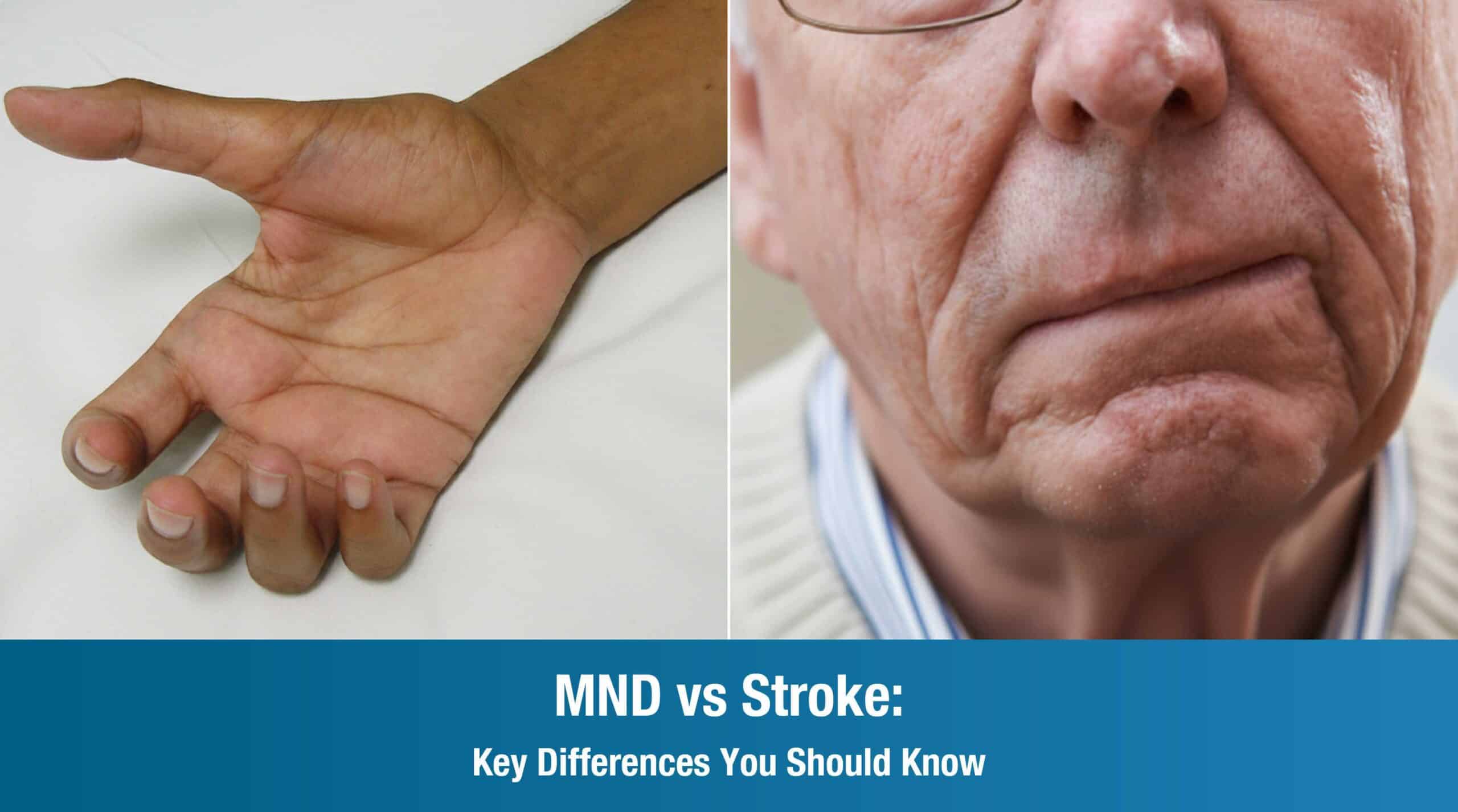
Motor Neuron Disease (MND) and stroke both affect movement and muscle control, but they differ greatly in how they begin, progress, and impact the body. Knowing these differences is key to early recognition, accurate diagnosis, and timely care.
Understanding MND and Stroke
Motor Neuron Disease (MND) is a progressive neurological condition that damages the nerve cells controlling voluntary movement. A stroke, on the other hand, is a sudden medical emergency caused by interrupted blood flow to the brain.
How MND Affects Motor Neurons Over Time ?
MND gradually damages the nerve cells that control voluntary muscles. This includes upper Motor Neuron Disease and lower Motor Neuron Disease, leading to weakness, stiffness, or muscle wasting. Because MND progresses slowly, symptoms become noticeable over months or years.
How a Stroke Disrupts Blood Flow to the Brain ?
A stroke occurs when a blood vessel in the brain becomes blocked or ruptures. This cuts off oxygen supply to brain cells, leading to immediate loss of function — often affecting speech, movement, or sensation.
Causes Behind MND and Stroke
The causes of Motor Neuron Disease are still being researched, with genetics and cellular degeneration playing major roles.
Stroke causes include high blood pressure, heart disease, blood clots, and lifestyle factors.
Understanding these differences is essential for anyone exploring Motor Neuron Disease treatment in India or learning how to prevent Motor Neuron Disease.
Symptoms of MND vs Symptoms of Stroke
MND symptoms develop slowly over months or years, while stroke symptoms appear suddenly within minutes.
MND Symptoms Often Include:
- Muscle weakness
- Twitching
- Gradual loss of mobility
- Changes in speech or swallowing (later stages)
Stroke Symptoms Typically Include:
- Sudden paralysis
- Facial drooping
- Slurred speech
- Loss of balance
- Severe headache
Gradual Onset of Weakness in MND
MND causes slow, progressive changes such as:
- Muscle weakness and wasting
- Twitching (fasciculations)
- Slurred speech
- Difficulty gripping or walking
These reflect the degeneration of motor neurons in different Motor Neuron Disease types..
Sudden Paralysis and Facial Droop in Stroke
Stroke symptoms are immediate and dramatic. Paralysis typically affects one side of the body (hemiplegia), making it difficult to move the arm, leg, or face on that side.
Facial droop and uneven smile are common, alongside slurred speech or difficulty forming words.
Immediate medical attention is critical, as prompt treatment can reduce brain damage, improve recovery outcomes, and minimise long-term disability.
Best Therapies for MND at Plexus
Our multidisciplinary approach improves strength, function, and daily independence.
Physiotherapy
- Enhances mobility
- Improves balance and strength
Occupational Therapy
- Supports daily living activities
- Provides adaptive strategies and tools
Speech and Language Therapy
- Improves speech clarity
- Manages swallowing difficulties
Cell Therapy
- Supports surviving neurons
- Slows degeneration
- Improves motor function
- Reduces inflammation
Best Therapies for Stroke at Plexus
Plexus provides an integrated stroke-rehabilitation program focused on regaining mobility and supporting long-term neurological healing.
Physiotherapy
Improves mobility, balance, and muscle function.
Occupational Therapy
Restores independence in daily tasks.
Speech and Language Therapy
Supports communication and swallowing recovery.
Cell Therapy
Enhances neural repair and accelerates recovery when combined with rehabilitation.
Other Disorders and Treatments Offered at Plexus
Plexus offers advanced therapies for neurological, musculoskeletal, and autoimmune conditions.
Therapies
- Aquatic Therapy
- Physiotherapy
- Occupational Therapy
- Cognitive Therapy
- Sensory Integration Therapy
- Behavior Therapy
- Hand Rehabilitation
- Custom Splinting and Orthotics
- Speech and Language Therapy
- Early Intervention Program
- Swallowing Therapy
- Obesity and Lifestyle Management
Disorders Treated
- Brachial Plexus Injury
- Spinocerebellar Ataxia
- Sensory Processing Disorder (SPD)
- Cerebral Palsy
- Multiple Sclerosis
- Spinal Cord Injury
- Motor Neuron Disease
- Stroke
- Autoimmune Conditions
- Orthopedic Conditions
- Sports Injuries
Patient Success Stories: Transformative Impact
Dr. Na’eem Sadiq’s expertise and compassionate approach have profoundly impacted the lives of countless patients at Plexus. By combining personalized therapies with innovative treatment methods, he has helped individuals overcome significant challenges and regain independence. The following success stories highlight the transformative outcomes under his care:
Enhanced Mobility: A 60-year-old Parkinson’s patient, who faced difficulty walking due to tremors, experienced significant improvement in balance and gait after six months of Aquatic Therapy and Physiotherapy. Under Dr. Sadiq’s guidance, the patient regained independent movement and greater confidence in daily activities.
Improved Communication Skills: A patient struggling with speech difficulties made remarkable progress through a customized Speech Therapy program designed by Dr. Sadiq. The therapy helped restore communication abilities and boosted the patient’s confidence in social interactions.
Restored Daily Functionality: A 55-year-old patient from Bangalore, initially struggling with basic tasks like dressing and personal care, regained independence and returned to work within four months after undergoing targeted Occupational Therapy. The program was tailored to rebuild functional skills and support everyday activities.
Greater Independence: A 65-year-old patient experiencing severe stiffness and limited mobility showed remarkable improvement after five months of Cell Therapy combined with Physiotherapy. The treatment significantly enhanced mobility and enabled the patient to achieve a higher level of independence in daily life.
Transformative Recovery Journey: Another patient, deeply appreciative of Dr. Sadiq’s attentive care, demonstrated substantial progress in both motor skills and communication after a three-month program combining Speech Therapy and Occupational Therapy at Plexus. The holistic approach helped restore functional abilities and improve overall quality of life.
Early Recognition of MND and Stroke Helps Improve Outcomes
Identifying symptoms early — whether the gradual weakness of MND or the sudden changes seen in stroke — ensures faster diagnosis, timely treatment, and better long-term recovery.
Why is Plexus the Best Choice for Treatments in India?
Plexus offers expert neurologists and advanced Motor Neuron Disease treatment in India, delivering complete, personalised care for recovery.
Reach Out to Us
WhatsApp: +91 89048 42087
Call: +91 78159 64668 (Hyderabad) | +91 93555 33404 (Bangalore)
FAQs
What is the main difference between MND and Stroke?
MND progresses slowly due to nerve degeneration, while a stroke happens suddenly due to interrupted brain blood flow.
Can a Stroke be mistaken for Motor Neuron Disease?
Yes — early symptoms can overlap, but the onset pattern and diagnostic tests clearly distinguish them.
What are the warning signs of a stroke?
Sudden weakness, facial droop, slurred speech, vision loss, or difficulty walking.
How does MND typically start?
MND begins gradually with muscle weakness, cramps, twitching, or changes in speech.
Can both MND and Stroke cause muscle weakness?
Yes — but MND causes progressive weakness, while stroke causes sudden loss of strength.
How are MND and Stroke diagnosed differently?
MND is diagnosed through EMG, NCS, and neurological exams; stroke is confirmed using CT/MRI scans.
What treatments are available for stroke recovery?
Rehabilitation therapies like physiotherapy, occupational therapy, speech therapy, and regenerative treatments support recovery.
About the Author
Dr. Na’eem Sadiq
Medical Director of Plexus
Dr. Na’eem Sadiq is a globally recognized neurologist and neuropsychiatrist, renowned for his contributions to the treatment of complex neurological disorders. He founded Plexus in 2011 to enhance the quality of life for patients living with neurological conditions.
With over 35 years of clinical experience, Dr. Sadiq is considered a leading expert in the field. His acclaimed research spans Demyelinating Polyneuropathy, Multiple Sclerosis, Epilepsy, and Migraine—placing him at the forefront of neurological care worldwide.