
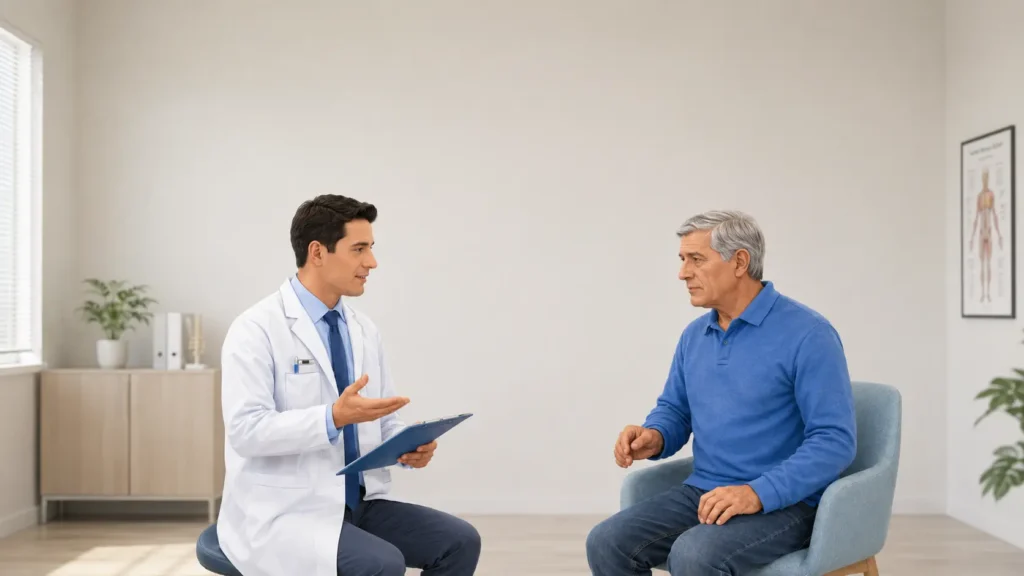
What Are Tremors in Parkinson’s Disease?
Tremors in Parkinson’s Disease are involuntary, rhythmic shaking movements that commonly affect the hands, fingers, arms, legs, jaw, or face. They are one of the most recognizable early signs of Parkinson’s and occur due to changes in brain cells responsible for controlling movement.
Why Do Tremors Happen in Parkinson’s?
Tremors in Parkinson’s Disease occur due to complex changes in the brain’s movement-control system. Below is a detailed explanation of the key mechanisms involved:
1. Loss of Dopamine-Producing Neurons
Parkinson’s disease primarily affects neurons in the substantia nigra, a region of the brain responsible for producing dopamine. Dopamine is a critical neurotransmitter that helps regulate smooth, coordinated muscle movement.
As these dopamine-producing cells gradually degenerate, the brain loses its ability to properly control motor signals. Without adequate dopamine, movement commands become irregular and poorly timed. This disruption contributes to the rhythmic, involuntary shaking known as tremors.
2. Imbalance in Brain Circuits Controlling Movement
Movement is controlled by a network of interconnected brain structures called the basal ganglia. These structures rely on a delicate balance between excitatory and inhibitory signals to produce smooth motion. When dopamine levels fall, this balance is disturbed. Some pathways become overactive while others become underactive. This imbalance creates abnormal electrical activity in motor circuits, which can manifest as repetitive, rhythmic muscle contractions — experienced externally as tremors.
3. Abnormal Neural Firing Patterns
In Parkinson’s disease, neurons begin firing in irregular, synchronized patterns rather than smooth, coordinated rhythms. This abnormal firing creates oscillations in the motor control system. These oscillations are transmitted from the brain to the muscles, resulting in repetitive shaking movements. Research suggests that these abnormal rhythmic signals are a key driver of resting tremors in Parkinson’s patients.
4. Dysfunction in the Thalamus
The thalamus acts as a relay station, transmitting motor signals from deeper brain structures to the cerebral cortex. When basal ganglia circuits become disrupted due to dopamine loss, the thalamus receives distorted signals. This faulty signal transmission amplifies abnormal motor rhythms, contributing to the visible tremor. Essentially, the thalamus helps “broadcast” the irregular movement signals to the body.
5. Reduced Motor Signal Regulation
Under normal conditions, the brain constantly fine-tunes muscle activity to maintain steady posture and controlled movement. Dopamine plays a crucial role in stabilizing these motor signals.When dopamine declines, the brain cannot properly suppress unwanted movements. As a result, involuntary muscle contractions occur even when the body is at rest — leading to the classic resting tremor seen in Parkinson’s disease.
6. Interaction with Stress and Emotional Factors
Although tremors originate from neurological changes, stress and anxiety can worsen them. Emotional stress increases certain brain chemicals that may intensify abnormal motor signaling.This is why tremors often become more noticeable during periods of nervousness, fatigue, or emotional strain, even though the root cause remains neurological.
Ready to Begin?
Our centres in Bengaluru (HRBR Layout) and Hyderabad are open Monday to Saturday, 8:30 AM to 6:30 PM.
What are Motor Symptoms in Parkinson’s Disease
Parkinson’s Disease primarily affects movement. The motor symptoms develop gradually and may worsen over time as dopamine-producing neurons decline.
1. Tremor
Tremor is often the earliest and most noticeable symptom of Parkinson’s disease. It typically begins in one hand or fingers and appears as a rhythmic shaking movement, especially when the limb is at rest. This is known as a resting tremor and may look like a “pill-rolling” motion between the thumb and forefinger. Tremors can also affect the arms, legs, jaw, or lips. They often decrease during voluntary movement but may worsen with stress or fatigue.
2. Bradykinesia (Slowness of Movement)
Bradykinesia refers to the slowing down of voluntary movements. Patients may find it difficult to initiate movement, and once started, movements may become smaller and slower. Simple daily activities such as buttoning a shirt, writing, or walking may take longer than usual. Over time, facial expressions may become reduced (masked face), and arm swing while walking may decrease.
3. Muscle Rigidity
Rigidity is stiffness of the muscles that does not relax easily. It can affect any part of the body, including the arms, legs, neck, or trunk. The stiffness may cause discomfort or muscle pain and can limit range of motion. When a doctor moves a patient’s limb during examination, they may feel a resistance known as “cogwheel rigidity,” where movement feels jerky instead of smooth.
4. Postural Instability
Postural instability refers to impaired balance and coordination. As Parkinson’s progresses, patients may struggle to maintain upright posture and are more prone to falls. They may develop a stooped posture and have difficulty making quick adjustments when pushed or when changing direction. This symptom typically appears in later stages of the disease.
5. Gait Disturbances
Walking patterns often change in Parkinson’s disease. Patients may take small, shuffling steps and have reduced arm swing. Turning may require multiple small steps. Some individuals experience “freezing of gait,” where they suddenly feel as if their feet are stuck to the ground, especially when starting to walk or passing through narrow spaces.
6. Reduced Automatic Movements
Parkinson’s can affect automatic movements that people normally perform unconsciously. These include blinking, smiling, and natural arm swinging while walking. Reduced blinking may cause dry eyes, while decreased facial expression can make a person appear serious or emotionless even when they are not.
7. Speech and Voice Changes (Motor Related)
Motor control problems can also affect speech muscles. Patients may develop a soft, low-volume voice (hypophonia), speak in a monotone manner, or have slurred speech. Writing may become smaller and cramped, a condition known as micrographia.
What Is Regenerative Cell Therapy for Parkinson’s?
Regenerative cell therapy is an advanced medical treatment that uses living regenerative cells to support repair and restoration of damaged neural tissue in Parkinson’s Disease. At Plexus, this innovative approach focuses on improving core motor symptoms such as tremors, rigidity, slowness of movement and balance issues by promoting neurorestoration at the cellular level rather than merely managing symptoms.
How Cell Therapy Works in Parkinson’s Disease
Cell therapy using regenerative cells is designed to support and repair damaged neural pathways affected by Parkinson’s Disease. Instead of only managing symptoms like tremors and stiffness, this approach works at the cellular level to promote neurorestoration and functional improvement.
Here’s a step-by-step explanation of how it works:
1. Collection of Autologous Mesenchymal Cells
The process begins by collecting autologous mesenchymal cells from the patient’s own body, typically from bone marrow or adipose (fat) tissue. Because the cells are autologous (from the same individual), the risk of immune rejection or allergic reaction is significantly reduced.
2. Laboratory Processing and Activation
The harvested regenerative cells are carefully processed in a controlled laboratory environment. During this stage, the cells are purified and prepared to enhance their therapeutic properties. The goal is to maximize their ability to support neural repair, reduce inflammation, and promote cell signaling that encourages healing.
3. Targeted Administration
Once prepared, the regenerative cells are delivered into the body using minimally invasive procedures. The method of delivery is selected based on the patient’s condition and treatment protocol. The cells travel to areas of neurological damage and begin interacting with surrounding tissues.
4. Neuroprotection and Repair
After administration, regenerative cells release growth factors, anti-inflammatory molecules, and signaling proteins. These bioactive substances:
- Support surviving dopamine-producing neurons
- Reduce inflammation in the nervous system
- Promote the formation of new neural connections
- Enhance cellular communication
This environment encourages functional recovery and protects existing brain cells from further damage.
5. Functional Improvement Over Time
Cell therapy does not produce instant results. Instead, improvements develop gradually as neural pathways stabilize and strengthen. Patients may experience:
- Reduced tremors
- Improved balance and coordination
- Better muscle control
- Enhanced mobility
When combined with physiotherapy and neurological rehabilitation, the effects can translate into meaningful improvements in daily living and independence.
Benefits of Regenerative Cell Therapy for Motor Symptoms in Parkinson’s Disease
Regenerative cell therapy offers a promising approach for addressing the core motor symptoms of Parkinson’s Disease. By working at the cellular level, regenerative cells aim to support neural repair, reduce inflammation, and enhance communication between brain cells responsible for movement control.
1. Reduction in Tremors
Tremors are one of the most recognizable symptoms of Parkinson’s disease. Regenerative cells help create a healthier neural environment by supporting surviving dopamine-producing neurons. As inflammation decreases and cellular communication improves, patients may experience better tremor control and smoother voluntary movements.
2. Improved Muscle Control and Coordination
Parkinson’s often causes stiffness (rigidity) and difficulty initiating movement (bradykinesia). Regenerative cell therapy supports neural signaling pathways involved in motor coordination. This can lead to improved muscle response, better posture, and more controlled body movements over time.
3. Enhanced Balance and Gait Stability
Impaired balance and shuffling gait significantly increase fall risk in Parkinson’s patients. By promoting neural repair and strengthening motor pathways, regenerative cells may help improve stability, walking pattern, and overall mobility—especially when combined with targeted rehabilitation therapies.
4. Slower Progression of Motor Decline
Motor symptoms tend to worsen as dopamine-producing neurons continue to degenerate. Regenerative cells release growth factors and protective signals that may help slow further damage. This neuroprotective effect can contribute to maintaining functional abilities for a longer duration.
5. Reduced Medication Dependency
Long-term use of Parkinson’s medications may lead to side effects such as involuntary movements (dyskinesia). By naturally supporting dopamine pathways and motor function, regenerative cell therapy may help reduce reliance on higher medication doses, contributing to better long-term symptom management.
6. Improved Daily Function and Independence
As tremors decrease and movement becomes smoother, patients may regain confidence in performing daily activities such as walking, eating, dressing, and writing. This improvement in motor function directly enhances quality of life and reduces caregiver burden.
7. Synergistic Effect with Rehabilitation
When regenerative cell therapy is combined with physiotherapy, occupational therapy, and neurological rehabilitation, the outcomes can be amplified. Cellular repair provides the biological foundation, while therapy helps retrain and strengthen motor patterns.
Treatment at Plexus for Parkinson’s Disease
At Plexus, Parkinson’s treatment follows a multidisciplinary rehabilitation approach designed to improve motor function, restore independence, and enhance overall quality of life. Each therapy targets specific movement and functional challenges associated with Parkinson’s Disease.
1. Aquatic Therapy
Aquatic therapy at Plexus is performed in a controlled, temperature-regulated pool under expert supervision. The natural buoyancy of water reduces body weight stress on joints and muscles, making movement easier and safer for patients with rigidity, tremors, and balance issues. Water resistance gently strengthens muscles while improving coordination and flexibility. The supportive environment also lowers fall risk, allowing patients to practice walking, balance exercises, and posture correction with greater confidence.
2. Physiotherapy
Physiotherapy plays a central role in managing Parkinson’s motor symptoms. At Plexus, individualized physiotherapy programs focus on improving strength, mobility, posture, and gait. Targeted exercises help reduce stiffness (rigidity), improve range of motion, and enhance muscle control. Therapists also work on balance retraining and fall prevention strategies. Through consistent sessions, patients often experience improved walking patterns, better coordination, and enhanced physical endurance.
3. Occupational Therapy
Occupational therapy at Plexus helps patients regain independence in daily activities such as dressing, eating, writing, and personal care. Parkinson’s can make fine motor tasks difficult due to tremors and slowed movements. Occupational therapists provide adaptive techniques, hand coordination training, and assistive device recommendations to simplify everyday tasks. The goal is to help patients maintain dignity, confidence, and functional independence at home and work.
4. Speech Therapy
Speech and voice changes are common in Parkinson’s disease. Speech therapy at Plexus addresses soft voice (hypophonia), slurred speech, swallowing difficulties, and communication challenges. Therapists use specialized vocal exercises to strengthen speech muscles and improve clarity and volume. Breathing control and articulation training help patients communicate more effectively, while swallowing therapy ensures safer eating and reduces the risk of aspiration.
5. Cell Therapy
Cell therapy at Plexus focuses on supporting neurological repair through the use of regenerative cells, including autologous mesenchymal cells derived from the patient’s own body. This approach aims to create a supportive environment for surviving dopamine-producing neurons by reducing inflammation and promoting cellular communication. While not a cure for Parkinson’s disease, regenerative cell therapy is designed to complement rehabilitation therapies by targeting the underlying neurological processes contributing to tremors and motor decline.
Why Choose Plexus in India
Proven Expertise: Operating since 2011, Plexus has established a strong track record in neurological and regenerative rehabilitation, handling a large volume of complex nerve‑injury cases. The team combines advanced knowledge in neurology and neurosurgery to offer comprehensive treatment solutions.
Advanced Facilities & Collaborative Care: As India’s first ISO‑certified regenerative rehabilitation and research centre, Plexus features cutting-edge diagnostic imaging, modern surgical theatres, and specialized rehabilitation suites. A multidisciplinary team of neurologists, neurosurgeons, physiotherapists, occupational therapists, pain specialists, and regenerative medicine experts works cohesively to deliver integrated care.
Comprehensive Patient Support: From initial assessment to long-term follow-up, Plexus ensures a structured recovery pathway. Support extends to both domestic and international patients, providing high-quality care with cost-efficiency. Access to organized outpatient programs, personalized therapy planning, and clear communication with medical teams enhances the overall patient experience.
Ready to Begin?
Our centres in Bengaluru (HRBR Layout) and Hyderabad are open Monday to Saturday, 8:30 AM to 6:30 PM.
Other Disorders Treated at Plexus
At Plexus,expertise extends to offer comprehensive care for a variety of neurological and related conditions. Plexus provide specialized treatments for disorders such as, Brachial Plexus Injury , Spinocerebellar Ataxia, Sensory Processing Disorder (SPD), Cerebral Palsy, Multiple Sclerosis,Parkinson’s disease, Spinal Cord Injury, Motor Neuron Disease, Stroke, Autoimmune Conditions, Orthopedic Conditions, and Sports Injuries. Plexus multidisciplinary approach, incorporating therapies like Cell Therapy, Physiotherapy, Occupational Therapy, Aquatic Therapy, and Speech Therapy, ensures personalized care tailored to each condition, helping patients achieve improved mobility, function, and quality of life.
FAQs
How does regenerative cell therapy help Parkinson’s patients?
Regenerative cell therapy supports neural repair, reduces inflammation, and promotes better cellular communication, which may help improve motor symptoms such as tremors and stiffness.
Is rehabilitation necessary along with cell therapy?
Yes. Combining regenerative cell therapy with physiotherapy, aquatic therapy, occupational therapy, and speech therapy enhances overall outcomes and helps translate neurological improvements into real-world functional gains.
What are the early signs that indicate Patient should seek treatment for Parkinson’s?
Early signs include mild tremors, slowed movements, stiffness, reduced arm swing while walking, softer voice, or changes in handwriting. Consulting a specialist early allows timely intervention and better long-term management.
Can treatment help with balance and fall prevention?
Yes. Physiotherapy and aquatic therapy specifically target balance retraining, posture correction, and gait improvement to reduce fall risk.
Is Parkinson’s treatment at Plexus personalized?
Yes. Each patient undergoes a detailed neurological and functional assessment to design a customized treatment plan tailored to individual symptoms and progression stage.
About the Author
Dr. Na’eem Sadiq
Medical Director of Plexus
Dr. Na’eem Sadiq is a globally recognized neurologist and neuropsychiatrist, renowned for his contributions to the treatment of complex neurological disorders. He founded Plexus in 2011 with a mission to enhance the quality of life for patients living with neurological conditions.
With over 35 years of clinical experience, Dr. Sadiq is considered a leading expert in the field. His internationally acclaimed research spans key topics such as Demyelinating Polyneuropathy, Multiple Sclerosis, Epilepsy, and Migraine, positioning him at the forefront of neurological care worldwide.