
Understanding the Biological Challenge of Brachial Plexus Injury
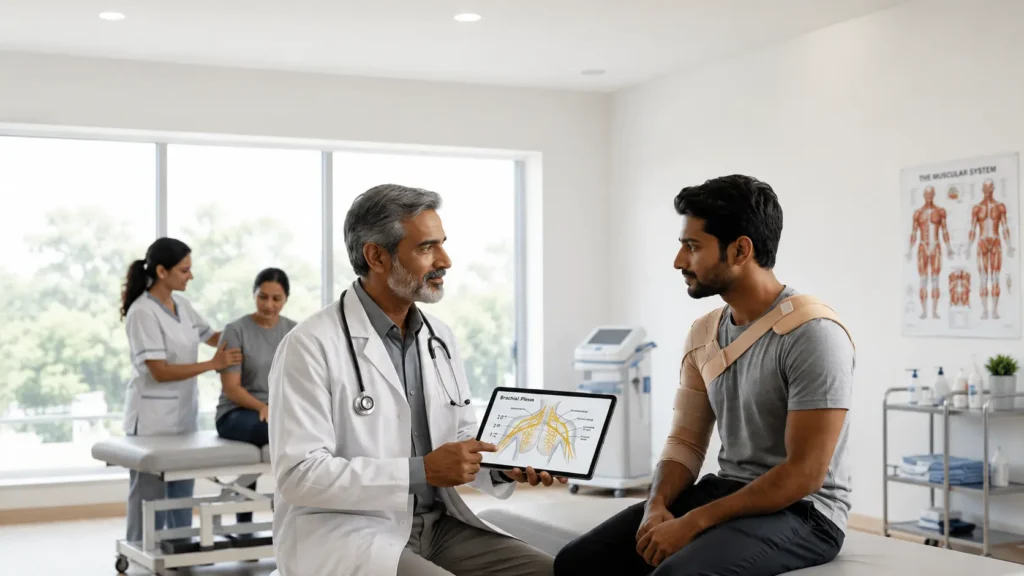
A brachial plexus injury is not simply a nerve injury in the way that a bone fracture is a bone injury. It is a disruption of the complex neural architecture that connects the cervical spinal cord to the arm, wrist, and hand through a network of roots, trunks, divisions, cords, and branches. When this network is stretched, compressed, or avulsed from the spinal cord, the biological consequences extend well beyond the mechanical damage at the site of injury.
Nerve degeneration in the distal axon occurs rapidly following brachial plexus injury. The denervated muscles begin to atrophy without the neural signals that normally maintain them. The surrounding tissue environment becomes unfavourable for nerve regeneration, with inflammatory mediators, scar tissue formation, and the absence of neurotrophic support creating barriers to spontaneous recovery. For complete avulsion injuries, where the nerve root is torn away from the spinal cord, regeneration across the injury site without biological support is not clinically possible.
This is the biological gap that cell therapy for brachial plexus injury at Plexus is designed to address. Rather than waiting for the nerve to recover while managing downstream consequences, advanced cell therapy brachial plexus at Plexus works to create the neurobiological conditions that make nerve regeneration more achievable and rehabilitation more effective.
Ready to Begin?
Our centres in Bengaluru (HRBR Layout) and Hyderabad are open Monday to Saturday, 8:30 AM to 6:30 PM.
What Is Cell Therapy for Brachial Plexus Injury at Plexus?
The Autologous Approach
- Cell therapy for brachial plexus at Plexus uses autologous mesenchymal cell therapy. Cells are drawn from the patient’s own bone marrow, eliminating immune rejection risk, donor dependency, and the need for immunosuppressive medication. The procedure involves three steps:
Step 1: Bone Marrow Aspiration
- Mesenchymal cells are harvested from the patient’s bone marrow under local anaesthesia. No general anaesthesia is required. The procedure is minimally invasive and does not require open surgery or extended hospitalisation.
Step 2: ISO-Certified Laboratory Processing
- The harvested cells are processed in Plexus’s ISO-certified laboratory, where cell isolation, quality verification, and preparation are conducted under independently certified conditions. This certification, the only one applied to brachial plexus cell therapy in India, ensures that cell viability, purity, and safety are verified before administration.
Step 3: Administration
- The processed cells are administered by the specialist clinical team. The delivery approach is determined by the treating neurologist based on the patient’s injury pattern, clinical profile, and assessment findings.
How Does Advanced Cell Therapy for Brachial Plexus Injury at Plexus Neuro Centre Support Nerve Recovery?
The Neurobiological Mechanisms
- Cell treatment for brachial plexus injury supports nerve recovery through several biological mechanisms relevant to brachial plexus injury specifically:
Neurotrophic Factor Secretion
- Administered mesenchymal cells secrete nerve growth factor, brain-derived neurotrophic factor, and glial cell line-derived neurotrophic factor. These proteins are among the most important biological drivers of peripheral nerve regeneration. They support the survival of injured neurons, promote axonal sprouting and elongation, and sustain the Schwann cell populations that guide regenerating axons toward their target muscles and sensory end organs. For brachial plexus injury patients, this trophic support addresses one of the primary biological barriers to spontaneous recovery.
Neuroinflammation Modulation
- The post-injury inflammatory environment in brachial plexus injury contributes to secondary nerve damage, Schwann cell dysfunction, and scar tissue formation that impedes regeneration. Mesenchymal cells exert a regulatory effect on the inflammatory microenvironment, reducing the macrophage and inflammatory cytokine activity that creates barriers to nerve recovery while preserving the pro-regenerative aspects of the post-injury inflammatory response.
Schwann Cell Support
- Schwann cells are the primary supporting cells of the peripheral nervous system, essential for axonal guidance, myelin formation, and the creation of the regenerative microenvironment that successful nerve repair requires. Published research confirms that mesenchymal cells promote Schwann cell proliferation and function, supporting the cellular infrastructure that guides regenerating axons along the correct pathways toward their target organs.
Neuroprotection of Surviving Neurons
- Where the nerve root cell body in the spinal cord is intact but the axon has been damaged, protecting the neuron from retrograde degeneration is clinically important. Mesenchymal cell therapy’s neuroprotective action supports the survival of the motor and sensory neurons whose axons are regenerating through the injured brachial plexus.
Who Should Consider Cell Treatment for Brachial Plexus Injury at Plexus?
Patients Who Benefit From Cell Therapy for Brachial Plexus
Plexus’s clinical team assesses each patient individually before cell therapy is recommended. The programme is most relevant for patients with:
- Traumatic brachial plexus injury in adults following road accidents, sports injuries, or industrial trauma, where the injury has produced significant upper limb weakness, sensory loss, or functional limitation
- Obstetric brachial plexus palsy in children including Erb’s palsy and Klumpke’s palsy, where spontaneous recovery has been incomplete and functional limitations in arm, hand, or shoulder use persist
- Incomplete recovery following surgical intervention, where nerve repair or grafting has been performed but functional recovery has plateaued before reaching the patient’s goals
- Conservative management cases where the injury pattern does not meet surgical criteria but where biological support for nerve recovery alongside intensive rehabilitation is clinically indicated
Assessment Before Cell Therapy
Before any cell therapy is administered, the Plexus clinical team conducts a comprehensive assessment:
- Neurological examination of motor strength across all affected muscle groups using the Medical Research Council grading scale
- Sensory assessment across the territory of affected nerve roots and peripheral branches
- Electrodiagnostic studies review, including EMG and nerve conduction studies, to characterise the injury pattern and identify signs of reinnervation
- Functional assessment of the affected upper limb across daily activities
- Imaging review where available, including MRI of the brachial plexus and cervical spine
How Does Regenerative Therapy for Brachial Plexus Injury Integrate With Rehabilitation?
Cell Therapy as the Foundation, Rehabilitation as the Builder
The most important clinical principle of regenerative therapy for brachial plexus injury at Plexus is that cell therapy alone is not sufficient. Its biological effects create an environment more conducive to nerve recovery and functional improvement. The rehabilitation disciplines then engage with this improved environment to translate neurological recovery into functional gains:
- Physiotherapy addresses shoulder, elbow, and arm strength through targeted exercises that capture and strengthen returning nerve function, maintaining muscle bulk through the denervation period and progressively challenging recovered motor units.
- Occupational Therapy delivers the sensorimotor retraining, fine motor skill development, and brachial plexus daily activities therapy that translate recovered motor function into meaningful daily use.
How Does Cell Therapy for Brachial Plexus Compare to Standard Management?
| Factor | Standard Brachial Plexus Management | Cell Therapy at Plexus |
| Treatment Target | Functional consequence of nerve injury | Nerve recovery environment directly |
| Neurotrophic Support | Not provided | BDNF, GDNF, NGF secretion supporting axonal regeneration |
| Neuroinflammation Management | Not specifically addressed | Mesenchymal cell modulation of inflammatory microenvironment |
| Schwann Cell Support | Not provided | Mesenchymal cells promoting Schwann cell proliferation |
| Procedure Type | Surgery or conservative management only | Minimally invasive, no open surgery |
| ISO Certification | Not standard | ISO-certified at Bangalore and Hyderabad centres |
| Rehabilitation Integration | Separate from medical management | Fully coordinated within a single programme |
What Improvements Have Patients Reported?
Patients who have completed advanced cell therapy brachial plexus treatment within Plexus’s Regenerative Rehabilitation Programme have reported:
- Progressive improvement in shoulder elevation and elbow flexion strength over the weeks and months following cell therapy and rehabilitation
- Improved sensory awareness in the affected arm and hand, with patients and parents describing the return of the ability to feel touch and temperature
- Greater ability to use the affected hand in daily activities including feeding, personal care, and object manipulation
- In children with Erb’s palsy, the restoration of the ability to bring the hand to the mouth and engage in two-handed play activities
- More rapid and consistent functional progress during rehabilitation following cell therapy, compared to the plateau pattern that often characterises conservative management alone
Why Plexus Is India’s Leading Centre for Cell Therapy for Brachial Plexus
India’s First ISO-Certified Regenerative Rehabilitation and Research Centre
- ISO certification at Plexus covers the complete cell therapy process, from harvest through laboratory processing to administration, providing independently verified quality assurance for every brachial plexus patient.
Autologous Cells Eliminating Immune Risk
- Cell therapy for brachial plexus at Plexus uses exclusively autologous cells, eliminating immune rejection risk and the need for immunosuppressive medication.
Fully Integrated Rehabilitation Programme
- Regenerative therapy for brachial plexus injury at Plexus is never standalone. Every patient receives a complete Regenerative Rehabilitation Programme integrating physiotherapy, occupational therapy, hand rehabilitation, aquatic therapy, and custom splinting within a single coordinated clinical structure.
Over 70 National and International Awards
- More than 70 awards for clinical excellence reflect consistent outcomes at Plexus for patients with complex neurological and nerve injury conditions.
Other Neurological Conditions Treated at Plexus
Specialist programmes are available for Parkinson’s Disease, Multiple Sclerosis, Spinocerebellar Ataxia, Motor Neuron Disease, Spinal Cord Injury, Stroke, Cerebral Palsy, Autoimmune Neurological Conditions, and Sports Injuries.
Ready to Begin?
Our centres in Bengaluru (HRBR Layout) and Hyderabad are open Monday to Saturday, 8:30 AM to 6:30 PM.
Source Transparency and Editorial Accountability
Supporting Evidence
- Li, H., et al. (2023). Review of rehabilitation protocols for brachial plexus injury. Frontiers in Neurology, 14, 1084223. https://pmc.ncbi.nlm.nih.gov (Source for biological barriers to brachial plexus nerve recovery, neurotrophic factor requirements, and the role of the post-injury inflammatory environment.)
- Martínez-Carlón-Reina, M., et al. (2024). Systematic Review and Meta-Analysis of Intervention Techniques in Occupational Therapy for Babies and Children with Obstetric Brachial Plexus Palsy. Journal of Clinical Medicine, 13(20), 6186. https://pmc.ncbi.nlm.nih.gov
- Barker, R.A., et al. (2017). New approaches to cell therapy for Parkinson’s disease. Nature Reviews Neurology, 13(11). https://www.nature.com (Source for mesenchymal cell neurotrophic factor secretion, Schwann cell support, and neuroprotective mechanisms applicable to peripheral nerve injury.)
- Indian Council of Medical Research (ICMR). Guidelines on Regenerative Medicine and Cell-Based Therapies. https://www.icmr.gov.in
- Plexus Clinical Programme Data, used for editorial validation. Plexus
Revision Timeline: April 2026. Page first published.
Last Updated: April 2026
Frequently Asked Questions
Is cell therapy for brachial plexus at Plexus available at both Bangalore and Hyderabad?
Yes. Cell therapy for brachial plexus is available at Plexus’s HRBR Layout in Bangalore, and at the Banjara Hills centre in Hyderabad, open Monday to Saturday from 8:30 AM to 6:30 PM. Consultations can be booked at Plexus.
How long does advanced cell therapy brachial plexus treatment take to show results?
Nerve regeneration and functional recovery following advanced cell therapy brachial plexus treatment at Plexus develops progressively over weeks to months, consistent with the biological timeline of peripheral nerve regeneration. Regular clinical reviews track progress across motor strength, sensory recovery, and functional upper limb use throughout the programme.
Can cell treatment for brachial plexus in India work alongside ongoing conservative management?
Yes. Cell treatment for brachial plexus in India at Plexus is designed to complement rather than replace ongoing medical management. The clinical team coordinates with the patient’s existing treating specialists throughout the programme.
What is cell therapy for brachial plexus injury and how does it work at Plexus?
Cell therapy for brachial plexus injury at Plexus uses autologous mesenchymal cells drawn from the patient’s own bone marrow, processed under ISO-certified conditions, and administered to support nerve recovery through neurotrophic factor secretion including BDNF, GDNF, and NGF, neuroinflammation modulation, and Schwann cell support, delivered as the neurobiological foundation of a fully integrated Regenerative Rehabilitation Programme.
Is cell treatment for brachial plexus in India available for children with Erb’s palsy?
Yes. Cell treatment for brachial plexus in India at Plexus is available for children with obstetric brachial plexus palsy including Erb’s palsy and Klumpke’s palsy, with the assessment and programme structure adapted to the child’s age, injury pattern, and stage of recovery.
Is regenerative therapy for brachial plexus injury at Plexus a surgical procedure?
No. Regenerative therapy for brachial plexus injury at Plexus is minimally invasive. Cells are harvested under local anaesthesia, processed in an ISO-certified laboratory, and administered without open surgery or general anaesthesia. No extended hospitalisation is required.