
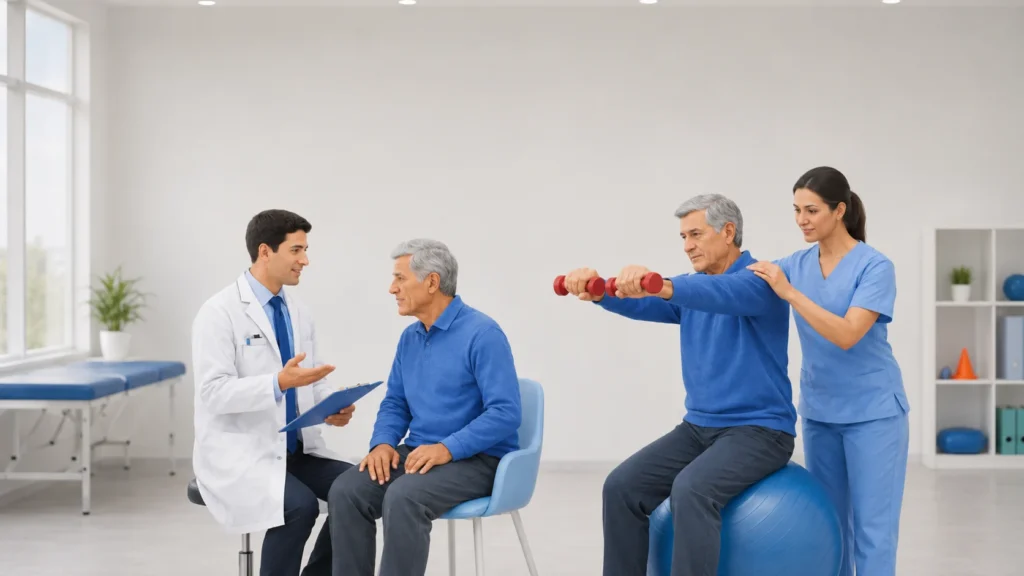
Combining Regenerative Cell Therapy and Physiotherapy in Parkinson’s Management
Parkinson’s Disease is a progressive neurological disorder that affects movement and coordination due to the gradual loss of dopamine-producing nerve cells in the brain. Dopamine is essential for smooth, controlled muscle activity, and its decline leads to symptoms such as tremors, stiffness, slowed movements, and balance difficulties. While it commonly develops after the age of 60, Parkinson’s can also affect younger individuals.
Ready to Begin?
Our centres in Bengaluru (HRBR Layout) and Hyderabad are open Monday to Saturday, 8:30 AM to 6:30 PM.
Causes of Parkinson’s Disease
1. Loss of Dopamine-Producing Neurons
The primary cause of Parkinson’s disease is the gradual degeneration of dopamine-producing nerve cells in the substantia nigra, a region of the brain responsible for movement control. Dopamine acts as a chemical messenger that helps transmit signals between brain cells to coordinate smooth and purposeful movements. When these neurons are damaged or lost, dopamine levels drop significantly, leading to motor symptoms such as tremors, stiffness, and slowed movement. The exact reason why these specific neurons deteriorate is still not fully understood, but their loss is the central biological feature of the disease.
2. Genetic Factors
Genetics can play a role in the development of Parkinson’s Disease, particularly in individuals who develop symptoms at a younger age. Certain gene mutations, such as those in the LRRK2, PARK7, PINK1, PRKN, and SNCA genes, have been linked to inherited forms of Parkinson’s. Although most cases are not directly inherited, having a close family member with the disease may slightly increase the risk. Genetic changes may affect how brain cells manage proteins, energy production, and cellular waste removal, making them more vulnerable to degeneration.
3. Environmental Triggers
Exposure to certain environmental toxins has been associated with an increased risk of Parkinson’s disease. Long-term exposure to pesticides, herbicides, heavy metals, and industrial chemicals may contribute to nerve cell damage. Rural living, well water consumption, and farming occupations have also been studied as possible risk factors. These toxins may cause oxidative stress or mitochondrial dysfunction, both of which can damage dopamine-producing neurons over time.
4. Abnormal Protein Accumulation
In people with Parkinson’s Disease, abnormal clumps of a protein called alpha-synuclein accumulate inside brain cells, forming structures known as Lewy bodies. These protein deposits interfere with normal cellular function and communication. The buildup disrupts important processes such as protein recycling and energy production, eventually leading to neuronal death. This abnormal protein aggregation is considered a key pathological hallmark of the disease.
5. Mitochondrial Dysfunction
Mitochondria are the energy-producing structures within cells. In Parkinson’s disease, mitochondrial function may become impaired, reducing the cell’s ability to generate energy efficiently. Dopamine-producing neurons are particularly sensitive to energy deficits. When mitochondria fail to function properly, cells become more susceptible to stress and damage, contributing to progressive neuronal loss.
6. Oxidative Stress and Inflammation
Oxidative stress occurs when harmful molecules called free radicals accumulate faster than the body can neutralize them. This imbalance can damage proteins, DNA, and cell membranes. In Parkinson’s disease, increased oxidative stress combined with chronic inflammation in the brain may accelerate the degeneration of dopamine-producing neurons. Inflammatory processes can further worsen neuronal damage and contribute to disease progression.
7. Aging
Age is the most significant risk factor for Parkinson’s disease. As people grow older, natural cellular processes become less efficient, including protein clearance, mitochondrial function, and antioxidant defenses. These age-related changes increase vulnerability to neurodegeneration. Most individuals diagnosed with Parkinson’s are over the age of 60, although early-onset cases can occur.
Symptoms of Parkinson’s Disease
1. Tremors
Tremors are one of the most recognizable symptoms of Parkinson’s Disease and often appear as a rhythmic shaking, usually beginning in one hand or fingers. This tremor typically occurs when the limb is at rest and may reduce when the person is actively using the hand. It can gradually spread to the other side of the body, affecting the arms, legs, jaw, or lips. Although tremors are not always disabling, they can interfere with daily activities such as holding objects, eating, or writing, and may become more noticeable during stress or fatigue.
2. Bradykinesia (Slowness of Movement)
Bradykinesia refers to the slowness and difficulty in initiating voluntary movements. Individuals may take longer to perform routine tasks like dressing, bathing, or walking. Movements may appear reduced in size and speed, and facial expressions may diminish, leading to a masked or blank appearance. Over time, this slowing can significantly impact independence and overall mobility.
3. Muscle Rigidity
Muscle rigidity causes stiffness and resistance to movement in the arms, legs, neck, or trunk. Unlike temporary stiffness from exercise, Parkinson’s-related rigidity persists even when muscles are relaxed. This stiffness can limit range of motion, cause discomfort or pain, and make simple actions such as turning in bed or swinging the arms while walking more difficult.
4. Postural Instability
Postural instability refers to impaired balance and coordination, which typically develops in the later stages of Parkinson’s disease. Individuals may have difficulty maintaining an upright posture and may adopt a stooped position. Reduced reflexes for balance correction increase the risk of falls, which can lead to injuries and reduced confidence in mobility.
5. Gait Changes
Changes in walking patterns are common in Parkinson’s Disease. Steps may become shorter and shuffling, and arm swing may decrease. Some individuals experience “freezing of gait,” a temporary inability to move the feet forward despite intending to walk. This often occurs when starting movement, turning, or approaching doorways and can significantly affect safety and independence.
6. Speech and Voice Changes
Parkinson’s can affect the muscles used for speech, causing the voice to become softer, monotone, or slurred. Speech may be less clear, and words may run together. Some individuals speak rapidly or hesitate frequently. These changes can make communication challenging and may affect social interactions and confidence.
7. Writing Changes (Micrographia)
Handwriting may gradually become smaller, cramped, and less legible, a condition known as micrographia. This occurs due to reduced movement amplitude and fine motor control. Writing may also become slower and more effortful, reflecting the underlying motor changes in the brain.
8. Sleep Disturbances
Sleep problems are common in Parkinson’s disease and may include difficulty falling asleep, frequent nighttime awakenings, vivid dreams, or acting out dreams during sleep. Restless legs syndrome and excessive daytime sleepiness may also occur. Poor sleep can worsen fatigue and impact overall well-being.
9. Mood Changes
Depression and anxiety are frequent non-motor symptoms of Parkinson’s Disease. These changes may result from alterations in brain chemistry as well as the emotional impact of living with a chronic condition. Mood disturbances can appear early in the disease and may significantly affect quality of life if not addressed.
10. Cognitive Changes
Some individuals with Parkinson’s experience slowed thinking, difficulty concentrating, or memory challenges. In advanced stages, cognitive impairment may progress to dementia. These changes occur due to the involvement of additional brain regions beyond those controlling movement.
11. Autonomic Dysfunction
Parkinson’s disease can affect the autonomic nervous system, which controls automatic body functions. This may lead to constipation, urinary difficulties, low blood pressure when standing (causing dizziness), excessive sweating, or sexual dysfunction. These symptoms can be persistent and may require targeted management.
12. Loss of Sense of Smell
A reduced or lost sense of smell, known as anosmia, can occur years before the appearance of motor symptoms. While it may seem minor, it is considered an early indicator of Parkinson’s Disease in many individuals and reflects early changes in specific brain pathways.
Diagnosis of Parkinson’s Disease
Diagnosing Parkinson’s disease is primarily based on clinical evaluation, as there is currently no single laboratory test that definitively confirms the condition. A neurologist carefully assesses symptoms, medical history, and physical findings to reach a diagnosis.
1. Detailed Medical History
The diagnostic process begins with a thorough review of the patient’s medical history. The doctor asks about the onset and progression of symptoms such as tremors, stiffness, slowness of movement, balance issues, sleep disturbances, and changes in mood or smell. Family history is also evaluated to determine whether there may be a genetic component. Understanding how symptoms have developed over time helps differentiate Parkinson’s disease from other neurological conditions.
2. Neurological Examination
A comprehensive neurological examination is performed to assess motor function. The doctor evaluates tremors (especially at rest), muscle rigidity, bradykinesia (slowness of movement), posture, balance, coordination, facial expression, and gait pattern. Reflexes and muscle tone are also tested. The presence of characteristic motor signs strongly supports a Parkinson’s diagnosis.
3. Response to Dopaminergic Medication
In many cases, doctors prescribe medications that increase dopamine levels, such as levodopa. If the patient shows noticeable improvement in motor symptoms after starting the medication, it supports the diagnosis of Parkinson’s disease. A positive response to dopamine therapy is considered an important diagnostic indicator.
4. Imaging Studies
Although brain imaging cannot directly confirm Parkinson’s disease, it is often used to rule out other causes of similar symptoms, such as stroke, brain tumors, or normal pressure hydrocephalus. MRI (Magnetic Resonance Imaging) scans are commonly performed for this purpose. In certain cases, specialized imaging such as a dopamine transporter (DaT) scan may be used to assess dopamine activity in the brain.
5. Exclusion of Other Conditions
Several neurological disorders can mimic Parkinson’s disease, including essential tremor, multiple system atrophy, progressive supranuclear palsy, and drug-induced parkinsonism. Doctors carefully evaluate symptoms and progression patterns to exclude these conditions. The absence of certain red-flag symptoms may help confirm a typical Parkinson’s diagnosis.
6. Ongoing Clinical Observation
Because Parkinson’s disease progresses gradually, sometimes diagnosis becomes clearer over time. Regular follow-ups allow doctors to monitor symptom progression and treatment response. The pattern of progression often provides additional confirmation.
How Combining Regenerative Cell Therapy and Physiotherapy Helps in Parkinson’s Management
Combining regenerative cell therapy with physiotherapy offers a comprehensive approach to managing Parkinson’s Disease by addressing both the biological and functional aspects of the condition. While regenerative cell therapy focuses on supporting neural health at a cellular level, physiotherapy works to improve strength, balance, coordination, and daily functioning. Together, they create a synergistic treatment strategy aimed at enhancing overall outcomes.
1. Supporting Neural Health and Repair
Regenerative cell therapy using autologous mesenchymal cells aims to create a supportive environment for damaged neurons in the brain. These regenerative cells may help reduce inflammation, promote neuroprotection, and support better cellular communication. By improving the internal neural environment, the brain may become more responsive to rehabilitation exercises and motor retraining.
2. Enhancing Neuroplasticity Through Movement
Physiotherapy plays a critical role in stimulating neuroplasticity, the brain’s ability to reorganize and form new neural connections. Targeted exercises, balance training, gait correction, and strength-building activities encourage the brain to develop alternative pathways to compensate for dopamine loss. When regenerative cell therapy supports neural function, physiotherapy helps translate those biological changes into practical motor improvements.
3. Improving Motor Symptoms More Effectively
Parkinson’s motor symptoms such as tremors, rigidity, and bradykinesia can limit daily activities. Regenerative cell therapy may help optimize neural signaling, while physiotherapy directly works on flexibility, posture, muscle strength, and coordination. The combination can result in better mobility, improved walking patterns, reduced stiffness, and enhanced overall movement control.
4. Reducing Disease Progression Impact
Although Parkinson’s disease is progressive, combining regenerative cell therapy with structured rehabilitation may help slow functional decline. By addressing inflammation and neuronal stress while simultaneously maintaining muscle strength and mobility, patients may preserve independence for a longer period.
5. Boosting Balance and Preventing Falls
Postural instability and gait disturbances increase fall risk in Parkinson’s patients. Physiotherapy incorporates balance training, core strengthening, and posture correction techniques. When supported by regenerative therapy that enhances neural responsiveness, patients may experience better coordination and reduced fall frequency.
6. Enhancing Quality of Life
The integrated approach not only targets physical symptoms but also contributes to improved confidence, emotional well-being, and independence. As mobility improves and daily tasks become easier, patients often report better overall quality of life. The psychological benefit of active participation in rehabilitation further strengthens long-term outcomes.
Treatment at Plexus for Parkinson’s Management
At Plexus, Parkinson’s Disease management follows a comprehensive and multidisciplinary rehabilitation model. The goal is not only to manage symptoms but also to enhance functional independence, mobility, and overall quality of life through integrated therapies.
1. Aquatic Therapy
Aquatic therapy at Plexus utilizes water-based exercises in a controlled therapeutic pool environment. The natural buoyancy of water reduces pressure on joints and muscles, making movement easier and safer for individuals with rigidity and balance issues. Water resistance helps strengthen muscles without excessive strain, while warm water can relax stiff muscles and improve flexibility. For Parkinson’s patients, aquatic therapy enhances coordination, gait training, and balance with a reduced risk of falls, making it particularly beneficial in moderate to advanced stages.
2. Physiotherapy
Physiotherapy focuses on improving mobility, posture, strength, and coordination. At Plexus, personalized physiotherapy programs include gait training, balance exercises, stretching routines, and functional movement retraining. Techniques are designed to counteract bradykinesia (slowness of movement), reduce stiffness, and improve overall physical endurance. Regular physiotherapy helps maintain independence, prevent complications such as muscle shortening, and lower fall risk.
3. Occupational Therapy
Occupational therapy at Plexus aims to improve a patient’s ability to perform daily activities such as dressing, eating, writing, and personal hygiene. Therapists work on fine motor skills, hand coordination, and adaptive techniques that make everyday tasks easier and safer. Assistive devices and home-modification strategies may also be recommended to promote independence. This therapy ensures that improvements achieved in physical rehabilitation translate into real-life functional benefits.
4. Speech Therapy
Parkinson’s disease can affect speech clarity, voice strength, and swallowing ability. Speech therapy at Plexus addresses issues such as soft voice (hypophonia), slurred speech, and difficulty articulating words. Structured vocal exercises help strengthen the muscles used in speech and improve communication effectiveness. Swallowing assessments and therapy may also be provided to reduce the risk of aspiration and ensure safe eating and drinking.
5. Regenerative Cell Therapy
Regenerative cell therapy at Plexus involves the use of autologous mesenchymal cells to support neural health and reduce inflammation. These regenerative cells are designed to promote a favorable environment for neuronal function and potentially enhance neuroplasticity. When integrated with rehabilitation therapies, regenerative cell therapy may support improved motor performance, balance, and overall neurological function. Each treatment plan is personalized following detailed neurological evaluation to ensure optimal outcomes.
Why Choose Plexus in India
Expertise: Established in 2011, Plexus specialises in neurological and regenerative rehabilitation, having treated hundreds of thousands of patients and earned a strong reputation in complex nerve‑injury care. Specialists at Plexus possess extensive experience in both neurology and neurosurgery, providing the full spectrum of care under a single roof.
Facilities & Multidisciplinary Team: Plexus is India’s first ISO‑certified regenerative rehabilitation and research centre, featuring advanced diagnostic imaging, surgical theatres, and dedicated rehabilitation suites. The interdisciplinary team includes neurologists, neurosurgeons, physiotherapists, occupational therapists, pain specialists, and regenerative medicine experts, all collaborating to deliver integrated care.
Patient Journey & Access: From initial consultation through discharge and long-term follow-up, Plexus ensures guidance at every stage of recovery. Services accommodate both domestic and international patients, offering cost-effective care without compromising quality. Outpatient programs, structured therapy and treatment planning, and seamless communication with medical teams form an essential part of the recovery process.
A Holistic Approach to Parkinson’s Management at Plexus
Parkinson’s Disease is a complex, progressive neurological disorder that affects both motor and non-motor functions. At Plexus, a multidisciplinary approach combining therapies addresses the condition from multiple angles. Regenerative cells support neural repair and reduce inflammation, while targeted rehabilitation therapies enhance mobility, coordination, strength, and daily functioning. By integrating these interventions, Plexus aims to improve quality of life, maintain independence, and optimize functional outcomes for patients living with Parkinson’s disease.
Ready to Begin?
Our centres in Bengaluru (HRBR Layout) and Hyderabad are open Monday to Saturday, 8:30 AM to 6:30 PM.
Other Disorders Treated at Plexus
At Plexus,expertise extends to offer comprehensive care for a variety of neurological and related conditions. Plexus provide specialized treatments for disorders such as, Brachial Plexus Injury , Spinocerebellar Ataxia, Sensory Processing Disorder (SPD), Cerebral Palsy, Multiple Sclerosis,Parkinson’s disease, Spinal Cord Injury, Motor Neuron Disease, Stroke, Autoimmune Conditions, Orthopedic Conditions, and Sports Injuries. Plexus multidisciplinary approach, incorporating therapies like Cell Therapy, Physiotherapy, Occupational Therapy, Aquatic Therapy, and Speech Therapy, ensures personalized care tailored to each condition, helping patients achieve improved mobility, function, and quality of life.
FAQs
What is regenerative cell therapy for Parkinson’s?
Regenerative cell therapy uses autologous mesenchymal cells from the patient’s own body to support neural repair, reduce inflammation, and promote neuroplasticity, potentially improving motor and non-motor symptoms.
How does physiotherapy help Parkinson’s patients?
Physiotherapy improves strength, flexibility, balance, posture, and coordination, helping patients move more efficiently and safely while reducing the risk of falls.
What benefits does aquatic therapy provide?
Aquatic therapy leverages water’s buoyancy and resistance to reduce joint stress, improve flexibility, strengthen muscles, and enhance balance in a safe environment.
How does occupational therapy support daily life?
Occupational therapy helps patients perform everyday activities independently, improving hand coordination, fine motor skills, and providing adaptive techniques or devices when needed.
Is treatment at Plexus personalized? Yes, all therapies, including regenerative cell therapy, are tailored to the patient’s specific neurological condition, symptom severity, and functional goals for optimal outcomes.
Dr. Na’eem Sadiq
Medical Director of Plexus
Dr. Na’eem Sadiq is a globally recognized neurologist and neuropsychiatrist, renowned for his contributions to the treatment of complex neurological disorders. He founded Plexus in 2011 with a mission to enhance the quality of life for patients living with neurological conditions.
With over 35 years of clinical experience, Dr. Sadiq is considered a leading expert in the field. His internationally acclaimed research spans key topics such as Demyelinating Polyneuropathy, Multiple Sclerosis, Epilepsy, and Migraine, positioning him at the forefront of neurological care worldwide.