
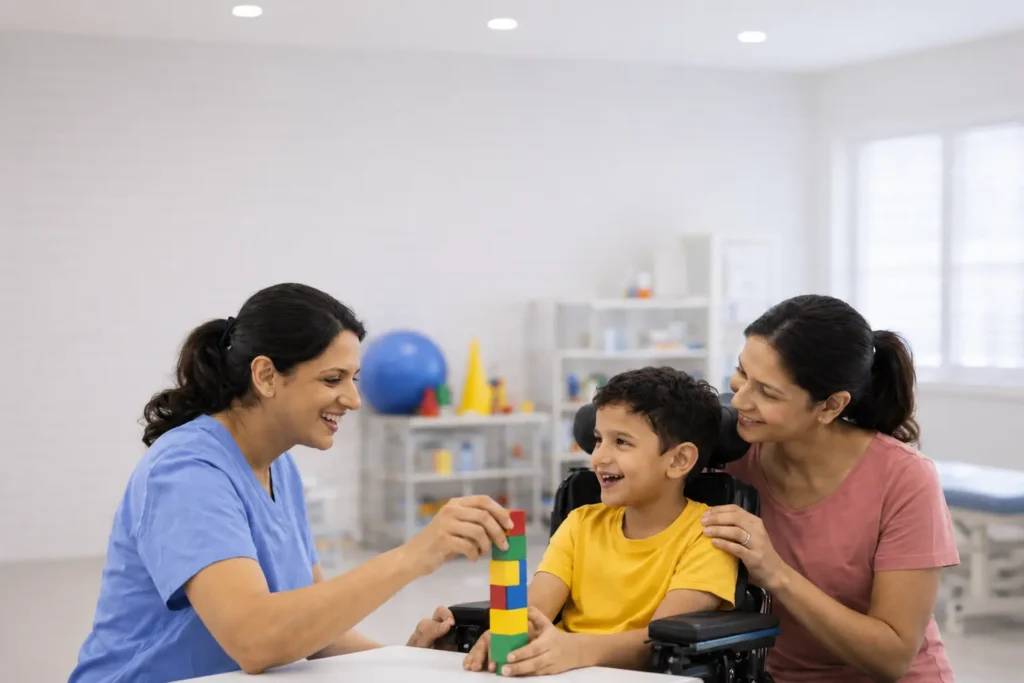
What is Cerebral Palsy?
Cerebral Palsy is a neurological movement disorder affecting muscle tone, posture, and coordination due to early brain injury or abnormal brain development. The cerebral palsy definition refers to a non-progressive but lifelong condition that primarily impacts motor function. Many parents search for what is cerebral palsy, define cerebral palsy, or the definition of cerebral palsy when early developmental delays appear in a cerebral palsy baby or cerebral palsy child. Cerebral palsy disease affects both children and adults, but cerebral palsy in children is most commonly diagnosed during infancy. Understanding cerebral palsy causes and cerebral palsy cause helps in early identification and structured intervention.
Ready to Begin?
Our centres in Bengaluru (HRBR Layout) and Hyderabad are open Monday to Saturday, 8:30 AM to 6:30 PM.
Types of Cerebral Palsy
Understanding the types of cerebral palsy is essential for accurate diagnosis, treatment planning, and long-term Cerebral Palsy management. The classification of cerebral palsy is primarily based on movement patterns, muscle tone abnormalities, and the parts of the body affected.
| Cerebral Palsy Types | Type of Cerebral Palsy | Key Movement Features | Common Symptoms of Cerebral Palsy | Body Parts Affected | Severity Range | Related Keywords |
| Spastic Cerebral Palsy | Most common cerebral palsy type | Increased muscle tone (spasticity), stiff muscles, tight joints | Muscle stiffness, exaggerated reflexes, difficulty walking | Legs, arms, or entire body | Mild cerebral palsy to severe | spastic cerebral palsy, cerebral palsy types |
| Spastic Diplegic Cerebral Palsy | Subtype of spastic CP | Predominantly affects lower limbs | Scissor gait, toe walking, delayed motor milestones | Mainly legs | Often moderate | spastic diplegic cerebral palsy, spastic diplegia cerebral palsy |
| Dyskinetic Cerebral Palsy | Movement disorder type | Involuntary, uncontrolled movements | Fluctuating muscle tone, twisting or jerky movements | Face, arms, legs | Moderate to severe | dyskinetic cerebral palsy |
| Athetoid Cerebral Palsy | Subtype of dyskinetic CP | Slow, writhing movements | Speech difficulties, facial grimacing | Hands, feet, face | Variable | athetoid cerebral palsy |
| Dystonic Cerebral Palsy | Subtype of dyskinetic CP | Sustained muscle contractions | Abnormal postures, muscle rigidity | Trunk and limbs | Moderate to severe | dystonic cerebral palsy |
| Ataxic Cerebral Palsy | Coordination-based type | Poor balance and depth perception | Tremors, unsteady walking, difficulty with fine motor tasks | Whole body | Usually mild to moderate | ataxic cerebral palsy |
| Mixed Cerebral Palsy | Combination of multiple types | Features of more than one movement disorder | Combination of spasticity and involuntary movements | Multiple regions | Often more complex | mixed cerebral palsy |
| Classification by Limb Involvement | Based on affected body parts | Hemiplegia (one side), Diplegia (both legs), Quadriplegia (all limbs) | Varies depending on distribution | One limb to full body | Mild to severe | cerebral palsy classification |
Causes of Cerebral Palsy
Understanding the causes of cerebral palsy is essential for early identification, prevention strategies, and structured cerebral palsy management. Cerebral Palsy causes are typically linked to abnormal brain development or brain injury occurring before, during, or shortly after birth. When families search for what causes cerebral palsy, the explanation often involves multiple medical and environmental factors rather than a single cerebral palsy cause.
- Prenatal Brain Development Abnormalities
One major cause of cerebral palsy involves abnormal brain formation during pregnancy. Genetic mutations, developmental malformations, or disruptions in fetal brain growth can interfere with motor control areas of the brain. In such cases, the cerebral palsy definition relates to impaired muscle coordination resulting from early developmental damage. These prenatal disturbances are among the leading cerebral palsy causes and may contribute to various cerebral palsy types, including spastic cerebral palsy and dyskinetic cerebral palsy.
- Lack of Oxygen to the Brain (Birth Asphyxia)
Reduced oxygen supply to the baby’s brain during labor or delivery is a recognized cause of cerebral palsy. Oxygen deprivation can damage motor control centers, leading to long-term movement disorders. This cerebral palsy cause is often associated with severe cerebral palsy symptoms and may result in spastic diplegic cerebral palsy or mixed cerebral palsy depending on the extent of injury. Early medical intervention plays a critical role in reducing the impact of such complications.
- Premature Birth and Low Birth Weight
Premature infants are at higher risk for cerebral palsy because the brain is still developing rapidly in the final weeks of pregnancy. Fragile blood vessels in premature babies may rupture, leading to bleeding in the brain. This increases the likelihood of cerebral palsy in children and may result in mild cerebral palsy or more complex cerebral palsy classification patterns. Prematurity remains one of the most common answers to the question of what causes cerebral palsy.
- Infections During Pregnancy
Maternal infections such as rubella, cytomegalovirus, toxoplasmosis, or untreated bacterial infections can interfere with fetal brain development. Inflammatory responses triggered by infection may damage the developing nervous system, contributing to cerebral palsy disease. These infections are significant causes of cerebral palsy and can influence the type of cerebral palsy diagnosed later, including ataxic cerebral palsy or dystonic cerebral palsy.
- Brain Infections After Birth
Serious infections in infancy, such as meningitis or encephalitis, may lead to inflammation and brain injury. Postnatal infections represent an important cerebral palsy cause, especially when untreated or severe. Resulting cerebral palsy symptoms may include muscle stiffness, involuntary movements, or coordination difficulties depending on the affected brain region.
- Traumatic Brain Injury in Early Childhood
Head trauma caused by accidents, falls, or physical injury during infancy can damage motor areas of the brain. This acquired form of cerebral palsy may present with symptoms of cerebral palsy similar to congenital cases. Early cerebral palsy diagnosis following brain injury allows structured cerebral palsy treatment and rehabilitation planning.
- Stroke in the Fetus or Newborn
A stroke occurring before or shortly after birth can interrupt blood flow to parts of the brain responsible for movement. This vascular cerebral palsy cause often results in hemiplegic patterns within the broader cerebral palsy classification. Early signs of cerebral palsy in newborns may include weakness on one side of the body or delayed motor milestones.
- Severe Neonatal Jaundice (Kernicterus)
Untreated high bilirubin levels in newborns can lead to kernicterus, a form of brain damage affecting movement control. This condition may contribute to dyskinetic cerebral palsy, including athetoid cerebral palsy. Prompt diagnosis and management of neonatal jaundice significantly reduce this preventable cause of cerebral palsy.
Symptoms of Cerebral Palsy
Recognizing the symptoms of cerebral palsy at an early stage supports timely cerebral palsy diagnosis and effective cerebral palsy treatment. Cerebral Palsy symptoms vary depending on the type of cerebral palsy, severity of brain injury, and overall neurological involvement. The following are the most common cerebral palsy signs and symptoms observed in infants, children, and adults.
- Abnormal Muscle Tone
One of the earliest and most noticeable cerebral palsy symptoms is abnormal muscle tone. Muscles may appear overly stiff, known as spasticity, which is commonly seen in spastic cerebral palsy, or unusually floppy in certain cases. Increased muscle tightness often affects posture and movement, particularly in spastic diplegic cerebral palsy, where stiffness mainly involves the legs. Fluctuating tone is more typical in dyskinetic cerebral palsy and dystonic cerebral palsy, contributing to difficulty in maintaining controlled movements.
- Delayed Developmental Milestones
Delayed motor milestones are among the early symptoms of cerebral palsy. A cerebral palsy baby may show delays in rolling over, sitting, crawling, or walking compared to age expectations. Parents often first notice concerns when a cerebral palsy child struggles with head control or balance. These delays are frequently linked to underlying cerebral palsy causes affecting motor development during early brain growth.
- Involuntary or Uncontrolled Movements
Involuntary movements are characteristic of certain cerebral palsy types, particularly athetoid cerebral palsy and other forms of dyskinetic cerebral palsy. Movements may appear twisting, writhing, jerky, or repetitive. These uncontrolled motions can interfere with daily activities, speech, and coordination. The classification of cerebral palsy helps specialists determine whether these movement patterns align with dyskinetic or mixed cerebral palsy.
- Poor Balance and Coordination
Balance difficulties are prominent in ataxic cerebral palsy. Affected individuals may exhibit an unsteady gait, tremors, or difficulty performing fine motor tasks such as writing or buttoning clothes. These cerebral palsy symptoms often become more noticeable as a child attempts standing and walking. Coordination challenges may range from mild cerebral palsy to more significant functional limitations depending on severity.
- Abnormal Gait Patterns
Walking abnormalities are common symptoms of cerebral palsy. Toe walking, scissor-like leg movements, crouched posture, or asymmetrical walking patterns frequently appear in spastic diplegia cerebral palsy and other spastic forms. Gait disturbances are key indicators used during cerebral palsy diagnosis and help determine appropriate cerebral palsy therapies.
- Speech and Swallowing Difficulties
Speech delays and articulation problems are frequent cerebral palsy signs and symptoms, especially in cases involving facial muscle control. A cerebral palsy patient may experience drooling, difficulty chewing, or swallowing challenges. These symptoms often require integrated cerebral palsy occupational therapy, speech therapy, and medical evaluation as part of comprehensive management of cerebral palsy.
- Seizures and Associated Neurological Conditions
Some individuals with cerebral palsy develop seizures due to underlying brain injury. Seizures are not present in all cerebral palsy types but are more common in severe cases or mixed cerebral palsy. In such situations, cerebral palsy medication may be prescribed to control seizure activity as part of holistic cerebral palsy management.
- Cognitive and Learning Difficulties
Although cerebral palsy primarily affects movement, certain children may experience learning difficulties or developmental delays. The severity varies widely, and many individuals with mild cerebral palsy have normal intelligence. Early therapeutic intervention improves outcomes in cerebral palsy in children by addressing both motor and cognitive needs.
Best Therapy Center for Cerebral Palsy at Plexus
Plexus is recognized as a leading therapy center for Cerebral Palsy that provides comprehensive, multidisciplinary care tailored to each patient’s unique needs. The center integrates advanced rehabilitation strategies to address the wide spectrum of cerebral palsy symptoms and enhance functional outcomes.
Aquatic therapy is a highly effective intervention included in structured cerebral palsy treatment programs. Performed in a warm, supportive water environment, aquatic therapy reduces the impact of gravity which allows easier movement and improved muscle relaxation. This environment helps children and adults with spastic cerebral palsy or poor balance and coordination to practice weight-bearing activities with less discomfort. Enhanced buoyancy encourages increased range of motion, improved gait patterns, and greater confidence during movement. Aquatic therapy also promotes cardiovascular fitness and can be particularly beneficial for individuals with severe stiffness or muscle tightness.
Physiotherapy remains the backbone of cerebral palsy rehabilitation and plays a central role in addressing motor deficits and impairments. Through individualized exercise regimes and hands-on techniques, physiotherapists work to improve strength, balance, flexibility, and posture. For children with spastic diplegic cerebral palsy or ataxic cerebral palsy, targeted interventions help normalize muscle tone, refine walking patterns, and enhance motor control. Regular physiotherapy also addresses delayed developmental milestones, making it an essential part of cerebral palsy management.
Occupational therapy focuses on improving fine motor skills and enabling greater independence in daily living activities. Therapists address skills such as self-feeding, dressing, writing, and hand-eye coordination. For children with cerebral palsy facing challenges in everyday tasks, occupational therapy supports adaptive techniques and assistive tools to enhance functional participation. This therapy is also crucial in promoting confidence and self-reliance within school, home, and community environments.
Cognitive rehabilitation is an integral component of holistic cerebral palsy care. Many children with cerebral palsy experience learning challenges or difficulties with attention, memory, and problem-solving. Cognitive rehabilitation uses structured exercises and practice strategies to improve mental processing, task planning, and executive functioning. This approach helps individuals become more efficient in academic tasks, social interaction, and everyday decision-making.
Speech therapy is essential for addressing communication challenges often seen in cerebral palsy patients. Therapists work on articulation, expressive language skills, and phonological awareness to improve verbal communication. Speech therapy also helps those with unclear speech patterns due to muscle control difficulties in the face and mouth. For many children with cerebral palsy, improved communication skills enhance learning opportunities, social engagement, and overall quality of life.
Swallowing therapy is critical for children and adults who experience feeding or swallowing difficulties, which are common cerebral palsy signs and symptoms. Trained specialists assess and treat oral-motor control difficulties to improve safe swallowing and reduce the risk of aspiration. Strategies may include strengthening exercises, sensory stimulation techniques, and posture optimization during meals. Swallowing therapy supports improved nutrition and reduces feeding-related health risks.
Why Choose Plexus in India
Selecting the right centre plays a crucial role in determining recovery outcomes. Plexus stands out for its structured approach, clinical expertise, and integrated rehabilitation model.
Expertise: Since 2011, Plexus has specialized in neurological and regenerative rehabilitation, treating hundreds of thousands of patients and establishing a strong reputation in complex nerve-injury care. The team consists of experienced specialists in neurology and neurosurgery, ensuring comprehensive evaluation and advanced treatment solutions under one roof.
Facilities & Multidisciplinary Team: Recognized as India’s first ISO-certified regenerative rehabilitation and research centre, Plexus is equipped with state-of-the-art diagnostic imaging systems, advanced surgical theatres, and dedicated rehabilitation suites. The interdisciplinary team includes neurologists, neurosurgeons, physiotherapists, occupational therapists, pain specialists, and regenerative medicine experts who collaborate closely to deliver coordinated and outcome-focused care.
Patient Journey & Access: From initial consultation through discharge and long-term follow-up, a structured care pathway ensures clarity and continuity throughout recovery. Support is available for both domestic and international patients, with cost-effective treatment options that maintain high clinical standards. Comfortable outpatient programs, personalized therapy planning, and accessible communication channels reflect a strong commitment to patient-centered rehabilitation.
Ready to Begin?
Our centres in Bengaluru (HRBR Layout) and Hyderabad are open Monday to Saturday, 8:30 AM to 6:30 PM.
Other Disorders Treated at Plexus
At Plexus,expertise extends to offer comprehensive care for a variety of neurological and related conditions. Plexus provide specialized treatments for disorders such as, Brachial Plexus Injury , Spinocerebellar Ataxia, Sensory Processing Disorder (SPD), Cerebral Palsy, Multiple Sclerosis,Parkinson’s disease, Spinal Cord Injury, Motor Neuron Disease, Stroke, Autoimmune Conditions, Orthopedic Conditions, and Sports Injuries. Plexus multidisciplinary approach, incorporating therapies like Cell Therapy, Physiotherapy, Occupational Therapy, Aquatic Therapy, and Speech Therapy, ensures personalized care tailored to each condition, helping patients achieve improved mobility, function, and quality of life.
FAQs
What is cerebral palsy? Cerebral palsy is a neurological movement disorder caused by early brain injury or abnormal brain development. The cerebral palsy definition describes a non-progressive condition that affects muscle tone, posture, and coordination.
What are the 4 types of cerebral palsy? The four main cerebral palsy types include spastic cerebral palsy, dyskinetic cerebral palsy, ataxic cerebral palsy, and mixed cerebral palsy. The classification of cerebral palsy is based on movement patterns and muscle tone abnormalities.
What are the early signs of cerebral palsy in newborns? Early signs of cerebral palsy in newborn infants may include poor head control, abnormal muscle tone, delayed motor milestones, feeding difficulties, and unusual reflex patterns. Recognizing cerebral palsy symptoms in babies allows early cerebral palsy diagnosis.
What causes cerebral palsy? Cerebral palsy causes may include premature birth, oxygen deprivation during delivery, infections during pregnancy, neonatal stroke, or traumatic brain injury. Often, the cause of cerebral palsy involves multiple prenatal or perinatal factors.
How is cerebral palsy diagnosis confirmed? Cerebral palsy diagnosis involves neurological examination, developmental assessment, and brain imaging such as MRI. Evaluation by cerebral palsy specialists helps determine the specific type of cerebral palsy and appropriate treatment of cerebral palsy.
What is the newest treatment for cerebral palsy? The newest treatment for cerebral palsy may include advanced regenerative cell therapy combined with structured rehabilitation programs such as physiotherapy, occupational therapy, speech therapy, and cognitive rehabilitation.
Can mild cerebral palsy improve with therapy? Mild cerebral palsy often shows significant functional improvement with early and consistent cerebral palsy therapies, including physiotherapy and cerebral palsy occupational therapy.
About the Author
Dr. Na’eem Sadiq
Medical Director of Plexus
Dr. Na’eem Sadiq is a globally recognized neurologist and neuropsychiatrist, renowned for his contributions to the treatment of complex neurological disorders. He founded Plexus in 2011 with a mission to enhance the quality of life for patients living with neurological conditions.
With over 35 years of clinical experience, Dr. Sadiq is considered a leading expert in the field. His internationally acclaimed research spans key topics such as Demyelinating Polyneuropathy, Multiple Sclerosis, Epilepsy, and Migraine, positioning him at the forefront of neurological care worldwide.