
When a Brachial Plexus Injury Changes Everything
A brachial plexus injury rarely arrives with warning. For many families, it follows a difficult birth. For others, it follows a road accident, a workplace incident, or a sports collision. In either case, the result is the same: a network of nerves that once allowed an arm to move, feel, and function is now damaged, and the person attached to that arm must navigate a life that has been quietly but significantly altered.
Weakness where there was once strength. Numbness where there was once sensation. An arm that hangs differently or will not respond. A child who cannot hold a toy with both hands or lift their affected arm above their head. An adult who cannot dress themselves, handle utensils, or manage the basic daily tasks that an undamaged upper limb makes effortless.
Families searching for the best hospital for brachial plexus treatment India are not looking for a hospital that can name the condition. They are looking for a centre that understands what the injury means at a nerve level, that knows how to address it with more than physical exercises alone, and that delivers a programme coordinated enough to produce outcomes that standard rehabilitation cannot.
What Does the Evidence Say About Brachial Plexus Injury Rehabilitation?
The published research base for brachial plexus rehabilitation supports a structured, multidisciplinary approach that addresses both the neurobiological and functional dimensions of the injury:
- Research published in the Journal of Neurosurgery has consistently confirmed that early structured rehabilitation after brachial plexus injury significantly improves both the rate and extent of functional recovery compared to delayed or unstructured intervention, particularly in patients with neurapraxic or axonotmetic injuries where spontaneous nerve regrowth is occurring.
- Studies in developmental medicine and child neurology have demonstrated that children with brachial plexus birth injuries who receive structured occupational and physiotherapy rehabilitation produce meaningfully better functional outcomes in terms of hand use, bimanual coordination, and activities of daily living than those who receive no therapy or delayed therapy, even in cases of partial nerve avulsion.
- The evidence for cell therapy in peripheral nerve injury contexts, drawn from research published in Nature Reviews Neurology and related journals, supports the capacity of autologous bone marrow derived cells to reduce the inflammatory environment surrounding damaged nerve tissue and release neurotrophic factors including BDNF and GDNF that support the survival and regrowth of injured nerve fibres.
- Plexus’s approach to brachial plexus treatment is built on this evidence base, combining the neurobiological foundation of autologous cell therapy with the structured physiotherapy and occupational therapy that the published literature consistently identifies as essential to meaningful functional recovery.
Ready to Begin?
Our centres in Bengaluru (HRBR Layout) and Hyderabad are open Monday to Saturday, 8:30 AM to 6:30 PM.
What Makes Plexus the Best Brachial Plexus Treatment Hospital in India
Cell Therapy: Addressing the Nerve Damage at Its Biological Source
Autologous cell therapy is the neurobiological core of Plexus’s brachial plexus treatment programme. Cells are drawn from the patient’s own bone marrow, processed under ISO-certified laboratory conditions at Plexus, and administered to support the damaged nerve environment.
In the context of brachial plexus injury, the regenerative properties of autologous bone marrow derived cells aid in the repair of damage caused by tearing or traction on the nerve roots and trunks. The cells reduce the chronic inflammatory environment that impedes nerve recovery, release BDNF and GDNF neurotrophic factors that support neuronal survival and axonal regrowth, and provide a more neurologically receptive substrate within which physiotherapy and occupational therapy gains are more meaningful and more durable.
The procedure is minimally invasive, requires no open surgery, no general anaesthesia, and no extended hospital stay. Because the cells are the patient’s own, there is no requirement for donor matching and no immune suppression is needed.
Physiotherapy: Restoring Motor Function, Strength, and Sensory Awareness
Plexus’s physiotherapy for brachial plexus injury is delivered by physiotherapists with specific expertise in upper limb peripheral nerve injury and neurorehabilitation. The programme is not a general upper limb exercise protocol. It is designed around the specific nerve roots affected, the muscles those roots supply, and the functional deficits each individual patient presents with.
- Strengthening and Motor Retraining: Targeted exercises to progressively rebuild strength and voluntary motor control in the muscles of the shoulder, arm, forearm, and hand that have been weakened or paralysed by the nerve injury, graded carefully to the patient’s current level of innervation and motor recovery.
- Range of Motion and Flexibility: Structured work to maintain and restore joint mobility across the shoulder, elbow, forearm, wrist, and hand, preventing the contracture and joint stiffness that accumulate rapidly in the absence of active movement and further restrict functional recovery.
- Sensory Awareness and Tone Rehabilitation: Targeted sensory retraining for the affected extremity to rebuild the sensory feedback pathways that normal motor control depends on, addressing the numbness, altered sensation, and reduced proprioceptive awareness that brachial plexus injury commonly produces alongside motor loss.
- Direct Current Stimulation: Electrical stimulation applied by Plexus’s physiotherapy team to support neuromuscular re-education, slowing muscle atrophy during the period of nerve recovery and facilitating the re-establishment of motor unit activation in muscles that have lost their nerve supply.
- Biofeedback: Training to support voluntary motor activation in muscles with partial or recovering innervation, using biofeedback to provide patients with real-time information about muscle activation that conscious effort alone cannot reliably generate in the early stages of nerve recovery.
- Bracing: Where functional positioning of the affected limb requires structural support during recovery, Plexus’s physiotherapy team integrates appropriate bracing strategies into the programme to protect joint integrity and enable functional positioning.
Occupational Therapy: Rebuilding the Practical Skills of Daily Life
Occupational therapy at Plexus for brachial plexus injury addresses the functional dimension of the condition that physiotherapy alone cannot fully reach: the practical daily independence that a functioning upper limb makes possible and that a brachial plexus injury progressively removes.
- Muscle Re-education and Retraining Therapy: Structured occupational therapy techniques to rebuild voluntary motor control in the affected arm and hand through purposeful, task-oriented activity, graded to the patient’s current functional capacity and progressed systematically across the programme.
- Sensory Re-education Therapy: Systematic rebuilding of sensory processing in the affected limb through a carefully structured programme that progresses from basic tactile awareness through to discriminative sensation, restoring the sensory feedback that effective daily hand use requires and that brachial plexus injury consistently disrupts alongside motor loss.
- Mirror Therapy: A neuroplasticity-based intervention that uses the visual representation of normal limb movement to activate and reorganise the motor cortex networks associated with the affected limb. Mirror therapy supports motor recovery by engaging the cortical and subcortical motor planning systems that direct upper limb movement, even when the peripheral nerve pathway remains incomplete.
- Hand Function Training: Systematic training of the grip, pinch, and fine motor skills that daily life depends on, including grip strength for functional holds on objects of varying size and weight, pinch precision for writing, fastening, and handling small objects, and bimanual coordination to rebuild the capacity to use both hands together in the two-handed daily tasks that brachial plexus injury has restricted.
- ADL Training: Activities of daily living training that translates motor and sensory gains into genuine practical independence, covering dressing and personal care, meal preparation and eating, writing and keyboard use, and household task management, all adapted to the patient’s current functional level and progressed as recovery allows.
- Hand Splinting: Individually designed splints provided and reviewed by Plexus’s occupational therapy team to maintain joint alignment, prevent contracture, and support functional hand positioning during recovery. Splints are regularly modified to reflect each patient’s evolving functional status throughout the programme.
How Does Brachial Plexus Treatment at Plexus Compare to Standard Approaches?
| Factor | Standard Brachial Plexus Treatment | Plexus Brachial Plexus Treatment |
| Neurobiological Intervention | Not available | ISO-certified autologous cell therapy |
| Physiotherapy Specificity | General upper limb rehabilitation | Brachial plexus nerve-specific programme |
| Occupational Therapy | Often a separate referral | Integrated within a single coordinated programme |
| Sensory Re-education | Rarely included | Structured component of the programme |
| Mirror Therapy | Not routinely provided | Integrated within occupational therapy |
| Hand Splinting | Variable availability | Individually designed and reviewed throughout |
| Children’s Play Retraining | Not consistently offered | Developmentally grounded programme for all ages |
| ISO Certification | Not standard | ISO-certified across complete cell therapy process |
| Programme Coordination | Fragmented across separate providers | Fully coordinated within a single clinical structure |
Who Should Consider Treatment at This Brachial Plexus Treatment Center India
Plexus’s clinical team assesses every patient individually. The programme at this top hospital for brachial plexus injury India is most appropriate for patients who:
- Are infants or children diagnosed with Erb’s Palsy or Klumpke’s Palsy following a brachial plexus birth injury, at any stage from the earliest weeks of diagnosis through to residual functional deficits in older children where prior treatment has not produced adequate functional return
- Are adults who have sustained traumatic brachial plexus injuries through road accidents, sports, workplace incidents, or other causes, regardless of whether the injury is recent or time has already passed since the initial event
- Have not previously received structured, condition-specific brachial plexus rehabilitation and are seeking a programme designed around the actual nerve biology of the injury rather than general upper limb physiotherapy
- Have undergone surgical nerve repair and require post-operative rehabilitation of sufficient depth and specificity to translate the neurological outcomes of surgery into functional daily gains
- Find that current or prior rehabilitation has not produced the functional improvements in arm, hand, or daily independence that were expected, and are seeking a brachial plexus specialist hospital India that combines neurobiological and rehabilitative intervention
What Improvements Have Patients Experienced Through Brachial Plexus Treatment at Plexus
Patients across both adult and paediatric presentations who have completed brachial plexus treatment at Plexus have reported:
- Meaningful return of voluntary movement in the affected arm and hand, including the ability to lift the arm, flex the elbow, grip objects, and perform daily tasks that had previously been entirely absent since the injury or from birth
- Progressive recovery of sensation through the affected limb across the course of the programme, with patients describing a gradual return of tactile and proprioceptive awareness that restored their ability to use the hand more purposefully
- Greater independence in dressing, eating, writing, and personal care, with patients reporting a meaningful reduction in the family assistance they had depended on since the injury
- In children, spontaneous and confident use of the previously affected hand in bimanual play and daily activities it had previously been excluded from, with families reporting that the programme produced improvements no prior treatment attempt had achieved
- Sustained functional gains following discharge from Plexus’s programme, reflecting the neurological depth of the combined cell therapy and rehabilitation approach rather than temporary improvement that regresses after treatment ends
Why Plexus Is the Best Hospital for Brachial Plexus Treatment India
India’s First ISO-Certified Regenerative Rehabilitation and Research Centre
- ISO certification at Plexus covers the complete cell therapy process, laboratory standards, and clinical programme structure across both Bangalore and Hyderabad centres, providing independently verified quality assurance that no other brachial plexus specialist hospital India can currently offer.
The Only Programme Combining Cell Therapy With Fully Integrated Specialist Rehabilitation
- Cell therapy, Physiotherapy, and Occupational Therapy are each designed at Plexus to build directly on one another within a single coordinated programme. The neurobiological foundation established by cell therapy creates a more receptive environment for both physiotherapy motor retraining and occupational therapy functional rehabilitation, producing outcomes that neither biological nor rehabilitative intervention achieves alone.
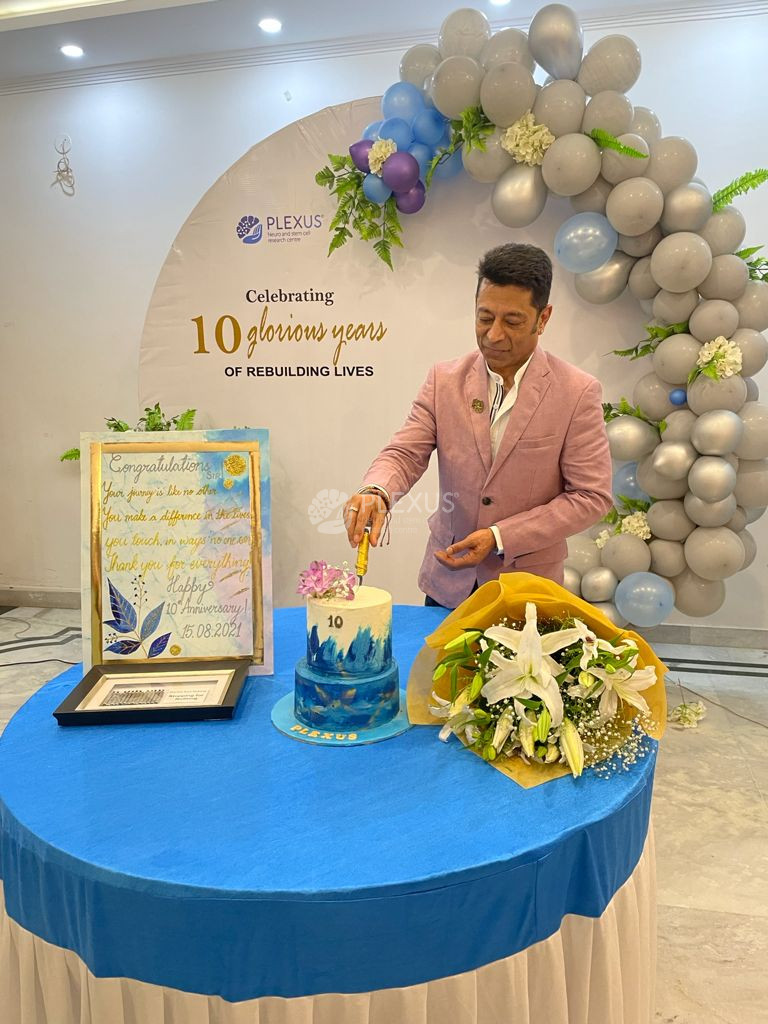
Founded and Led by Dr. Na’eem Sadiq
- With over 35 years of neurological expertise and more than 500,000 patients treated, Dr. Na’eem Sadiq provides the clinical foundation from which every aspect of Plexus’s brachial plexus treatment programme is designed and delivered.
Over 70 National and International Awards for Clinical Excellence
- More than 70 national and international awards for clinical excellence in neurological and regenerative rehabilitation reflect consistent outcomes across brachial plexus injury presentations at every severity level and across both paediatric and adult populations.
Other Neurological Conditions Treated at Plexus
Plexus’s expertise in brachial plexus treatment is part of a broader clinical commitment to neurological and regenerative care. Specialist programmes are available for Cerebral Palsy, Multiple Sclerosis, Spinal Cord Injury, Parkinson’s Disease, Motor Neuron Disease, Stroke, Spinocerebellar Ataxia, and Autoimmune Neurological Conditions.
Ready to Begin?
Our centres in Bengaluru (HRBR Layout) and Hyderabad are open Monday to Saturday, 8:30 AM to 6:30 PM.
Source Transparency and Editorial Accountability
Supporting Evidence
- Midha, R. (1997). Epidemiology of brachial plexus injuries in a multitrauma population. Neurosurgery, 40(6), 1182-1189. https://journals.lww.com (Source for causes and severity classification of traumatic brachial plexus injuries in adult populations.)
- Pondaag, W., Malessy, M.J.A., et al. (2004). Natural history of obstetric brachial plexus palsy: a systematic review. Developmental Medicine and Child Neurology, 46(2), 138-144. (Source for Erb’s Palsy and Klumpke’s Palsy clinical presentation, recovery trajectories, and rehabilitation evidence.)
- Terzis, J.K., Kostopoulos, V.K. (2007). The surgical treatment of brachial plexus injuries in adults. Plastic and Reconstructive Surgery, 119(4), 73e-92e. (Source for nerve injury severity grading: neurapraxia, axonotmesis, neurotmesis, and avulsion in brachial plexus injury.)
- Barker, R.A., et al. (2017). New approaches to cell therapy for neurological injury. Nature Reviews Neurology, 13(11), 655-669. https://www.nature.com (Source for autologous cell therapy mechanisms including BDNF and GDNF release in peripheral nerve injury contexts.)
- Yancosek, K.E., Howell, D. (2009). A narrative review of dexterity assessments. Journal of Hand Therapy, 22(3), 258-270. (Source for hand function rehabilitation and occupational therapy outcomes in peripheral nerve injury.)
- Indian Council of Medical Research (ICMR). Guidelines on Regenerative Medicine and Cell-Based Therapies. https://www.icmr.gov.in
- Plexus Clinical Programme Data, used for editorial validation. Plexus
Revision Timeline: May 2026. Content covering brachial plexus injury treatment at Plexus, including cell therapy, physiotherapy, and occupational therapy within the Regenerative Rehabilitation Programme at Bangalore and Hyderabad centres.
Last Updated: May 2026
Frequently Asked Questions
What makes Plexus the best hospital for brachial plexus treatment in India?
Plexus is India’s first ISO-certified regenerative rehabilitation and research centre, combining autologous cell therapy with specialist physiotherapy and occupational therapy for brachial plexus injury within a fully coordinated Regenerative Rehabilitation Programme, under the clinical leadership of Dr. Na’eem Sadiq with over 35 years of neurological expertise and more than 500,000 patients treated.
Does the best brachial plexus treatment hospital in India at Plexus treat children and adults?
Yes. Plexus treats brachial plexus injury across all patient groups, including infants and children with Erb’s Palsy and Klumpke’s Palsy following birth injury, and adults who have sustained traumatic brachial plexus injuries through accidents, sports, or occupational incidents.
What treatments does this brachial plexus treatment center India provide for brachial plexus injury?
Plexus’s brachial plexus treatment programme includes autologous cell therapy, specialist physiotherapy covering motor retraining, sensory rehabilitation, direct current stimulation, and biofeedback, and occupational therapy including muscle re-education, sensory re-education, mirror therapy, hand function training, ADL training, hand splinting, and play skill retraining for children, delivered as a coordinated programme.
Is treatment at this top hospital for brachial plexus injury India available for patients from outside Bangalore or Hyderabad?
Yes. Plexus serves patients from across India and internationally. Initial consultations can be arranged remotely and in-person programme scheduling is coordinated to accommodate travel from any location within India or abroad.
How long does brachial plexus treatment at this brachial plexus specialist hospital India take?
Programme duration at Plexus is individualised following a thorough multi-domain clinical assessment. The specialist team establishes a structured treatment timeline at the outset and reviews it regularly based on each patient’s injury severity, nerve recovery progress, and rate of functional improvement through the programme.