
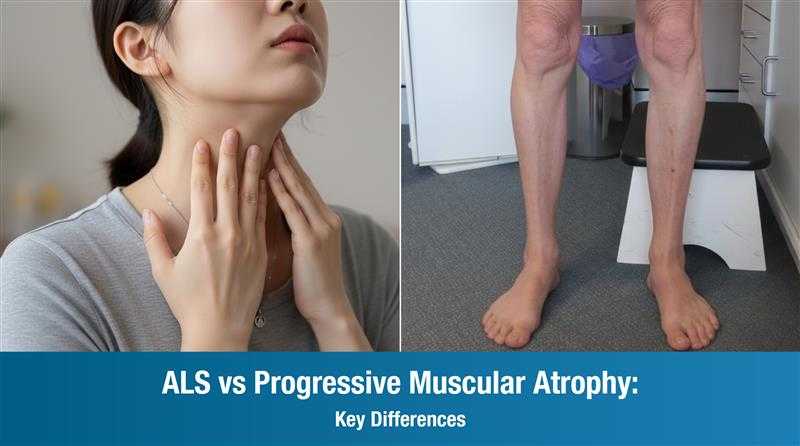
When it comes to Motor Neuron Disease (MND), two conditions that are often compared — and sometimes confused — are Amyotrophic Lateral Sclerosis (ALS) and Progressive Muscular Atrophy (PMA). While both fall under the MND spectrum, understanding what sets them apart is essential for early intervention and accurate diagnosis.
At Plexus , we work with patients every day who want clarity on these two conditions. This guide breaks it down simply and clearly.
Understanding ALS and Progressive Muscular Atrophy
What is ALS?
ALS is a progressive neurodegenerative condition that affects both upper motor neurons (UMNs) — the nerves that carry signals from the brain to the spinal cord — and lower motor neurons (LMNs) — the nerves that connect the spinal cord to the muscles.
Because both types of neurons are affected, ALS leads to:
- Muscle weakness
- Stiffness or spasticity
- Reduced coordination
- Difficulty with movement, speech, swallowing, and breathing
In simple terms, ALS is a type of Motor Neuron Disease that involves widespread nerve-cell damage affecting both signal pathways from brain to muscles.
What is Progressive Muscular Atrophy (PMA)?
PMA is a variant of motor neuron disease that affects only lower motor neurons (LMNs). These are the nerves that directly control muscle movement.
As a result, PMA causes:
- Muscle wasting
- Reduced or absent reflexes
- Weakness without stiffness or spasticity
- Slower progression compared to ALS
This makes PMA a more selective form of Motor Neuron Disease, primarily causing muscle weakness and wasting while sparing the upper motor neurons.
Causes and Risk Factors
Understanding what causes these conditions can help with early recognition and proactive care.
Common Causes of ALS
Although the exact causes of Motor Neuron Disease remain under study, ALS may develop due to:
- Genetic mutations (5–10% of cases)
- Oxidative stress
- Glutamate toxicity
- Autoimmune mechanisms
- Environmental exposures (toxins, chemicals, physical stress)
Risk Factors for PMA
The underlying cause of PMA is less defined, but risk factors include:
- Age above 50
- Male gender
- Sporadic onset
- Rare genetic associations
Symptoms and Clinical Differences
While ALS and PMA share some similarities, their clinical patterns reveal clear distinctions.
Symptoms Seen in ALS
Because ALS affects both UMNs and LMNs, symptoms are more varied:
- Muscle stiffness (spasticity)
- Twitching or cramps
- Limb weakness
- Difficulty speaking or swallowing
- Breathing challenges
- Increased or abnormal reflexes
These symptoms are typical of both Upper Motor Neuron Disease and LMN involvement.
Symptoms Unique to PMA
PMA progresses more slowly and does not involve UMNs:
- Muscle wasting
- Reduced or absent reflexes
- Fasciculations
- Gradual limb weakness
- No spasticity or exaggerated reflexes
This is why PMA patients are often classified under Lower Motor Neuron Disease.
Diagnosis and Medical Evaluation
Accurate diagnosis helps differentiate ALS from PMA and guides the right Motor Neuron Disease treatment in India.
Tests for ALS Diagnosis
ALS diagnosis confirms both UMN and LMN damage through:
- EMG
- NCS
- MRI of brain and spine
- Blood and urine tests
- Pulmonary function tests
- Neurological evaluation
Tests for PMA Identification
PMA diagnosis focuses on LMN-only damage:
- EMG showing LMN degeneration
- NCS for nerve integrity
- Clinical examination confirming no UMN signs
- MRI to rule out structural causes
- Progression monitoring
Some PMA patients may later show UMN signs and move into the ALS spectrum.
Best Therapies for MND at Plexus
Our multidisciplinary approach improves movement, communication, independence, and overall wellbeing for individuals with Motor Neuron Disease including ALS and PMA.
Physiotherapy
- Improves mobility and strength
- Reduces stiffness
- Prevents complications like contractures
Occupational Therapy
- Restores independence in daily activities
- Offers adaptive tools and modified techniques
- Enhances safety and energy efficiency
Speech and Language Therapy
- Improves speech clarity and voice control
- Supports safe swallowing
- Provides assistive communication devices
Cell Therapy
Plexus leads India in regenerative neurorehabilitation.
Cell Therapy helps:
- Support surviving motor neurons
- Slow degeneration
- Improve functional outcomes
- Reduce inflammation
Combined with rehabilitation, it significantly enhances quality of life.
Other Disorders and Treatments Offered at Plexus
Plexus offers advanced therapies for neurological, musculoskeletal, and autoimmune conditions.
Therapies
- Aquatic Therapy
- Physiotherapy
- Occupational Therapy
- Cognitive Therapy
- Sensory Integration Therapy
- Behavior Therapy
- Hand Rehabilitation
- Custom Splinting and Orthotics
- Speech and Language Therapy
- Early Intervention Program
- Swallowing Therapy
- Obesity and Lifestyle Management
Disorders Treated
- Brachial Plexus Injury
- Spinocerebellar Ataxia
- Sensory Processing Disorder (SPD)
- Cerebral Palsy
- Multiple Sclerosis
- Spinal Cord Injury
- Motor Neuron Disease
- Stroke
- Autoimmune Conditions
- Orthopedic Conditions
- Sports Injuries
Patient Success Stories: Transformative Impact
Dr. Na’eem Sadiq’s expertise and compassionate approach have profoundly impacted the lives of countless patients at Plexus. By combining personalized therapies with innovative treatment methods, he has helped individuals overcome significant challenges and regain independence. The following success stories highlight the transformative outcomes under his care:
Enhanced Mobility: A 60-year-old Parkinson’s patient, who faced difficulty walking due to tremors, experienced significant improvement in balance and gait after six months of Aquatic Therapy and Physiotherapy. Under Dr. Sadiq’s guidance, the patient regained independent movement and greater confidence in daily activities.
Improved Communication Skills: A patient struggling with speech difficulties made remarkable progress through a customized Speech Therapy program designed by Dr. Sadiq. The therapy helped restore communication abilities and boosted the patient’s confidence in social interactions.
Restored Daily Functionality: A 55-year-old patient from Bangalore, initially struggling with basic tasks like dressing and personal care, regained independence and returned to work within four months after undergoing targeted Occupational Therapy. The program was tailored to rebuild functional skills and support everyday activities.
Greater Independence: A 65-year-old patient experiencing severe stiffness and limited mobility showed remarkable improvement after five months of Cell Therapy combined with Physiotherapy. The treatment significantly enhanced mobility and enabled the patient to achieve a higher level of independence in daily life.
Transformative Recovery Journey: Another patient, deeply appreciative of Dr. Sadiq’s attentive care, demonstrated substantial progress in both motor skills and communication after a three-month program combining Speech Therapy and Occupational Therapy at Plexus. The holistic approach helped restore functional abilities and improve overall quality of life.
Choosing the Right Support for ALS and PMA
Choosing the right care team can transform the journey with ALS or PMA.
Build the Right Care Team
Choose a centre that offers:
- Experienced neurologists
- Physiotherapy, OT, and speech therapy together
- Respiratory and nutritional support
- Counselling for patients and caregivers
Opt for Personalised Rehabilitation
Effective rehab should be:
- Goal-driven
- Updated regularly
- Focused on independence and safety
Prepare Early, Not Late
Small early decisions help prevent complications:
- Home safety modifications
- Timely mobility aids
- Adaptive devices
Support Beyond the Physical
Emotional health is equally important:
- Join patient communities
- Plan ahead calmly
- Support caregivers
Consider Regenerative Options Wisely
Choose centres that combine cell therapy with structured rehabilitation and clear medical supervision.
Why is Plexus the Best Choice for Treatments in India?
Plexus is a leading centre for neuro-rehabilitation and regenerative therapies, providing specialised care for ALS, PMA, and other neurological disorders. With expert specialists, personalised rehab plans, advanced regenerative treatments, and all therapies under one roof, Plexus delivers effective, comprehensive support for anyone with Motor Neuron Disease.
Reach Out to Us
WhatsApp: +91 89048 42087
Call: +91 78159 64668 (Hyderabad) | +91 93555 33404 (Bangalore)
FAQs
What is the main difference between ALS and PMA?
ALS affects both UMNs and LMNs, while PMA affects only LMNs.
Is PMA considered a variant of ALS?
Yes, PMA is considered part of the ALS spectrum.
What are the early signs of PMA?
Muscle wasting, reduced reflexes, and gradual limb weakness.
Which condition progresses faster, ALS or PMA?
ALS typically progresses faster.
How is PMA diagnosed differently from ALS?
PMA is confirmed by LMN-only damage with no UMN signs.
Are ALS and PMA treated the same way?
They share similar goals, but treatments are personalized to each condition.
About the Author
Dr. Na’eem Sadiq
Medical Director of Plexus
Dr. Na’eem Sadiq is a globally recognized neurologist and neuropsychiatrist, renowned for his contributions to the treatment of complex neurological disorders. He founded Plexus in 2011 to enhance the quality of life for patients living with neurological conditions.
With over 35 years of clinical experience, Dr. Sadiq is considered a leading expert in the field. His acclaimed research spans Demyelinating Polyneuropathy, Multiple Sclerosis, Epilepsy, and Migraine—placing him at the forefront of neurological care worldwide.