
When the Hands Begin to Fail
For most people living with Parkinson’s disease, the loss of hand control is where independence first starts to feel fragile. A signature that no longer looks like itself. A button that takes four attempts to fasten. A fork that shakes between the plate and the mouth.
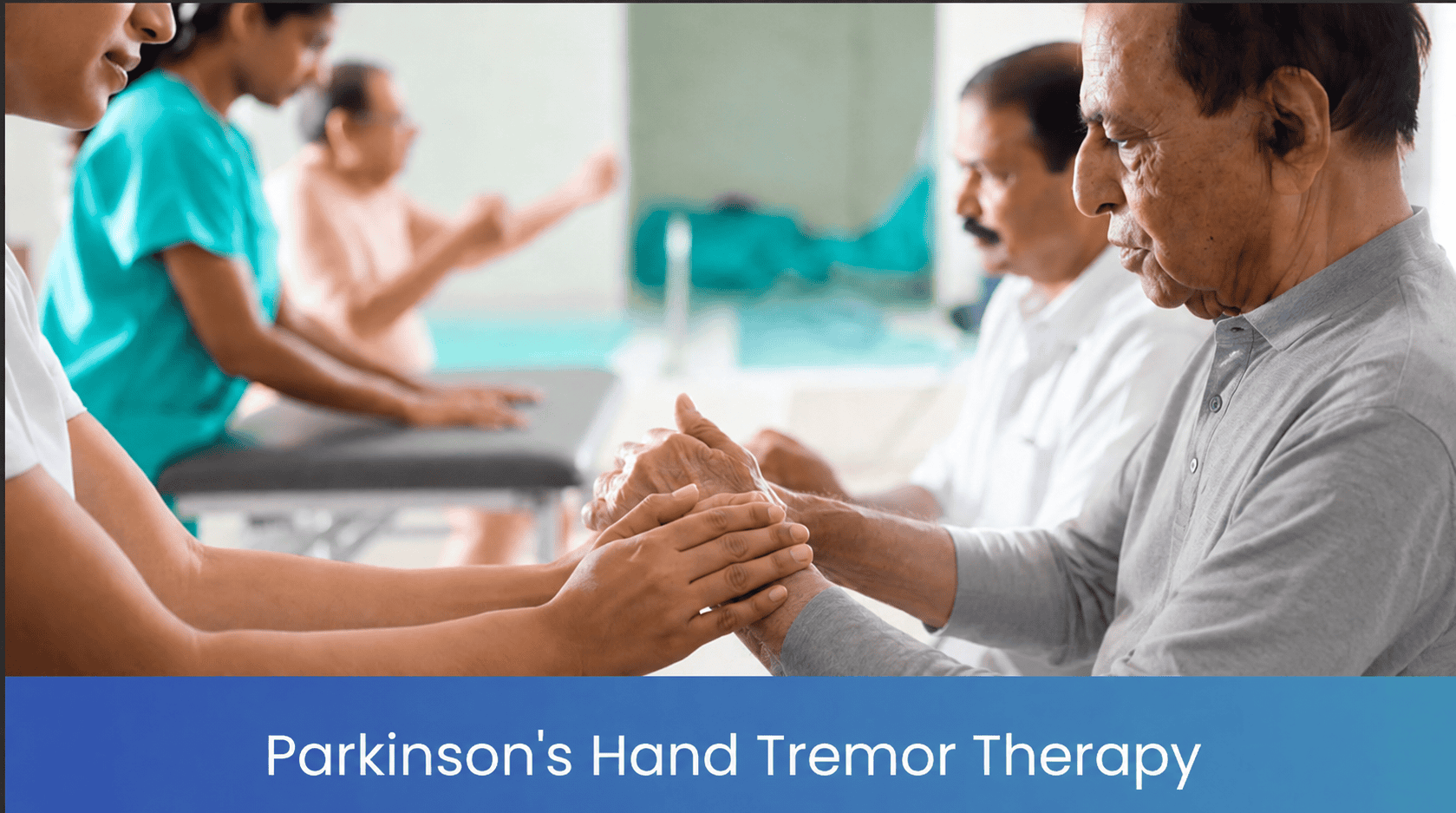
Parkinson’s hand tremor therapy at Plexus addresses this directly, combining autologous mesenchymal cell therapy with specialist Hand Rehabilitation and Occupational Therapy to target the neurological source of fine motor deterioration, not just the symptoms it produces.
Founded by Dr. Na’eem Sadiq, Plexus brings over 35 years of neurological expertise and has treated more than 500,000 patients. As India’s first ISO-certified regenerative rehabilitation and research centre, it delivers condition-specific Parkinson’s hand tremor therapy within a fully integrated clinical programme.
Why Does Parkinson’s Disease Affect the Hands?
Parkinson’s disease causes the degeneration of dopaminergic neurons in the substantia nigra, disrupting the basal ganglia circuitry that coordinates voluntary movement. This produces:
- Resting tremor, typically beginning in one hand, with a characteristic pill-rolling motion that directly affects writing, eating, and holding objects steadily
- Parkinson’s hand stiffness treatment needs arising from rigidity in the hand and forearm, reducing the fluid range of movement needed for dressing and personal care
- Bradykinesia causing progressively smaller, slower handwriting known as micrographia, and difficulty managing cutlery, buttons, and zips
- Reduced grip strength and sensory feedback, making tasks that once required no conscious effort demand significant concentration and energy
- Coordination problems in Parkinson’s therapy arising from the breakdown in the timing and sequencing of motor signals between the brain and the hands
These changes do not respond fully to dopamine replacement medication alone. A neurobiologically targeted approach combined with specialist rehabilitation is clinically necessary for meaningful, durable improvement.
How Plexus’s Parkinson’s Hand Tremor Therapy Works
Cell therapy at Plexus supports the fine motor circuitry of the brain through the following mechanisms:
- Neuroprotection of surviving dopaminergic neurons in the substantia nigra, directly slowing the progression of hand tremor, rigidity, and bradykinesia
- Neuroinflammation reduction across the motor networks governing hand function, creating a more stable environment for neuronal survival
- Release of BDNF and GDNF neurotrophic factors that sustain motor circuit integrity and support the pathways governing fine motor coordination and grip
- A stronger neurological foundation for Hand Rehabilitation and Occupational Therapy, producing more durable functional gains than rehabilitation alone can achieve against ongoing degeneration
What Does Parkinson’s Hand Tremor Therapy at Plexus Involve?
Clinical Assessment
Before treatment begins, the Plexus team evaluates:
- Tremor characteristics, rigidity severity, and bradykinesia across both hands
- Fine motor task performance covering writing, dressing, fastening, and feeding
- Grip strength and coordination assessment
- Daily independence profile documenting where Parkinson’s independence loss therapy is most urgently needed
Autologous Cell Therapy Procedure
Mesenchymal cells are harvested from the patient’s bone marrow under local anaesthesia, processed in Plexus’s ISO-certified laboratory, and administered into the central nervous system. The procedure is minimally invasive, requires no general anaesthesia, and no extended hospitalisation.
Integrated Rehabilitation Programme
Following cell therapy, patients begin a structured programme incorporating:
- Hand Rehabilitation targeting tremor compensation, grip retraining, pinch strength, and fine motor task practice for Parkinson’s fine motor skills treatment
- Occupational Therapy addressing Parkinson’s dressing difficulty therapy, Parkinson’s eating difficulty therapy, Parkinson’s button difficulty therapy, and practical Parkinson’s daily activities help across personal care and home tasks
- Neuro-Physiotherapy for upper limb rigidity management, coordination retraining, and Parkinson’s walking difficulty treatment where gait is affected alongside hand function
- Aquatic Therapy for controlled hand and upper limb strengthening in a low fall-risk environment
Improvements Patients Have Experienced
Patients who have completed Parkinson’s hand tremor therapy at Plexus have reported:
- Greater steadiness during writing, eating, and personal care tasks
- Improved ability to fasten buttons, manage zips, and dress independently
- Reduced tremor intensity during daily activities
- Better grip and pinch strength for kitchen and household tasks
- Less effort and fatigue required to complete fine motor tasks
- Greater overall independence across daily activities, reducing reliance on caregiver support
How Parkinson’s Hand Tremor Therapy at Plexus Compares
| Factor | Conventional Management | Plexus Hand Tremor Therapy |
| Neurological Intervention | Not available | ISO-certified autologous cell therapy |
| Fine Motor Rehabilitation | Variable and separate | Integrated Hand Rehabilitation programme |
| Occupational Therapy | Separate referral | Coordinated within single programme |
| Aquatic Therapy | Not hospital-integrated | India’s first hospital-integrated pool |
| Daily Independence Focus | Limited | Dedicated Parkinson’s daily activities help |
| Disease Modification | Not available | Aims to slow dopaminergic neurodegeneration |
Who Should Consider Parkinson’s Hand Tremor Therapy at Plexus?
This programme is appropriate for patients who:
- Have a confirmed Parkinson’s disease diagnosis in whom hand tremor, rigidity, or fine motor loss is affecting writing, dressing, eating, or daily independence
- Find that current medication provides incomplete tremor control
- Are seeking Parkinson’s fine motor skills treatment, Parkinson’s coordination problems therapy, or Parkinson’s independence loss therapy within a single integrated programme
- Are medically stable and able to engage consistently with a structured rehabilitation programme
Why Plexus for Parkinson’s Hand Tremor Therapy
- India’s only ISO-certified regenerative rehabilitation and research centre delivering autologous cell therapy for Parkinson’s hand tremor and fine motor symptoms
- India’s first hospital-integrated Aquatic Therapy pool for upper limb and postural strengthening
- Specialist Hand Rehabilitation and Occupational Therapy delivered as part of a fully coordinated programme, not as separate referrals
- Over 70 national and international awards for clinical excellence in neurological and regenerative rehabilitation
- Led by Dr. Na’eem Sadiq with over 35 years of neurological expertise and more than 500,000 patients treated
Other Neurological Conditions Treated at Plexus
Specialist programmes are available for Multiple Sclerosis, Spinocerebellar Ataxia, Motor Neuron Disease, Spinal Cord Injury, Stroke, Cerebral Palsy, Brachial Plexus Injury, Autoimmune Neurological Conditions, and Sports Injuries.
Source Transparency and Editorial Accountability
- Bloem, B.R., Okun, M.S., Klein, C. (2021). Parkinson’s disease. The Lancet, 397(10291), 2284-2303. https://www.thelancet.com
- Radder, D.L.M., et al. (2020). Physiotherapy in Parkinson’s Disease: A Meta-Analysis of Present Treatment Modalities. https://journals.sagepub.com
- Bhidayasiri, R., Tarsy, D. (2012). Treatment of tremors in Parkinson’s disease. Expert Review of Neurotherapeutics. https://www.tandfonline.com
- Indian Council of Medical Research (ICMR). Guidelines on Regenerative Medicine and Cell-Based Therapies. https://www.icmr.gov.in
- Plexus Clinical Programme Data, used for editorial validation. Plexus
Last Updated: April 2026
Frequently Asked Questions
Is Parkinson’s hand tremor therapy available at both Plexus centres?
Yes. Parkinson’s hand tremor therapy is available at Plexus’s Bangalore centres (HRBR Layout) and the Hyderabad centre (Banjara Hills), open Monday to Saturday, 8:30 AM to 6:30 PM. Appointments can be booked at Plexus.
Can Parkinson’s hand tremor therapy work alongside existing medication?
Yes. The Regenerative Rehabilitation Programme at Plexus is designed to complement existing pharmacological management. No medication changes are made without the direct involvement of the patient’s treating neurologist.
How long does Parkinson’s hand tremor therapy at Plexus last?
Programme duration is individualised following the initial clinical assessment. The team establishes a clear timeline at the outset and reviews it regularly based on each patient’s tremor severity, fine motor profile, and rate of progress.